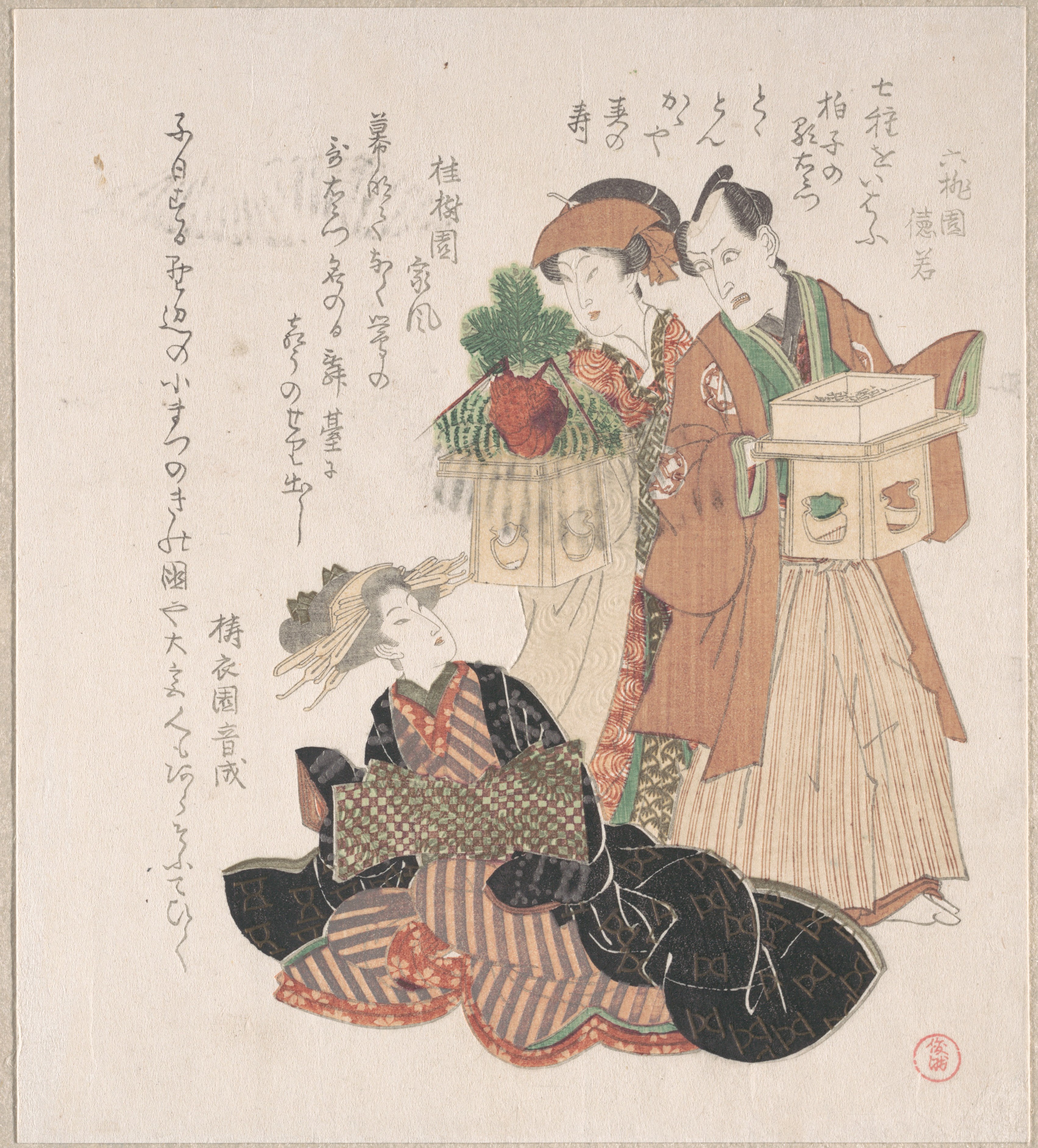
Actor Nakamura Utayemon with Two Women Preparing for the New Year Ceremony
- Date:
- 19th century
- Medium:
- Part of an album of woodblock prints (surimono); ink and color on paper
- Source:
- Metropolitan Museum of Art
Description
Utagawa Toyokuni I (1769-1825) here pairs his characteristic Edo ukiyo-e yakusha-e portraiture with the seasonal subject matter of New Year preparations, depicting the kabuki actor Nakamura Utayemon (most likely Nakamura Utaemon III, called Shikan, who was Toyokuni's frequent subject) flanked by two women arranging the rituals that accompanied the most important festival of the Japanese year. The Japanese New Year, observed at the start of the lunar year, was marked by elaborate preparations including pine and bamboo arrangements (kadomatsu), special foods, gift exchanges, and formal household calls. Print designers treated the holiday as a major commercial subject because almanacs, calendar prints, and seasonal scenes all sold strongly in the closing months of the year. Toyokuni's blending of an identifiable star actor with the women's domestic ritual is characteristic of the way kabuki celebrity infused everyday life in Edo: the actor is presented not on stage but in a quasi-private setting, his glamour intensified by the contrast with the women's quieter activity. The composition demonstrates the Utagawa school's sophisticated handling of multi-figure design, with the principals arranged so that costume patterns and gestures direct the eye around the sheet. The Metropolitan Museum of Art's recorded date of 1800 places the print at the close of Toyokuni's first major period, just before he received pupils who would carry the Utagawa name into mid-century prominence. The impression is held in the Metropolitan Museum of Art.
More Prints by Utagawa Toyokuni I

Segawa Kikunojō III as the Shop Boy Chōkichi
1796
Woodblock print (nishiki-e), ink and color on paper
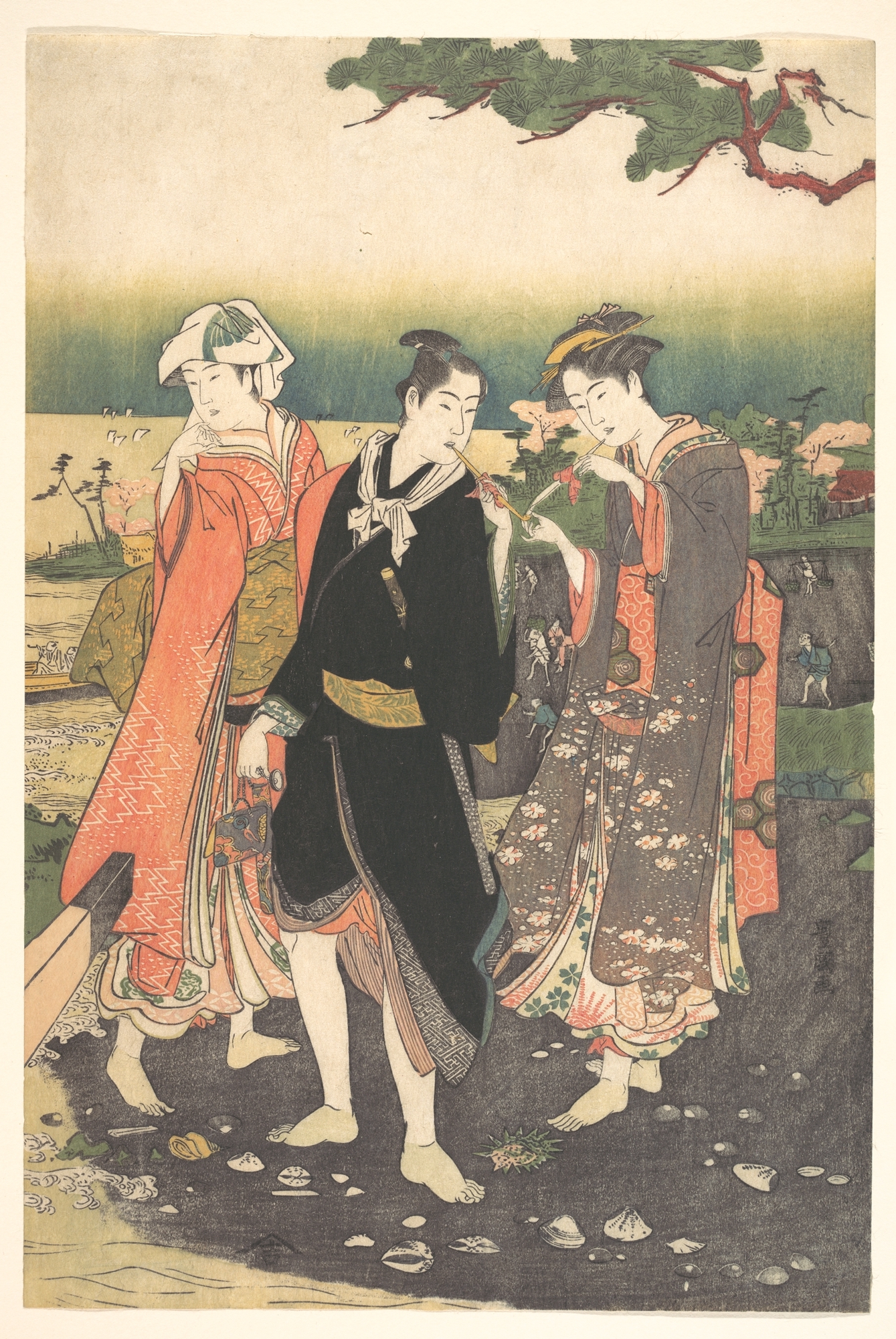
On Shinagawa Beach at Ebb-Tide
1769–1825
Woodblock print; ink and color on paper
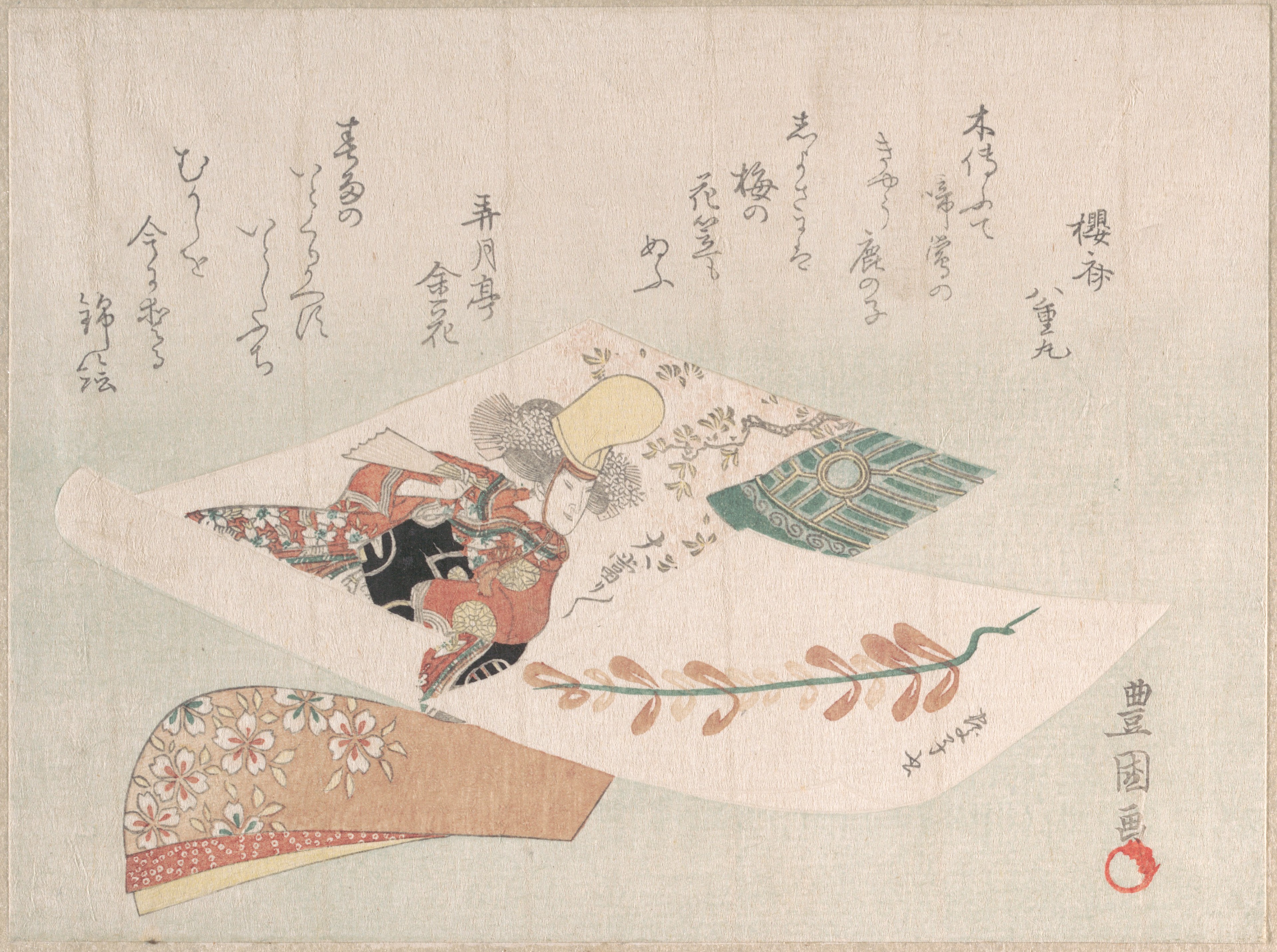
Representation of the Dance-Play "Dōjōji"
Woodblock print (surimono); ink and color on paper

The actors Sawamura Sojuro II as Satsuma Gengobei and Arashi Ryuzo II as Mawashi-otoko Yasuke in the play "Edo Sunago Kichirei Soga," performed at the Miyako Theater on the first month, 1795
c. 1795
Color woodblock print; oban
Frequently Asked Questions
Actor Nakamura Utayemon with Two Women Preparing for the New Year Ceremony was created by Utagawa Toyokuni I (歌川豊国) in 19th century.