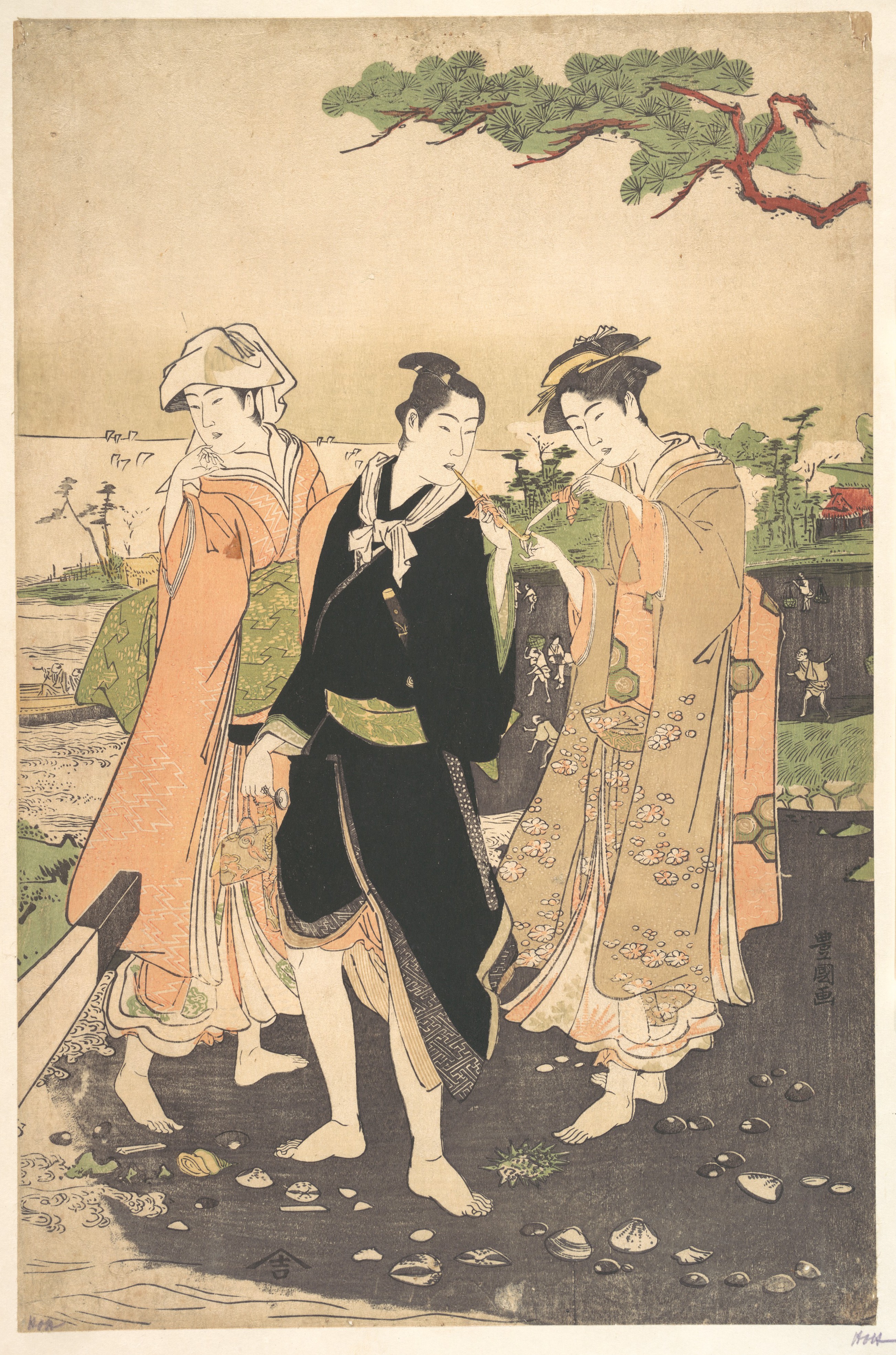
Along the Seashore at Futami
- Medium:
- Middle sheet of a triptych of woodblock prints; ink and color on paper
- Source:
- Metropolitan Museum of Art
Description
Along the Seashore at Futami is a woodblock print by Utagawa Toyokuni in the Metropolitan Museum of Art, catalogued with the placeholder date of 1769 that corresponds to the artist's birth year rather than a documented production year. The subject is the famous coast at Futamigaura in Ise Province, the celebrated site of the two Wedded Rocks, Meoto Iwa, joined by a sacred shimenawa rope and revered as a manifestation of the Shinto creator deities Izanagi and Izanami. Futami had been a stock motif in Japanese painting and ukiyo-e long before Toyokuni, but in his Utagawa-school treatment it appears as a setting for elegantly dressed women rather than a purely topographical study, in keeping with the bijin-ga strain of his Edo ukiyo-e output. The print pairs the timeless sacred shoreline with the contemporary fashion of Edo women in patterned robes, a juxtaposition that gave the design appeal both as a souvenir of pilgrimage and as a fashion-conscious meisho-e. As the founding master of the Utagawa school's market dominance, Toyokuni applied his theatrical eye for figural drama to such landscape-and-beauty compositions as readily as to his celebrated yakusha-e portraits. The Metropolitan Museum of Art preserves the print as part of its broad Utagawa holdings. The image stands as a representative example of how Edo ukiyo-e absorbed the sacred geography of distant provinces into the everyday visual world of the capital.
More Prints by Utagawa Toyokuni I

Segawa Kikunojō III as the Shop Boy Chōkichi
1796
Woodblock print (nishiki-e), ink and color on paper
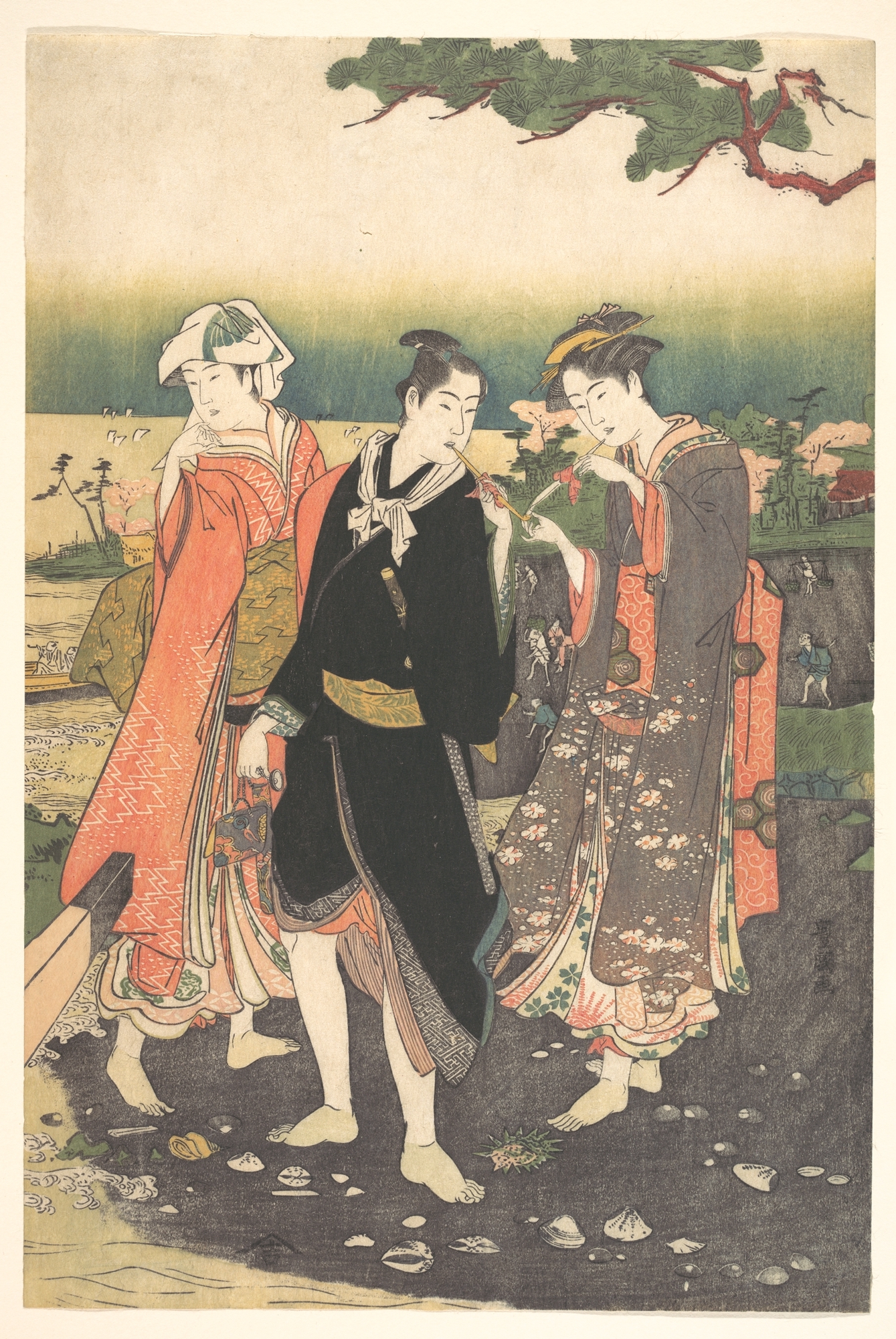
On Shinagawa Beach at Ebb-Tide
1769–1825
Woodblock print; ink and color on paper
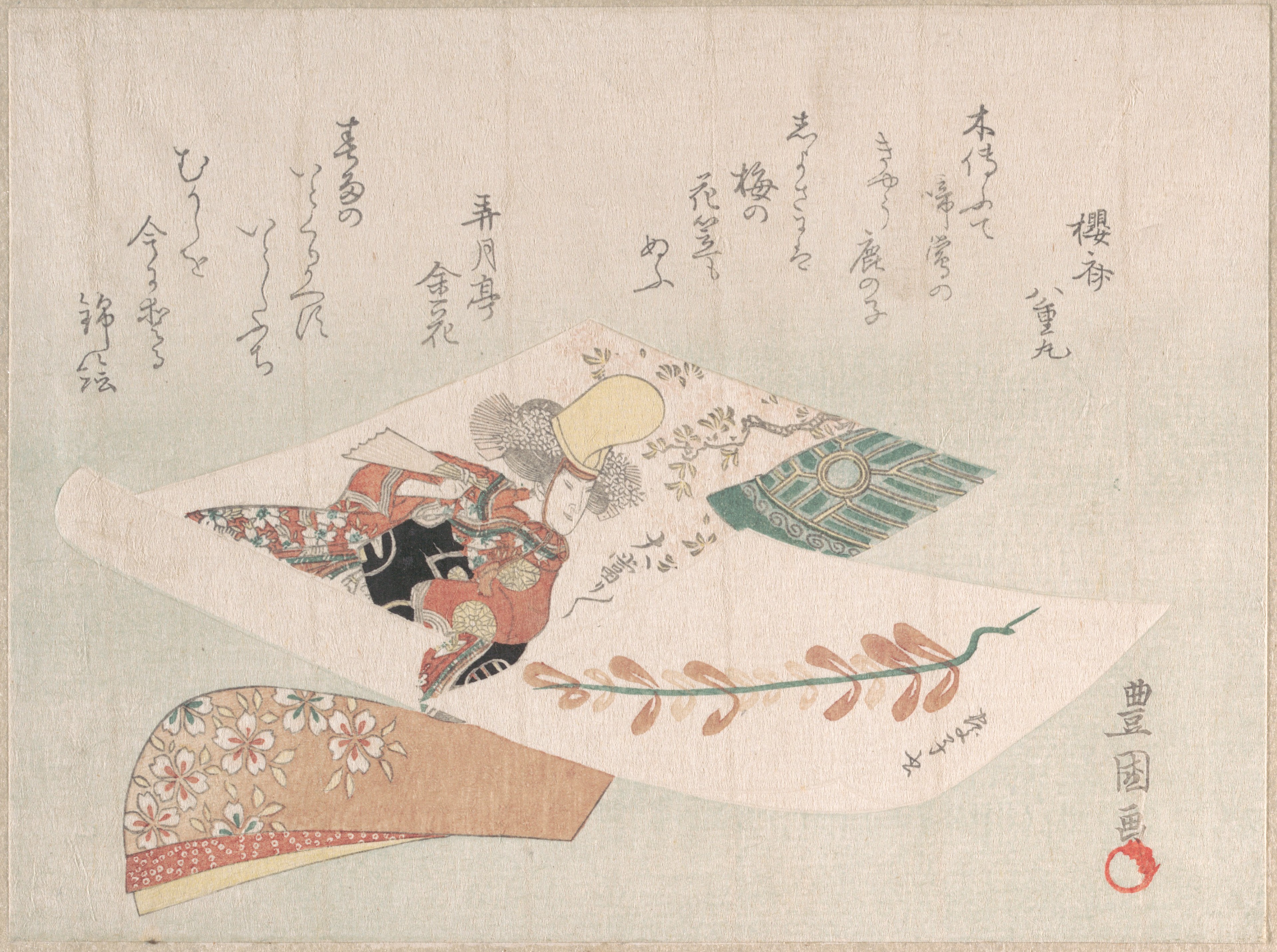
Representation of the Dance-Play "Dōjōji"
Woodblock print (surimono); ink and color on paper

The actors Sawamura Sojuro II as Satsuma Gengobei and Arashi Ryuzo II as Mawashi-otoko Yasuke in the play "Edo Sunago Kichirei Soga," performed at the Miyako Theater on the first month, 1795
c. 1795
Color woodblock print; oban
Frequently Asked Questions
Along the Seashore at Futami was created by Utagawa Toyokuni I (歌川豊国).