![Amusements of Kabuki Actors of the “Third Floor” [Dressing Room], by Shikitei Sanba 俳優三階興 by Utagawa Toyokuni I — Japanese First volume of a two-volume set of woodblock-printed books; ink and color on paper, 1801](https://images.metmuseum.org/CRDImages/as/original/2013_877_08_crd.jpg)
Amusements of Kabuki Actors of the “Third Floor” [Dressing Room], by Shikitei Sanba 俳優三階興
- Date:
- 1801
- Medium:
- First volume of a two-volume set of woodblock-printed books; ink and color on paper
- Source:
- Metropolitan Museum of Art
Description
Amusements of Kabuki Actors of the Third Floor, by Shikitei Sanba is a yakusha-e composition by Utagawa Toyokuni preserved in the Metropolitan Museum of Art. The work pairs Toyokuni, the leading designer of actor prints in late Edo ukiyo-e, with the popular novelist Shikitei Sanba, whose comic prose drew on the social texture of theater and bathhouse alike. In the Kabuki playhouses of Edo, the third floor of a theater housed the dressing rooms reserved for star actors. To depict that space was to draw back a curtain on the working world of performers, showing them off-stage as they prepared, rested, joked, and prepared their costumes and makeup. Toyokuni's design gathers actors in an interior whose details—mirror stands, robes hung on racks, low tables and tobacco trays—announce the dressing room as a place of craft as well as celebrity. Shikitei Sanba's accompanying text would have given Edo readers a knowing commentary on personalities and customs of the green room, the kind of insider material that connoisseurs of the theater prized. The Met dates this print to 1801, taken here from the museum record. The collaboration belongs to a moment when literary writers and ukiyo-e designers regularly cross-pollinated, and the sheet stands as both an outstanding yakusha-e production and a document of the social network linking artists, actors, and authors in early-nineteenth-century Edo.
More Prints by Utagawa Toyokuni I

Kabuki Actor Iwai Kumesaburo with abacus

Segawa Kikunojō III as the Shop Boy Chōkichi
1796
Woodblock print (nishiki-e), ink and color on paper
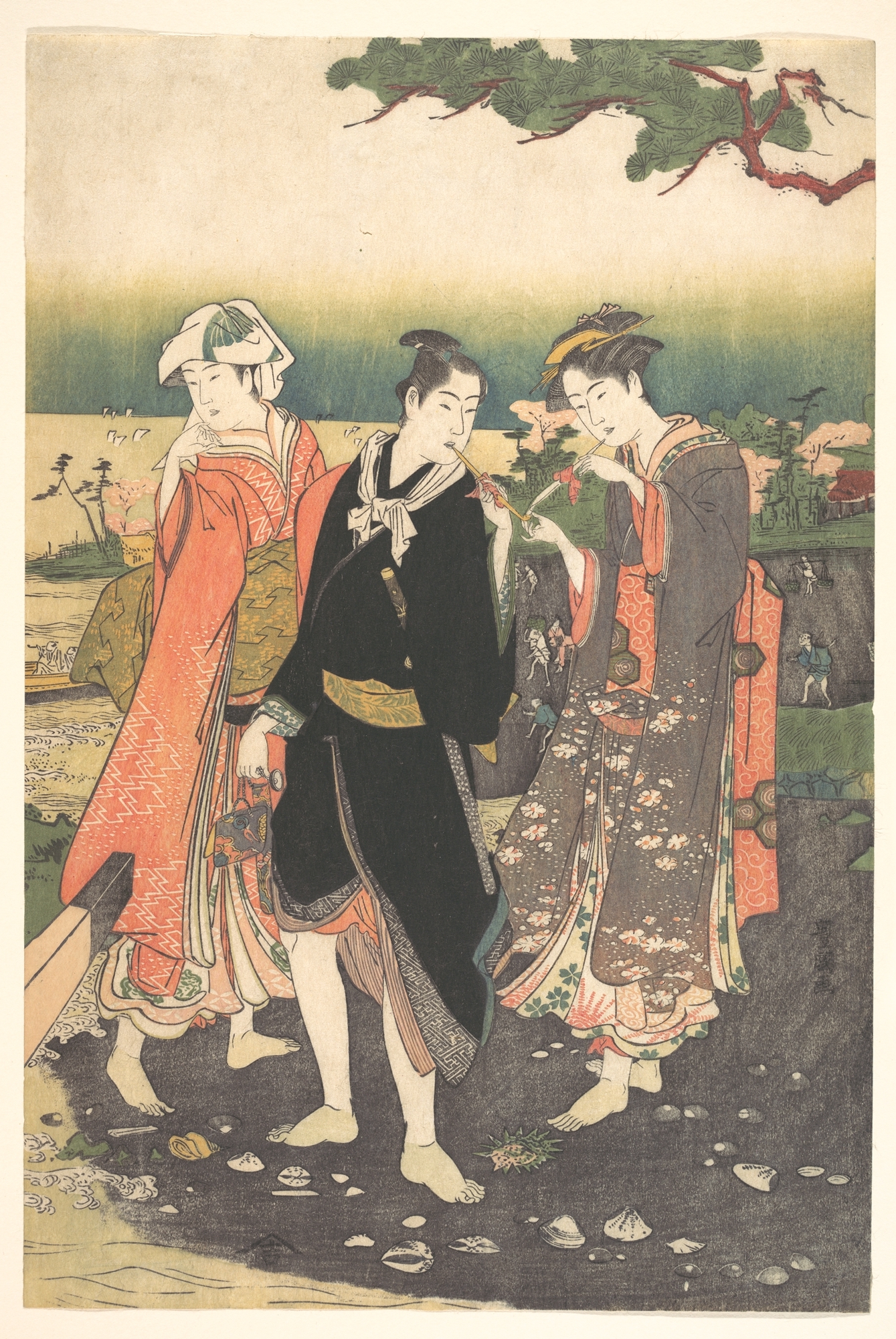
On Shinagawa Beach at Ebb-Tide
1769–1825
Woodblock print; ink and color on paper
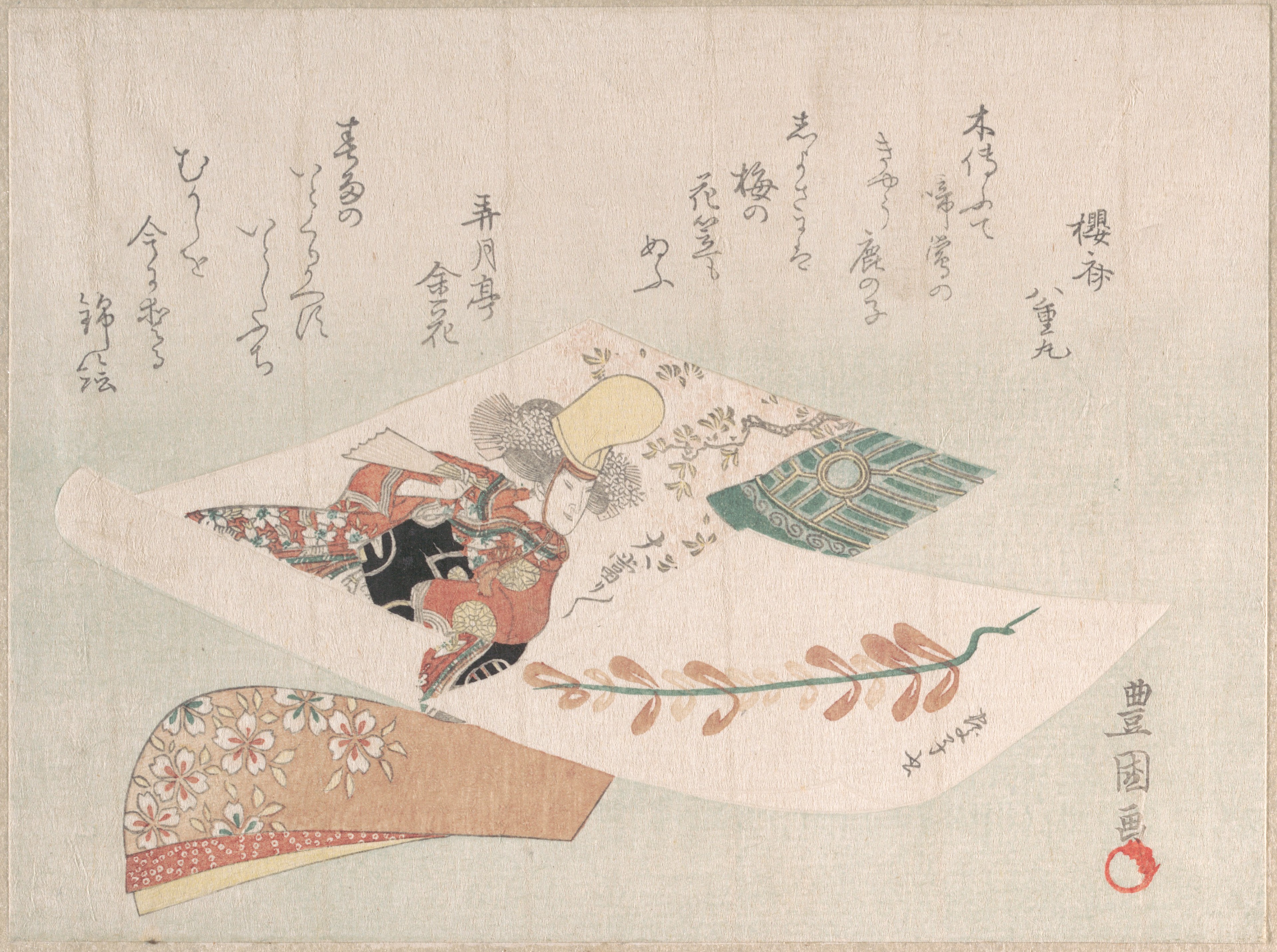
Representation of the Dance-Play "Dōjōji"
Woodblock print (surimono); ink and color on paper
Frequently Asked Questions
Amusements of Kabuki Actors of the “Third Floor” [Dressing Room], by Shikitei Sanba 俳優三階興 was created by Utagawa Toyokuni I (歌川豊国) in 1801.