
An Actor Beside Water
- Medium:
- Woodblock print; ink and color on paper
- Source:
- Metropolitan Museum of Art
Description
"An Actor Beside Water" in the Metropolitan Museum of Art is a Utagawa Toyokuni design that places a single kabuki performer in a quiet pictorial moment, departing momentarily from the high-energy confrontation scenes that drove much of Edo ukiyo-e production. The print's compositional simplicity, with the figure set against a lightly suggested aquatic background, allows Toyokuni to concentrate the viewer's attention on costume, posture, and individual likeness, the three foundations of yakusha-e. The Utagawa school, which Toyokuni would lead to dominance in the early nineteenth century, valued exactly this kind of focused single-figure portrait because it gave audiences an unobstructed view of the actor and offered the workshop a relatively economical way to commemorate a production. The textile patterning of the costume rewards close inspection: each motif acted as a visual signal that contemporary audiences could decode, attaching the figure to a specific role, season, or theatrical lineage. Water imagery, both literal and metaphorical, threaded through kabuki and through the wider pictorial culture of Edo, evoking transience and refreshment in ways that connected the actor portrait to broader poetic conventions. Toyokuni's line work is precise and confident, characteristic of the workshop's commercial output during a period when Edo ukiyo-e had matured into a recognizable urban art form. The Metropolitan's preservation of this impression supports ongoing research into Utagawa Toyokuni's compositional range, demonstrating that the yakusha-e genre encompassed contemplative as well as theatrical extremes within the same artistic vocabulary.
More Prints by Utagawa Toyokuni I

Segawa Kikunojō III as the Shop Boy Chōkichi
1796
Woodblock print (nishiki-e), ink and color on paper
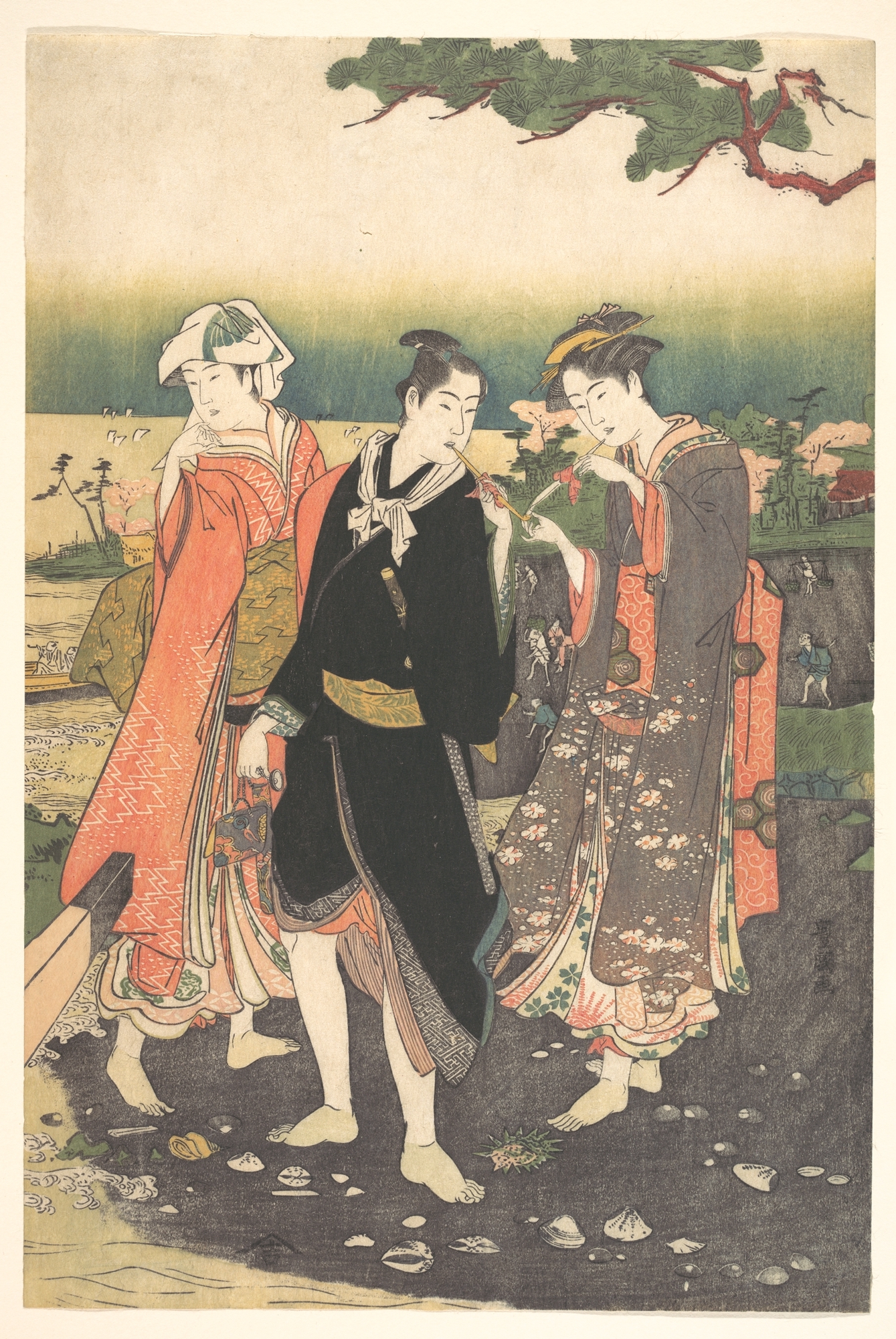
On Shinagawa Beach at Ebb-Tide
1769–1825
Woodblock print; ink and color on paper
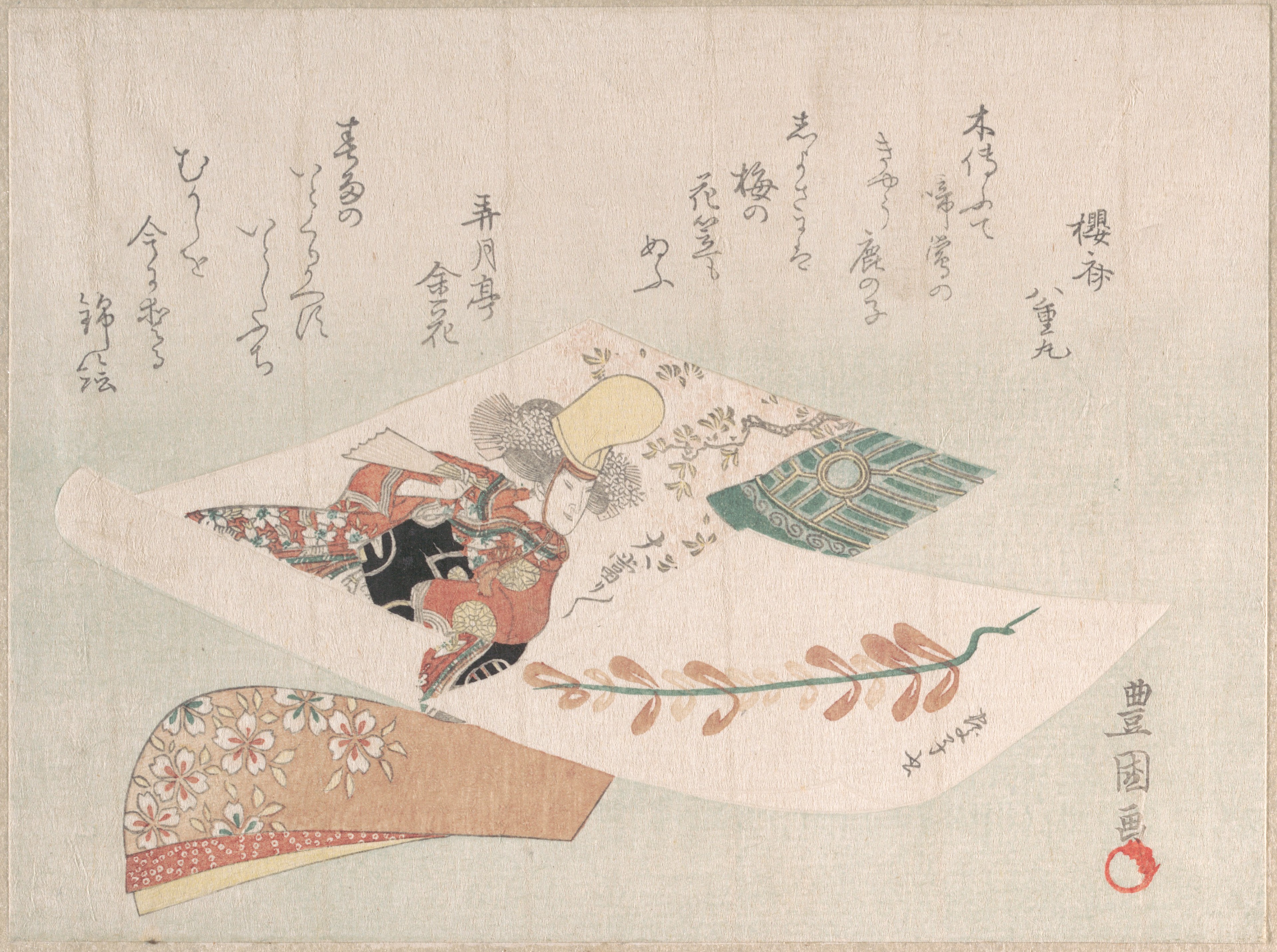
Representation of the Dance-Play "Dōjōji"
Woodblock print (surimono); ink and color on paper

The actors Sawamura Sojuro II as Satsuma Gengobei and Arashi Ryuzo II as Mawashi-otoko Yasuke in the play "Edo Sunago Kichirei Soga," performed at the Miyako Theater on the first month, 1795
c. 1795
Color woodblock print; oban
Frequently Asked Questions
An Actor Beside Water was created by Utagawa Toyokuni I (歌川豊国).