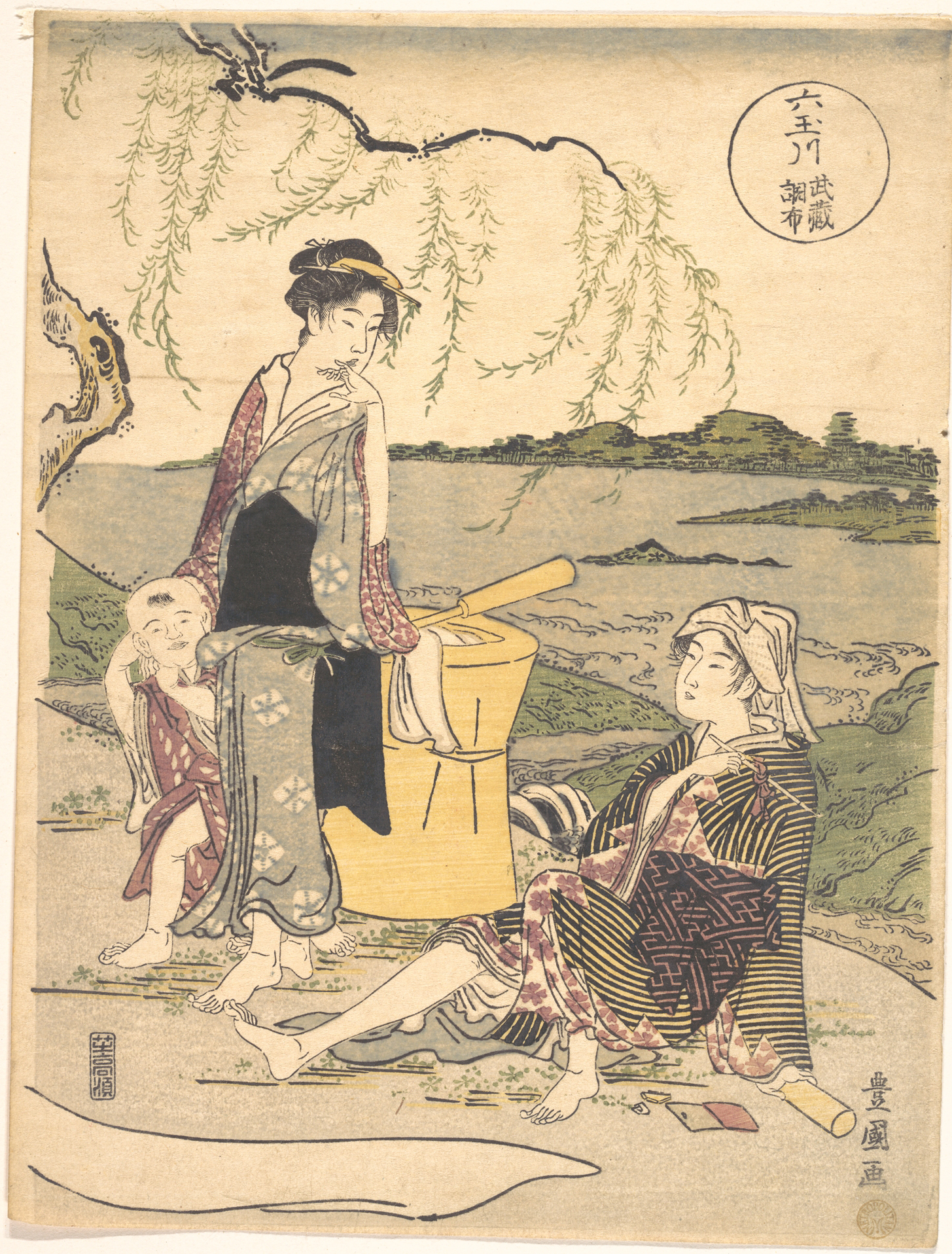
Chofu no Tamagawa
- Date:
- ca. 1789
- Medium:
- Woodblock print; ink and color on paper
- Source:
- Metropolitan Museum of Art
Description
This Edo ukiyo-e print by Utagawa Toyokuni I (1769-1825), titled Chōfu no Tamagawa, draws on one of the most beloved poetic subjects of classical Japanese literature: the Six Jewel Rivers (Mu Tamagawa). These six rivers, scattered across Japan, were celebrated for their associations with classical waka poetry, each linked to a particular poetic image—the cherry blossoms of Yoshino, the kerria of Ide, the plovers of Mu, the cloth fulling of Settsu, the cool stream of Kii, and, for Chōfu in Musashi Province, the cloth bleaching that gave the river its name and its poetic resonance. The image of women washing or bleaching cloth in the Chōfu Tamagawa became a standard subject in classical poetry, and ukiyo-e designers from Hokusai to Hiroshige produced famous Mu Tamagawa series exploiting these literary references. Toyokuni's contribution to the genre brings his signature handling of figures—elegantly dressed women, in this case engaged in or evoking the river-associated activity—to a poetic-geographic framework that flatters the viewer's classical literacy. The print belongs to the bijinga branch of his output rather than to yakusha-e, and shows the influence of the broader fascination with classical Japanese poetry that ran through Edo print culture. The 1779 date recorded in the Metropolitan Museum of Art's holdings appears to predate Toyokuni's working career and is likely a cataloguing artifact; the print dates from his mature production. The impression is held in the Metropolitan Museum of Art.
More Prints by Utagawa Toyokuni I

Segawa Kikunojō III as the Shop Boy Chōkichi
1796
Woodblock print (nishiki-e), ink and color on paper
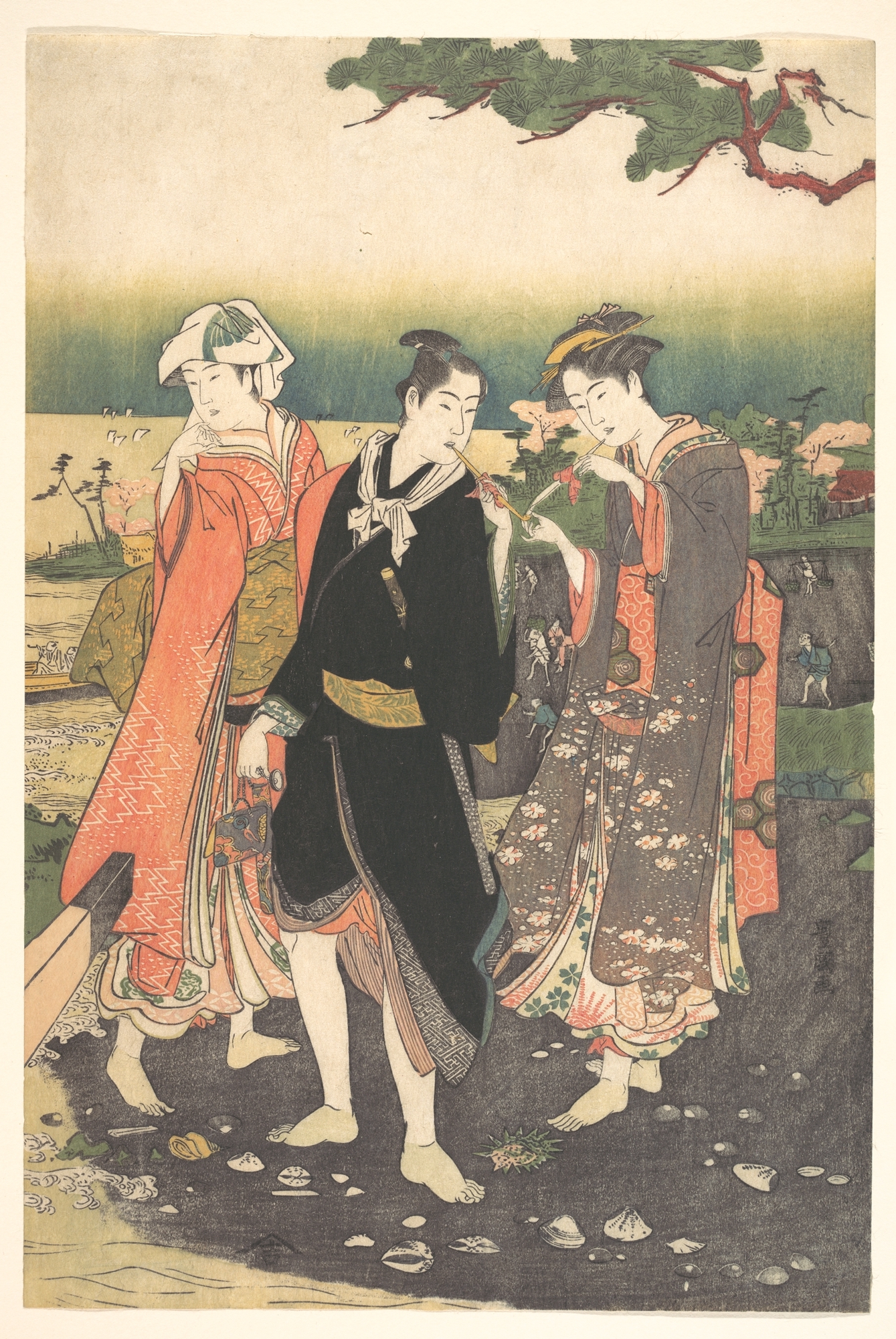
On Shinagawa Beach at Ebb-Tide
1769–1825
Woodblock print; ink and color on paper
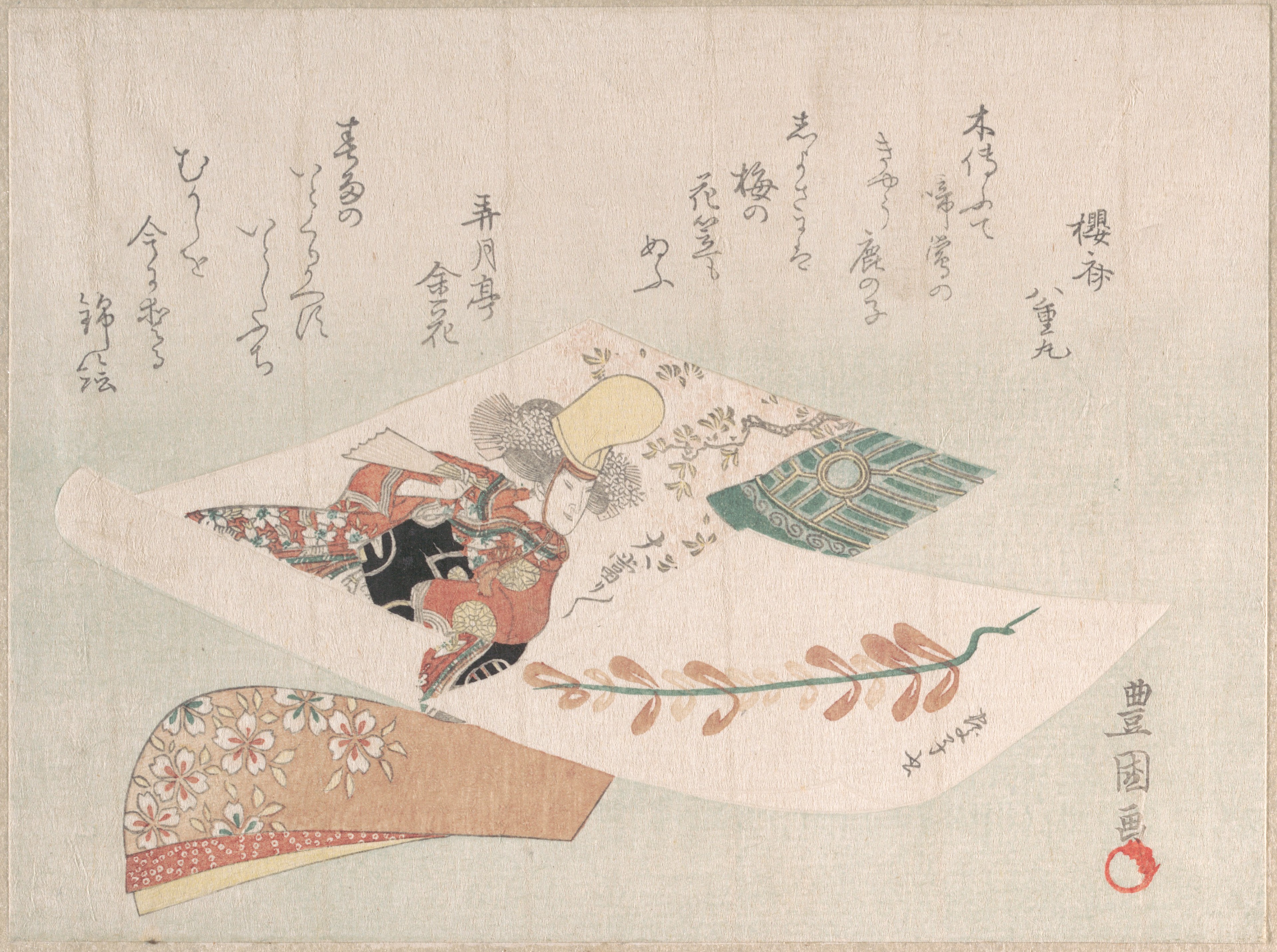
Representation of the Dance-Play "Dōjōji"
Woodblock print (surimono); ink and color on paper

The actors Sawamura Sojuro II as Satsuma Gengobei and Arashi Ryuzo II as Mawashi-otoko Yasuke in the play "Edo Sunago Kichirei Soga," performed at the Miyako Theater on the first month, 1795
c. 1795
Color woodblock print; oban
Frequently Asked Questions
Chofu no Tamagawa was created by Utagawa Toyokuni I (歌川豊国) in ca. 1789.