
Clearing Weather at Enoshima, Morokoshigahara off the Shore of Koyurugi (Enoshima seiran, Koyurugi no iso Morokoshigahara), from the series "Eight Views of Famous Places (Meisho hakkei)"
- Date:
- c. 1833/34
- Medium:
- Color woodblock print; oban
- Source:
- Art Institute of Chicago
Description
Clearing Weather at Enoshima, Morokoshigahara off the Shore of Koyurugi (Enoshima seiran, Koyurugi no iso Morokoshigahara), from the series Eight Views of Famous Places (Meisho hakkei), is dated 1828 by the Art Institute of Chicago, and forms part of Utagawa Toyokuni's late cycle adapting the Chinese Xiao-Xiang model to Japanese locales. Here the seiran, or clearing weather after rain or mist, motif is paired with Enoshima, the sacred island off the Sagami coast that had long been a destination for pilgrims and pleasure travelers. The composition probably balances a distant view of the island, the offshore landscape, and a foreground populated by figures, integrating landscape with bijin-ga in a way that became increasingly common in late Edo ukiyo-e series. Toyokuni's late career intersected with the rise of the landscape series as a dominant format in the print market, and his contributions show that the artist most famous for yakusha-e could also adapt fluidly to meisho work. The Art Institute of Chicago preserves the sheet within its Toyokuni holdings as a record of his engagement with the Enoshima coast, a region whose seasonal moods and atmospheric effects were highly valued in poetic and pictorial traditions. As Edo ukiyo-e, the print thus participates simultaneously in classical Chinese-derived scheme and in the very concrete geography of nineteenth-century travel, where coastal sites such as Enoshima were both pilgrimage destinations and fashionable subjects of print design.
More Prints by Utagawa Toyokuni I

Segawa Kikunojō III as the Shop Boy Chōkichi
1796
Woodblock print (nishiki-e), ink and color on paper
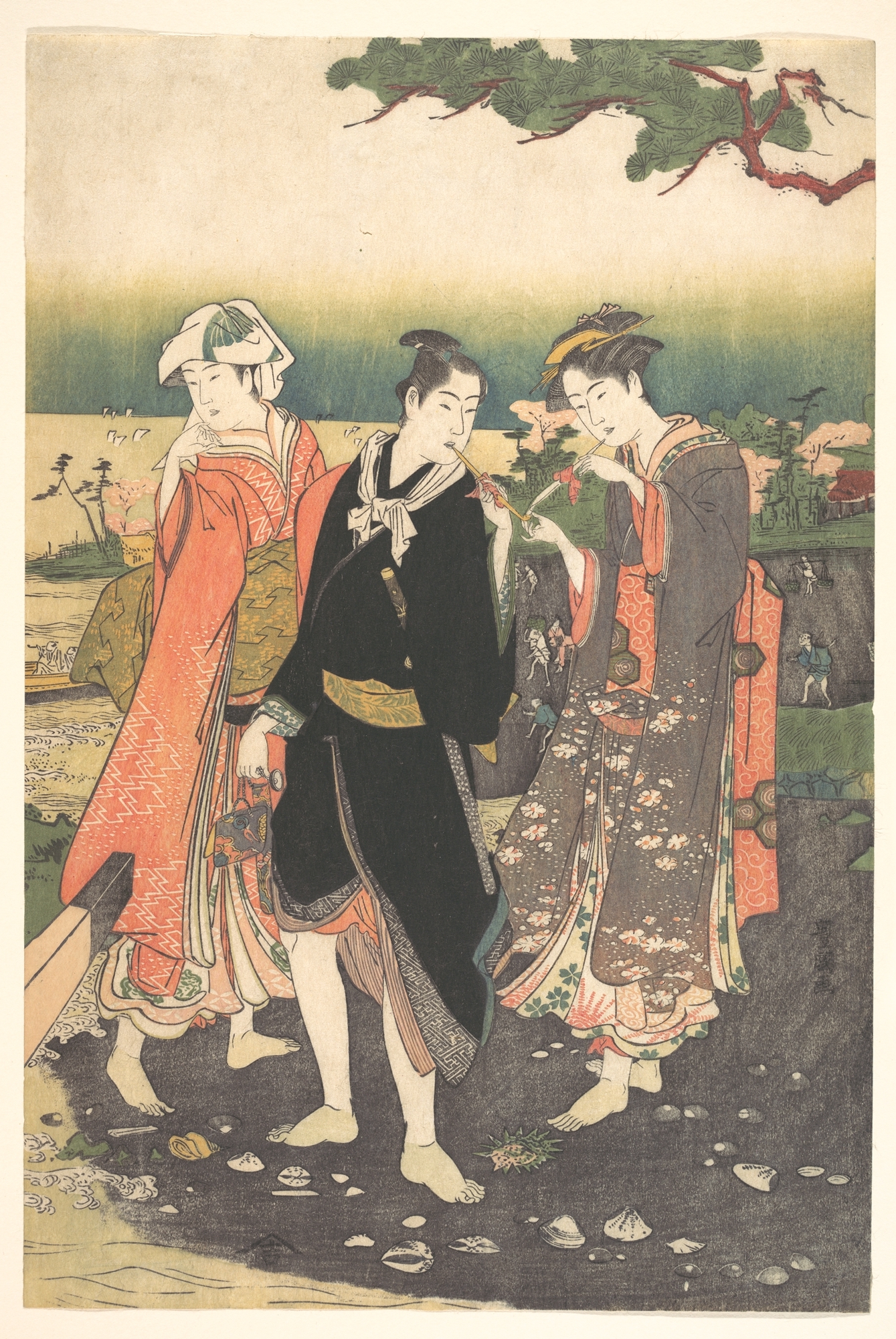
On Shinagawa Beach at Ebb-Tide
1769–1825
Woodblock print; ink and color on paper
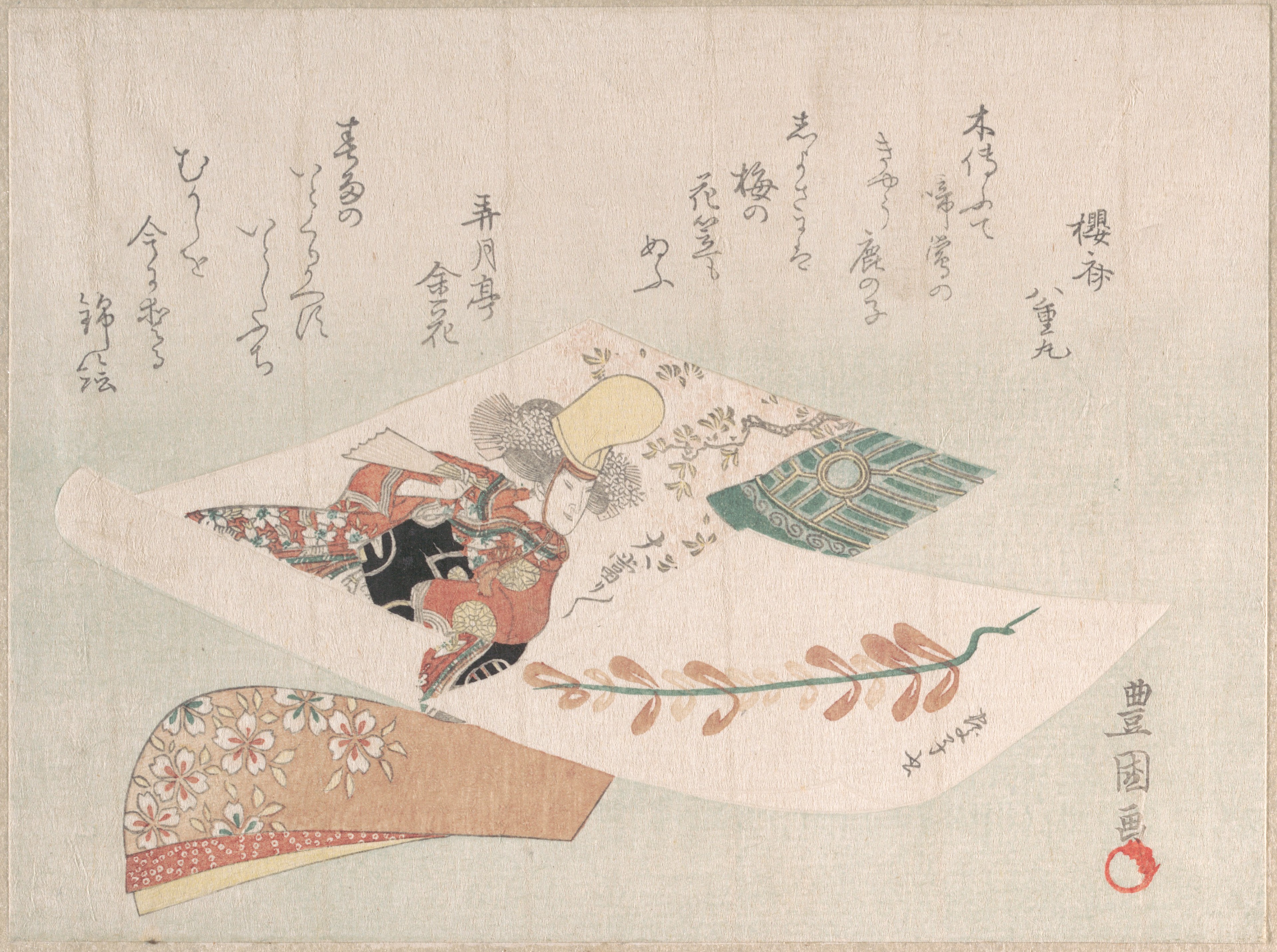
Representation of the Dance-Play "Dōjōji"
Woodblock print (surimono); ink and color on paper

The actors Sawamura Sojuro II as Satsuma Gengobei and Arashi Ryuzo II as Mawashi-otoko Yasuke in the play "Edo Sunago Kichirei Soga," performed at the Miyako Theater on the first month, 1795
c. 1795
Color woodblock print; oban
Frequently Asked Questions
Clearing Weather at Enoshima, Morokoshigahara off the Shore of Koyurugi (Enoshima seiran, Koyurugi no iso Morokoshigahara), from the series "Eight Views of Famous Places (Meisho hakkei)" was created by Utagawa Toyokuni I (歌川豊国) in c. 1833/34.