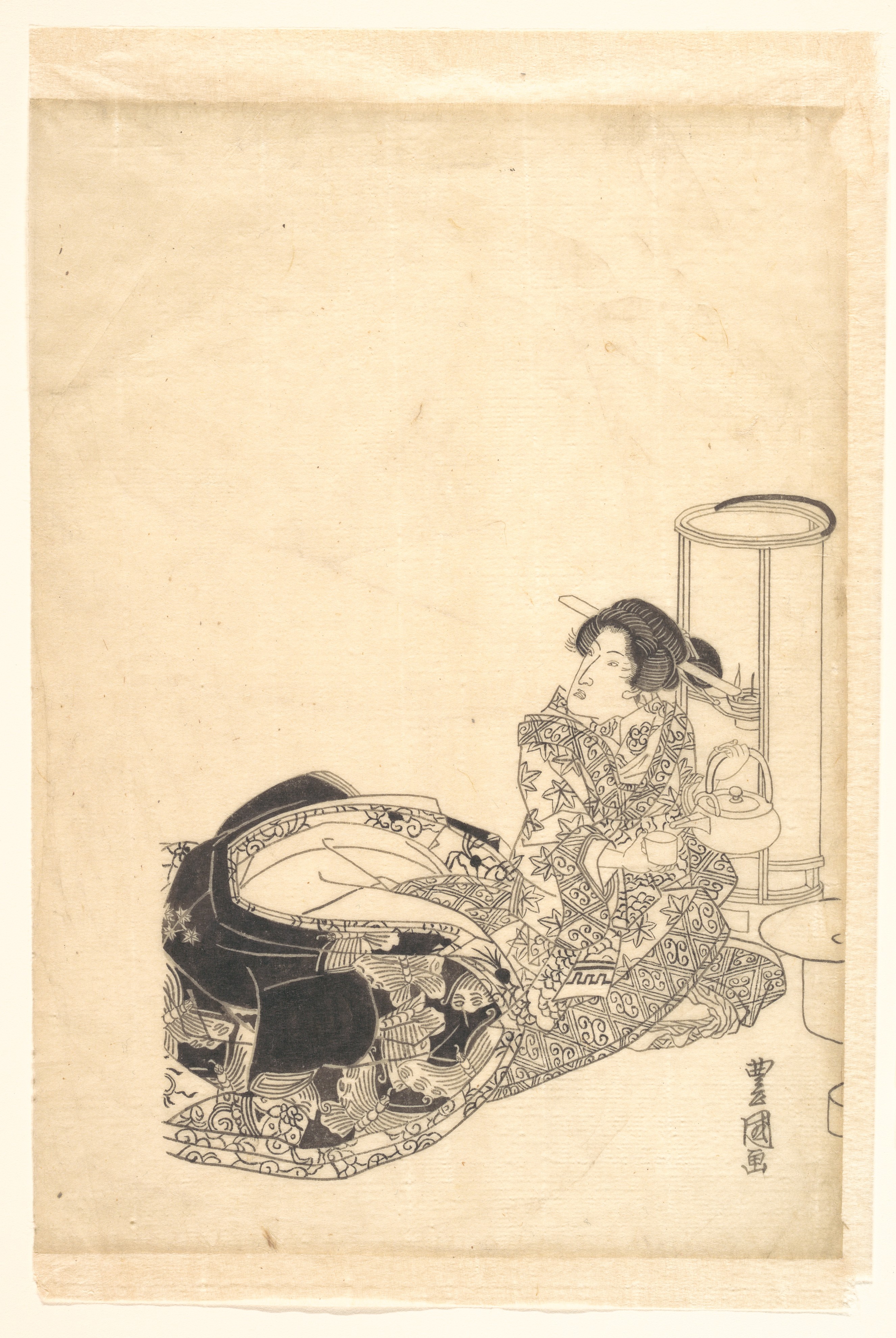
Courtesan or Actor as Courtesan Pouring Tea by the Light of a Lantern
- Medium:
- Monochrome woodblock print; ink on paper
- Source:
- Metropolitan Museum of Art
Description
Catalogued by the Metropolitan Museum of Art with a deliberately open identification, this Utagawa Toyokuni print depicts either a courtesan or an onnagata actor playing a courtesan, captured in the intimate act of pouring tea by the light of a lantern. The ambiguity is itself revealing: the Edo ukiyo-e tradition cultivated exactly this productive overlap between bijin-ga (pictures of beautiful women) and yakusha-e (actor portraits), and Toyokuni was particularly skilled at compositions that could be read either way. The lantern-lit nocturnal setting evokes the licensed pleasure quarters of Edo, where the highest-ranked courtesans entertained clients with carefully ritualized service that included tea preparation, music, and conversation. The same scene also appeared frequently on the kabuki stage, where male onnagata performers reinterpreted courtesan culture for theatrical audiences. Toyokuni's linework attends to the elaborate construction of the figure's robes, the architecture of the elevated coiffure, and the subtle play of light from the lantern, the latter rendered without literal illusion but with carefully observed compositional cues. The Utagawa school's commercial dominance of late Edo print production rested in part on exactly this kind of versatile, atmospheric figure work, which fit equally well into a yakusha-e album, a bijin-ga set, or a private collector's holdings. Preserved at the Metropolitan Museum of Art, the print supports ongoing research into Utagawa Toyokuni's mature figure style and into the porous boundary between theatrical and pleasure-quarter imagery in Edo ukiyo-e.
More Prints by Utagawa Toyokuni I

Segawa Kikunojō III as the Shop Boy Chōkichi
1796
Woodblock print (nishiki-e), ink and color on paper
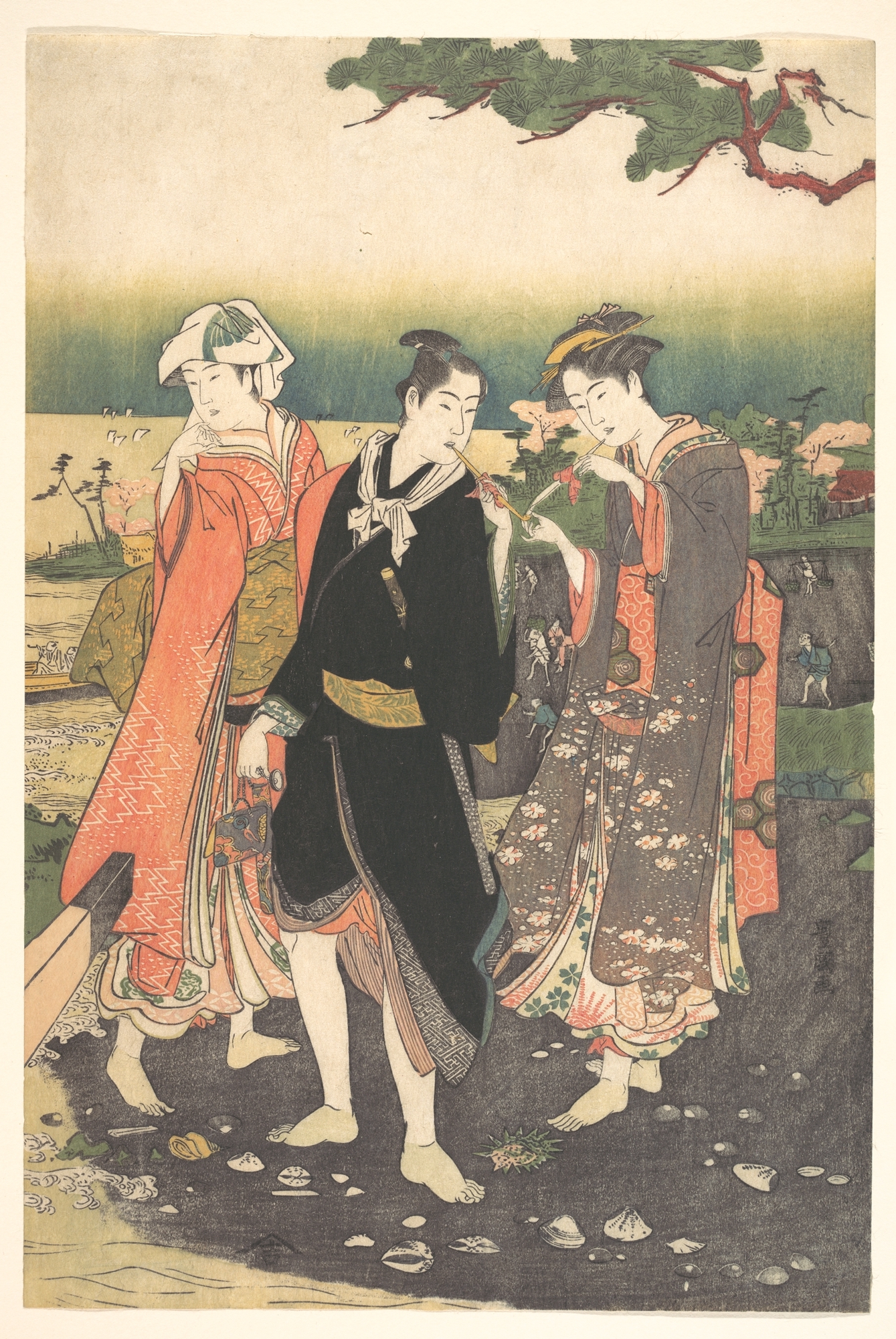
On Shinagawa Beach at Ebb-Tide
1769–1825
Woodblock print; ink and color on paper
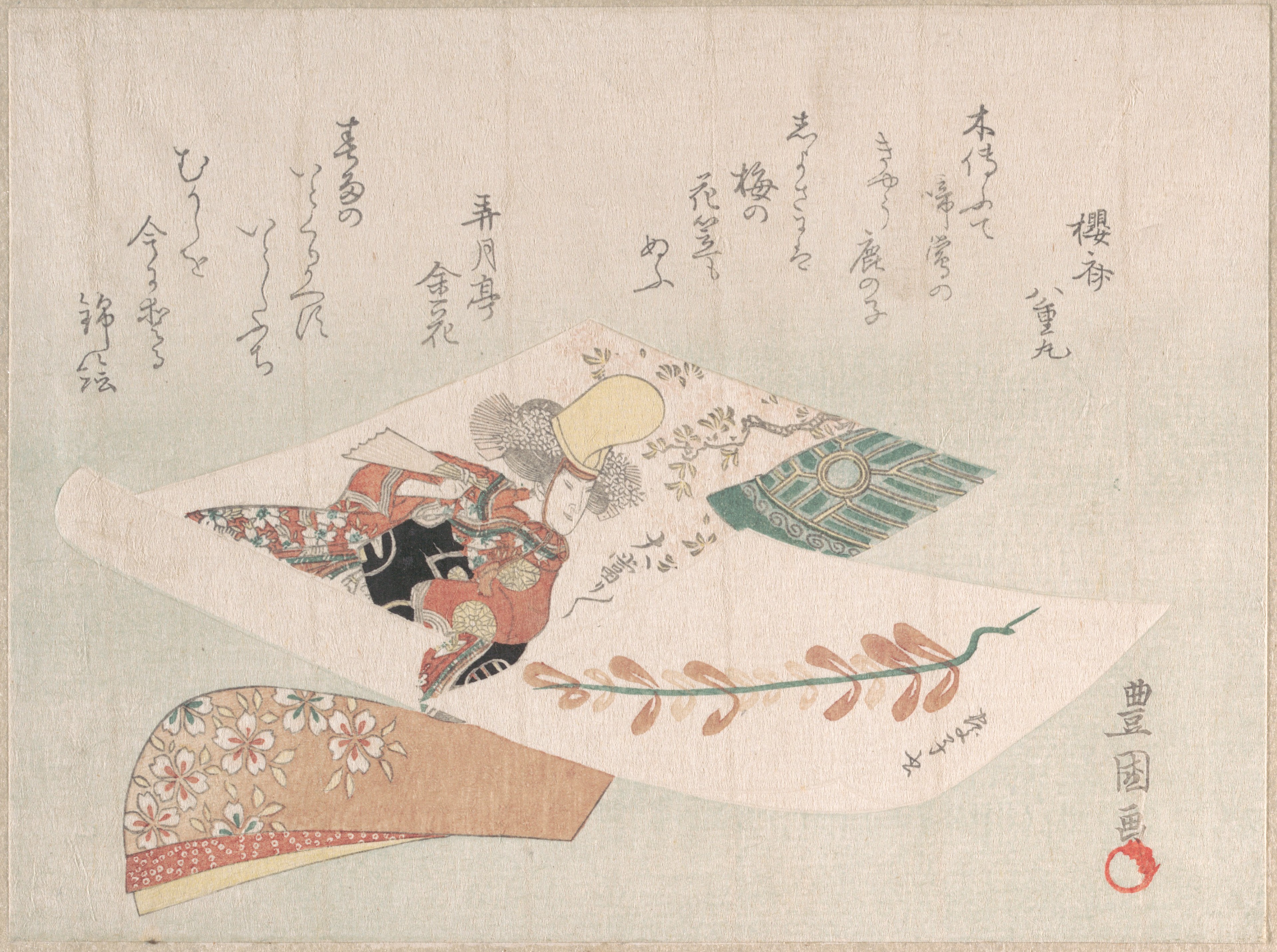
Representation of the Dance-Play "Dōjōji"
Woodblock print (surimono); ink and color on paper

The actors Sawamura Sojuro II as Satsuma Gengobei and Arashi Ryuzo II as Mawashi-otoko Yasuke in the play "Edo Sunago Kichirei Soga," performed at the Miyako Theater on the first month, 1795
c. 1795
Color woodblock print; oban
Frequently Asked Questions
Courtesan or Actor as Courtesan Pouring Tea by the Light of a Lantern was created by Utagawa Toyokuni I (歌川豊国).