
Courtesans of the Chojiya and their attendants playing kemari
- Date:
- c. 1791/93
- Medium:
- Color woodblock print; oban triptych
- Source:
- Art Institute of Chicago
Description
Courtesans of the Chojiya and their attendants playing kemari, dated 1786 in Art Institute of Chicago records, is a multi-figure composition by Utagawa Toyokuni that places the women of one of the famous Yoshiwara brothels in the unusual setting of an aristocratic ball-kicking game. Kemari, an ancient courtly pastime in which players kept a feathered ball aloft using only their feet, was associated with Heian-era nobility and with elite male leisure; transferring it to courtesans of the Chojiya is a typical Edo ukiyo-e mitate, blending classical reference with the fashion theatre of the licensed quarters. Toyokuni arranges the figures so that the ball and the kicking foot become the energetic center of the design, with kimono sleeves and obi extending outward in long, decorative arcs. The detailed costumes also serve as advertisements for the Chojiya itself; courtesans' names and house affiliations were a recognizable part of the visual code, and viewers in Edo would have read the print partly as a who's-who of contemporary celebrities. While Toyokuni's later fame would rest on yakusha-e, designs like this one demonstrate how thoroughly he was steeped in bijin-ga and group scenes from the start. As Edo ukiyo-e, the print weaves together courtly pastime, brothel publicity, and group portraiture in a single sheet, preserved at the Art Institute of Chicago as part of its holdings of Utagawa Toyokuni's early work.
More Prints by Utagawa Toyokuni I

Kabuki Actor Iwai Kumesaburo with abacus

Segawa Kikunojō III as the Shop Boy Chōkichi
1796
Woodblock print (nishiki-e), ink and color on paper
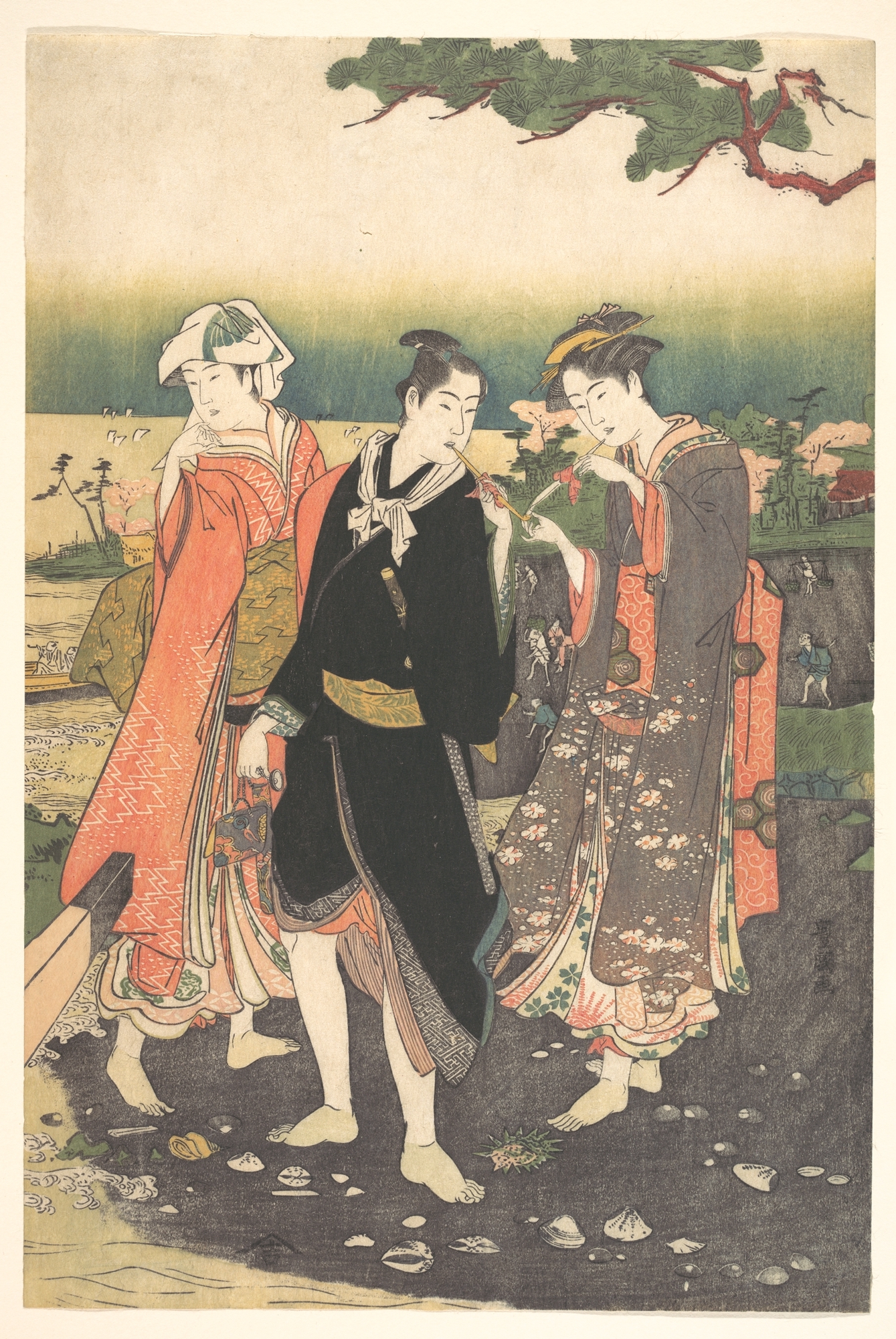
On Shinagawa Beach at Ebb-Tide
1769–1825
Woodblock print; ink and color on paper
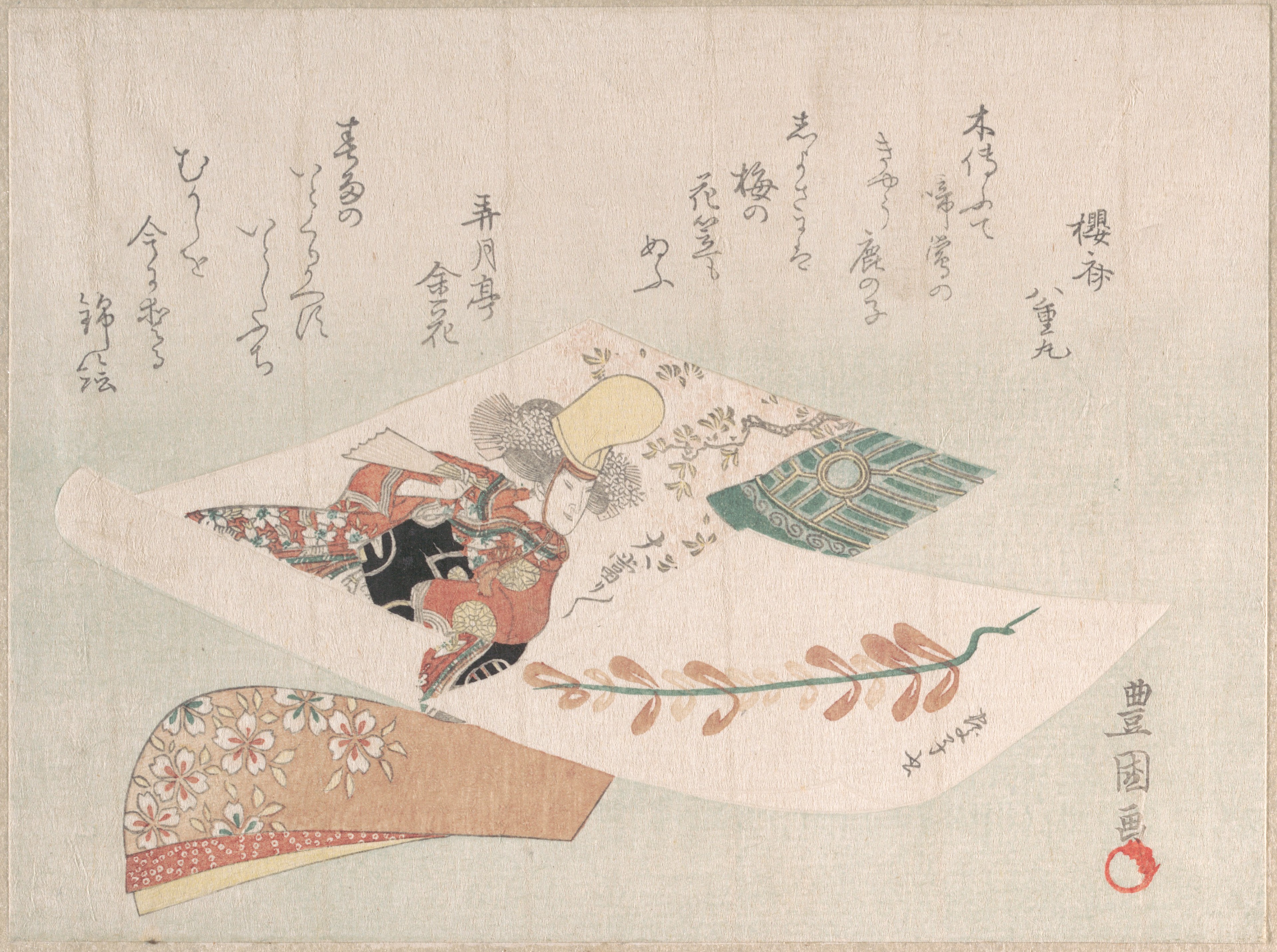
Representation of the Dance-Play "Dōjōji"
Woodblock print (surimono); ink and color on paper
Frequently Asked Questions
Courtesans of the Chojiya and their attendants playing kemari was created by Utagawa Toyokuni I (歌川豊国) in c. 1791/93.