
Doing the Laundry by the Well Curb (Idobata no sentaku to araihari)
- Date:
- c. 1795
- Medium:
- Color woodblock prints; oban triptych
- Source:
- Art Institute of Chicago
Description
Utagawa Toyokuni I's "Doing the Laundry by the Well Curb (Idobata no Sentaku to Araihari)" turns from the theatrical and the literary to the daily routines of Edo household labor. The Art Institute of Chicago holds the print, in which a small group of women wash, wring, and stretch lengths of cloth — the araihari process by which Edo households dismantled kimono into long fabric panels for cleaning and rebuilt them afterwards. The well curb (idobata) was a center of communal life in Edo neighborhoods, and Utagawa Toyokuni's design treats it as a setting worthy of careful figural composition. Although Utagawa Toyokuni built his career on kabuki actor prints — the yakusha-e that made the Utagawa school's name in Edo ukiyo-e — works like this confirm that his eye for arrangement, drapery, and rhythm extended fully into the domestic genre. The araihari process required the women to handle long bolts of cloth, and Toyokuni uses these horizontal stretches as compositional anchors that cross the print. The result is a design as elegant in its movement as any of his stage portraits, but built from labor rather than performance. The Art Institute of Chicago's catalogue documents the print without speculation. For collectors of Edo ukiyo-e, the work is a strong example of how Toyokuni's bijinga ranged across the social spectrum — from Yoshiwara oiran to the women of the well curb — without losing the discipline of line that defined the Utagawa school.
More Prints by Utagawa Toyokuni I

Kabuki Actor Iwai Kumesaburo with abacus

Segawa Kikunojō III as the Shop Boy Chōkichi
1796
Woodblock print (nishiki-e), ink and color on paper
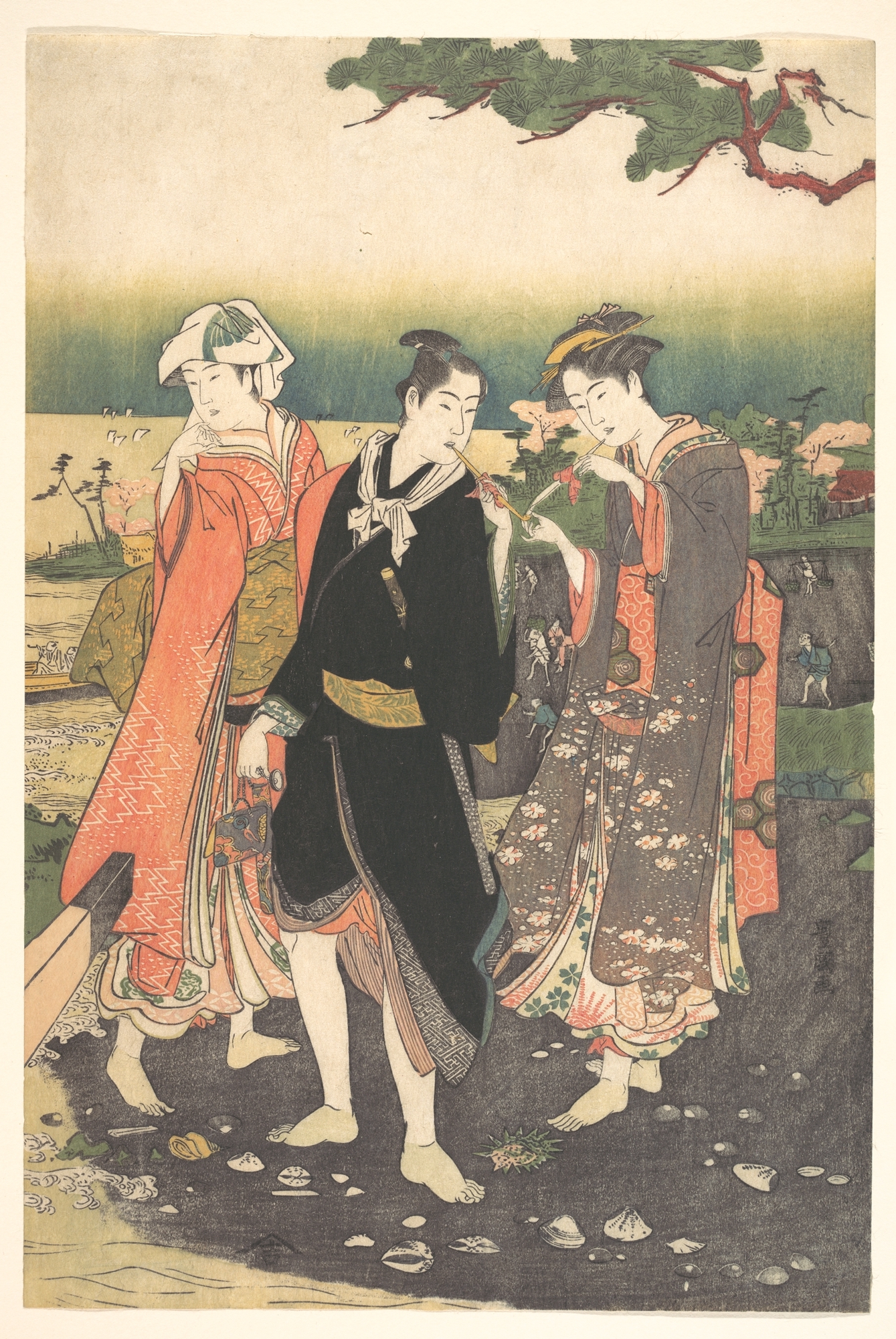
On Shinagawa Beach at Ebb-Tide
1769–1825
Woodblock print; ink and color on paper
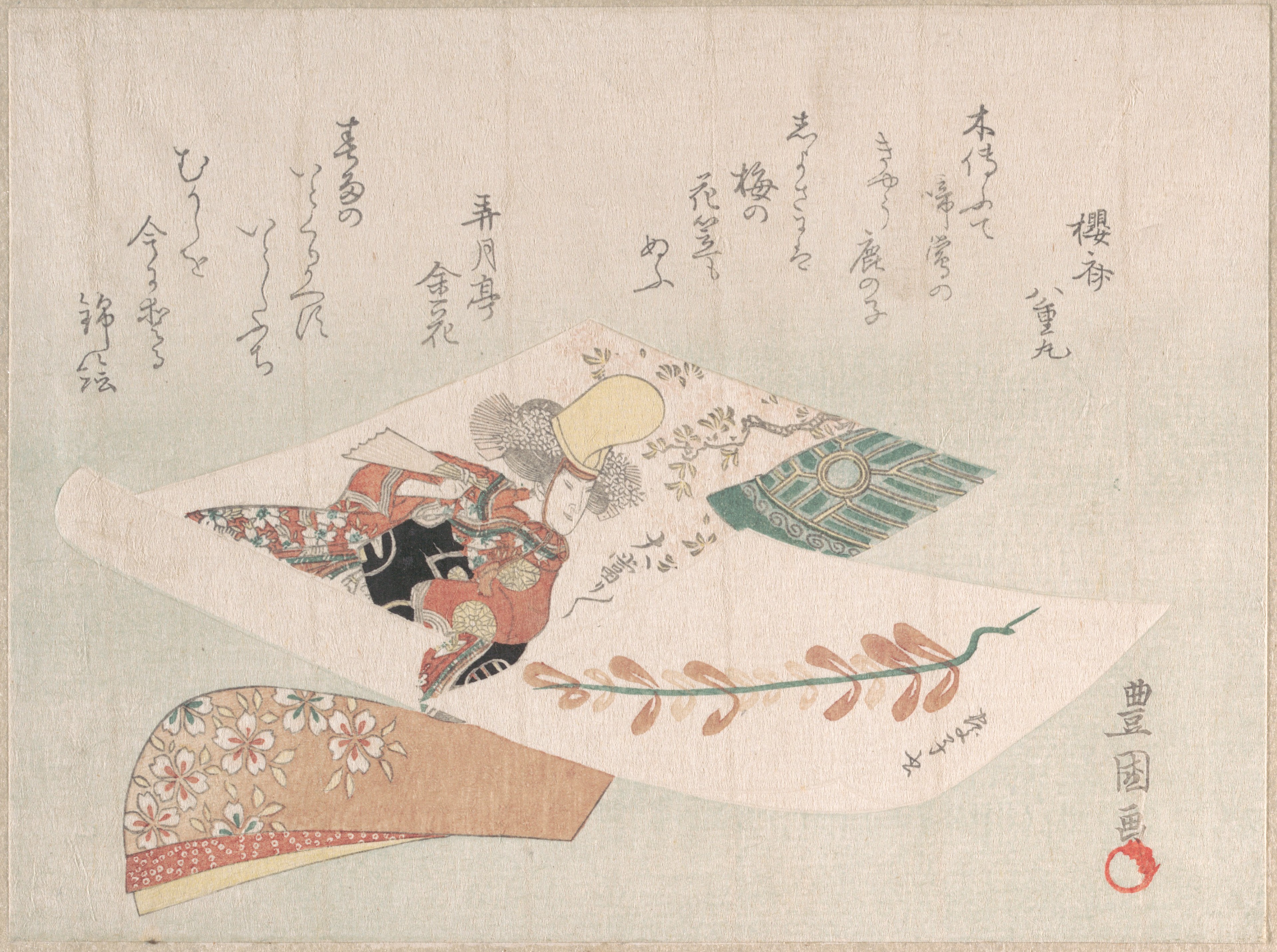
Representation of the Dance-Play "Dōjōji"
Woodblock print (surimono); ink and color on paper
Frequently Asked Questions
Doing the Laundry by the Well Curb (Idobata no sentaku to araihari) was created by Utagawa Toyokuni I (歌川豊国) in c. 1795.