Eight Modern Views of Famous Places in Tokyo of Great Japan (Dai Nippon Tokyo kaika meisho hakkei no zu)
- Date:
- 1875
- Medium:
- Color woodblock print; oban triptych
- Source:
- Art Institute of Chicago
Description
Issued in 1875 and preserved at the Art Institute of Chicago, "Eight Modern Views of Famous Places in Tokyo of Great Japan" (Dai Nippon Tokyo kaika meisho hakkei no zu) is a striking late example of how the Utagawa Toyokuni name and the broader Utagawa workshop continued to design prints well into the Meiji period, after the formal end of the Edo era. The series reworks the classical "Eight Views" (hakkei) tradition for the rapidly modernizing capital, renamed Tokyo only a few years earlier, and pairs famous places with markers of "kaika" (civilization, enlightenment), the watchword of early Meiji modernization. The print sits at a fascinating threshold in the long history of Edo ukiyo-e: the technical vocabulary of woodblock printing and the compositional habits of the Utagawa school remain firmly in place, while the subject matter has pivoted to telegraph poles, brick buildings, gas lamps, Western-style umbrellas, and other emblems of post-1868 transformation. The classic "Eight Views" frame, originally borrowed from Chinese landscape painting and absorbed into Japanese poetic culture, becomes a vehicle for inventorying contemporary urban change. The yakusha-e specialization of the early Toyokuni studio is here adapted to a meisho-e (famous places) format that connects the workshop to a still wider tradition. For collectors studying the late Utagawa school's response to Meiji modernity and the persistence of Edo ukiyo-e conventions into the new era, the series offers an exceptional case study in cultural and visual transition.
More Prints by Utagawa Toyokuni I

Segawa Kikunojō III as the Shop Boy Chōkichi
1796
Woodblock print (nishiki-e), ink and color on paper
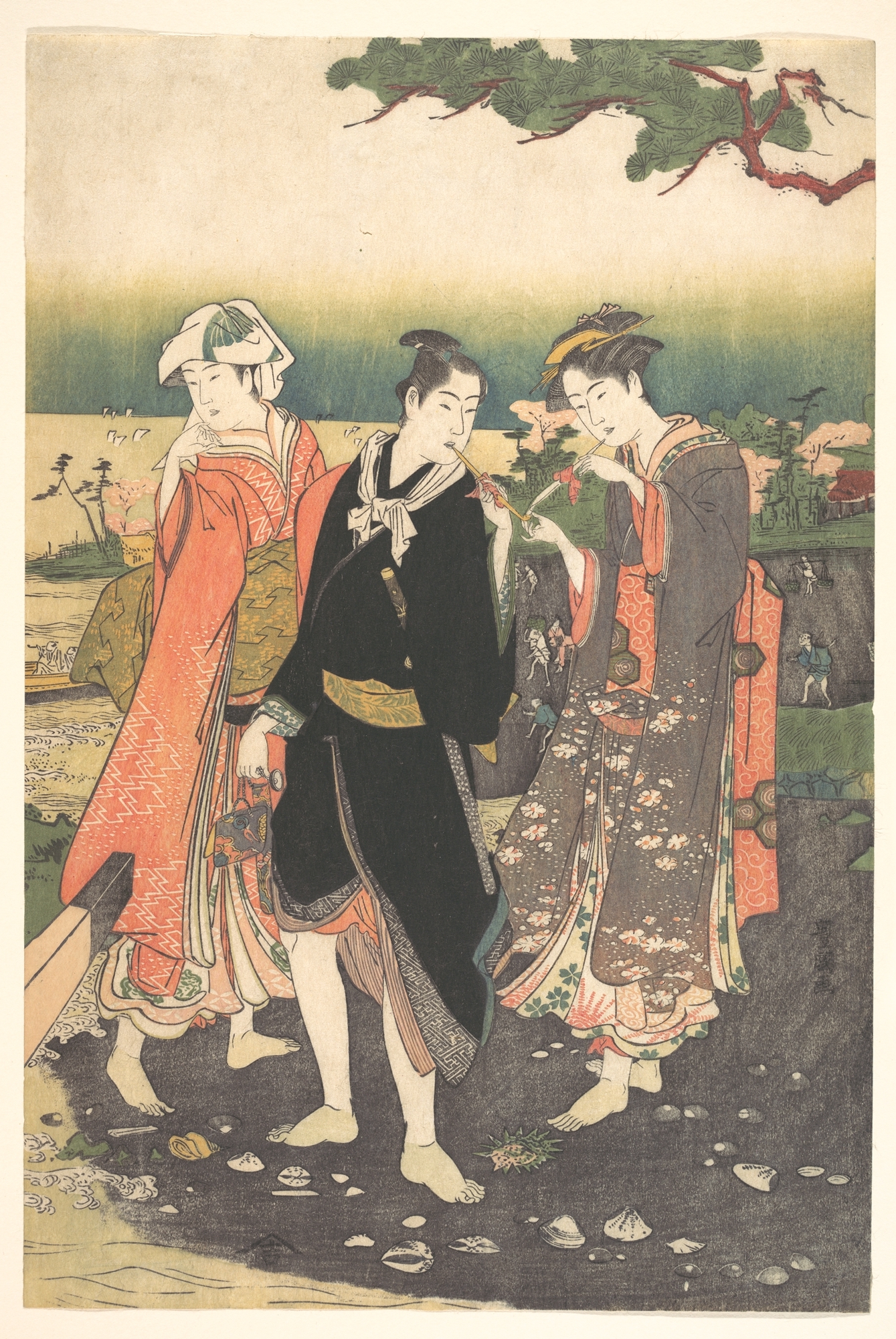
On Shinagawa Beach at Ebb-Tide
1769–1825
Woodblock print; ink and color on paper
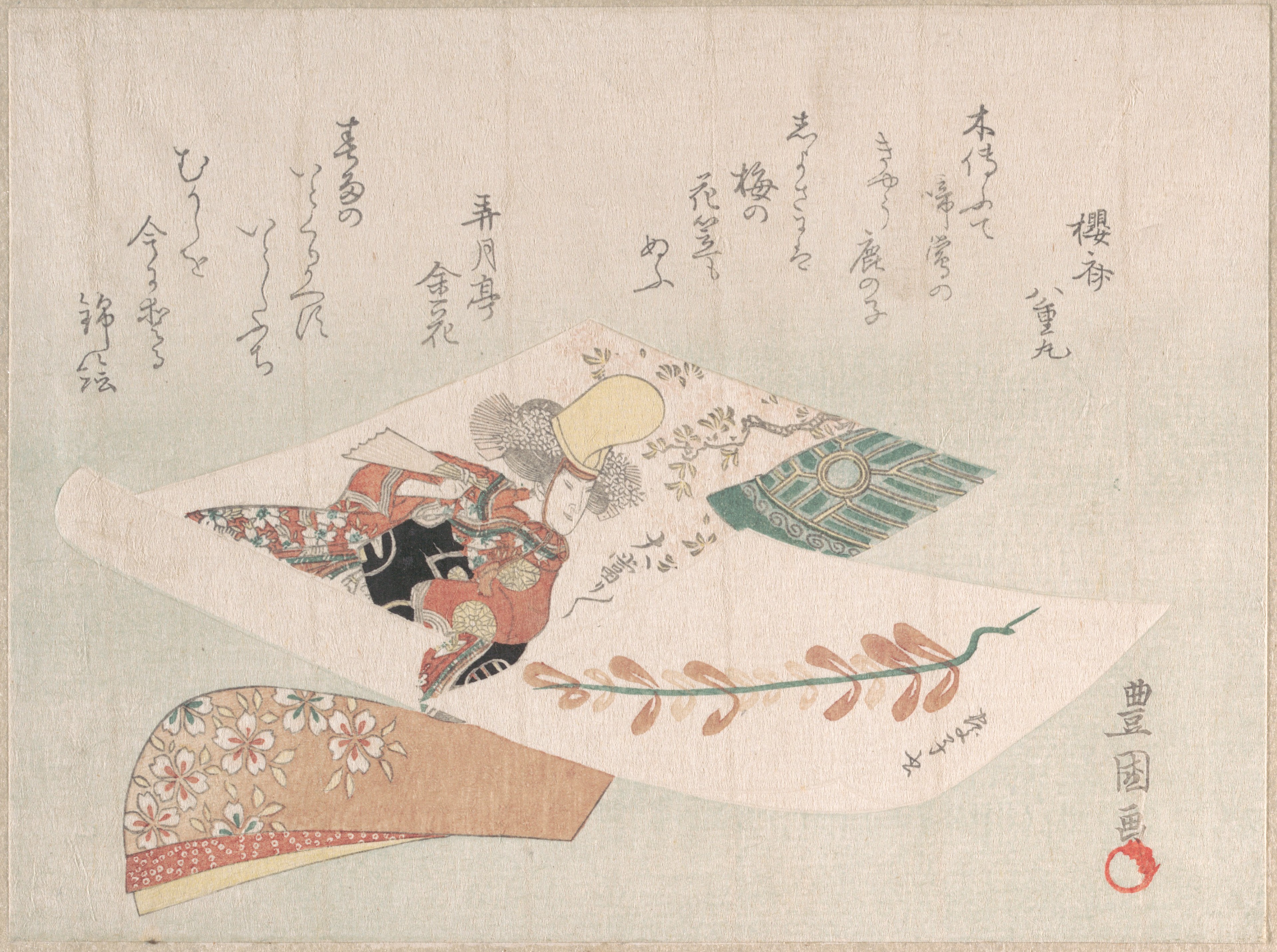
Representation of the Dance-Play "Dōjōji"
Woodblock print (surimono); ink and color on paper

The actors Sawamura Sojuro II as Satsuma Gengobei and Arashi Ryuzo II as Mawashi-otoko Yasuke in the play "Edo Sunago Kichirei Soga," performed at the Miyako Theater on the first month, 1795
c. 1795
Color woodblock print; oban
Frequently Asked Questions
Eight Modern Views of Famous Places in Tokyo of Great Japan (Dai Nippon Tokyo kaika meisho hakkei no zu) was created by Utagawa Toyokuni I (歌川豊国) in 1875.