
Evening Bell at Kamakura, View of the Mountains of Awa Province from Tsurugaoka (Kamakura bansho, Tsurugaoka yori Boshu yama no zu), from the series "Eight Views of Famous Places (Meisho hakkei)"
- Date:
- c. 1833/34
- Medium:
- Color woodblock print; oban
- Source:
- Art Institute of Chicago
Description
Evening Bell at Kamakura, View of the Mountains of Awa Province from Tsurugaoka (Kamakura bansho, Tsurugaoka yori Boshu yama no zu), from the series Eight Views of Famous Places (Meisho hakkei), is recorded by the Art Institute of Chicago with a date of 1828, placing it in the late phase of Utagawa Toyokuni's long career. The series adapts the Chinese Eight Views of Xiao and Xiang model, in which a set of evocative meteorological and seasonal motifs, such as evening bells, autumn moons, and clearing weather, are paired with specific locations. Here Toyokuni assigns the evening bell motif to Kamakura, looking out from the high ground at Tsurugaoka Hachimangu toward the distant mountains of Awa across the bay. The composition combines a panoramic landscape view with figures who animate the foreground, integrating bijin-style figures with the meisho scheme. As Edo ukiyo-e, the print belongs to a moment when landscape series were beginning to dominate the print market; Hokusai's and Hiroshige's great cycles were also taking shape in these years. Toyokuni's series demonstrates that even an artist whose career was defined by yakusha-e could turn fluently to the meisho hakkei tradition. The Art Institute of Chicago preserves the sheet as part of its Toyokuni holdings, where it complements the actor prints by showing his late-career engagement with landscape and famous-place imagery.
More Prints by Utagawa Toyokuni I

Segawa Kikunojō III as the Shop Boy Chōkichi
1796
Woodblock print (nishiki-e), ink and color on paper
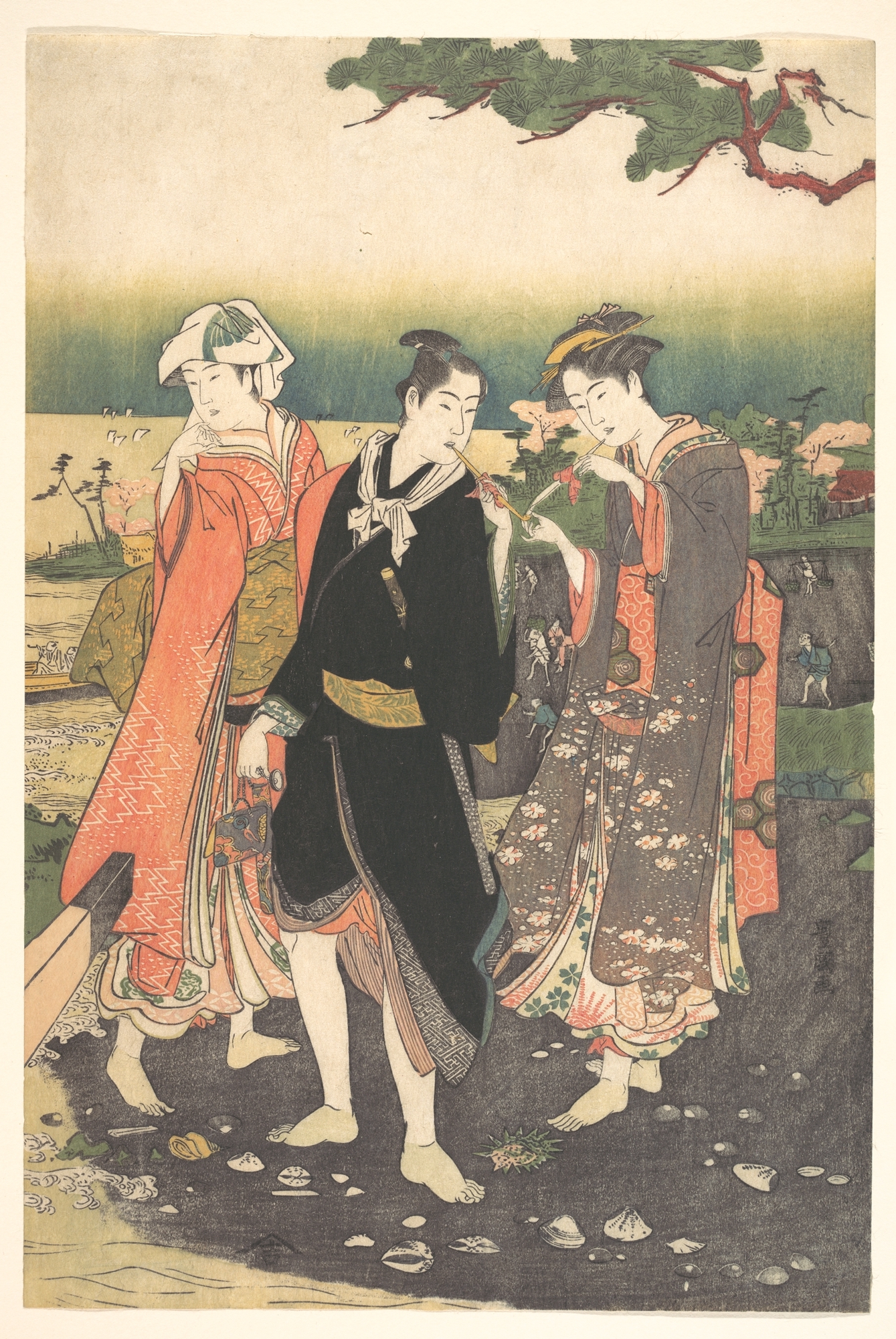
On Shinagawa Beach at Ebb-Tide
1769–1825
Woodblock print; ink and color on paper
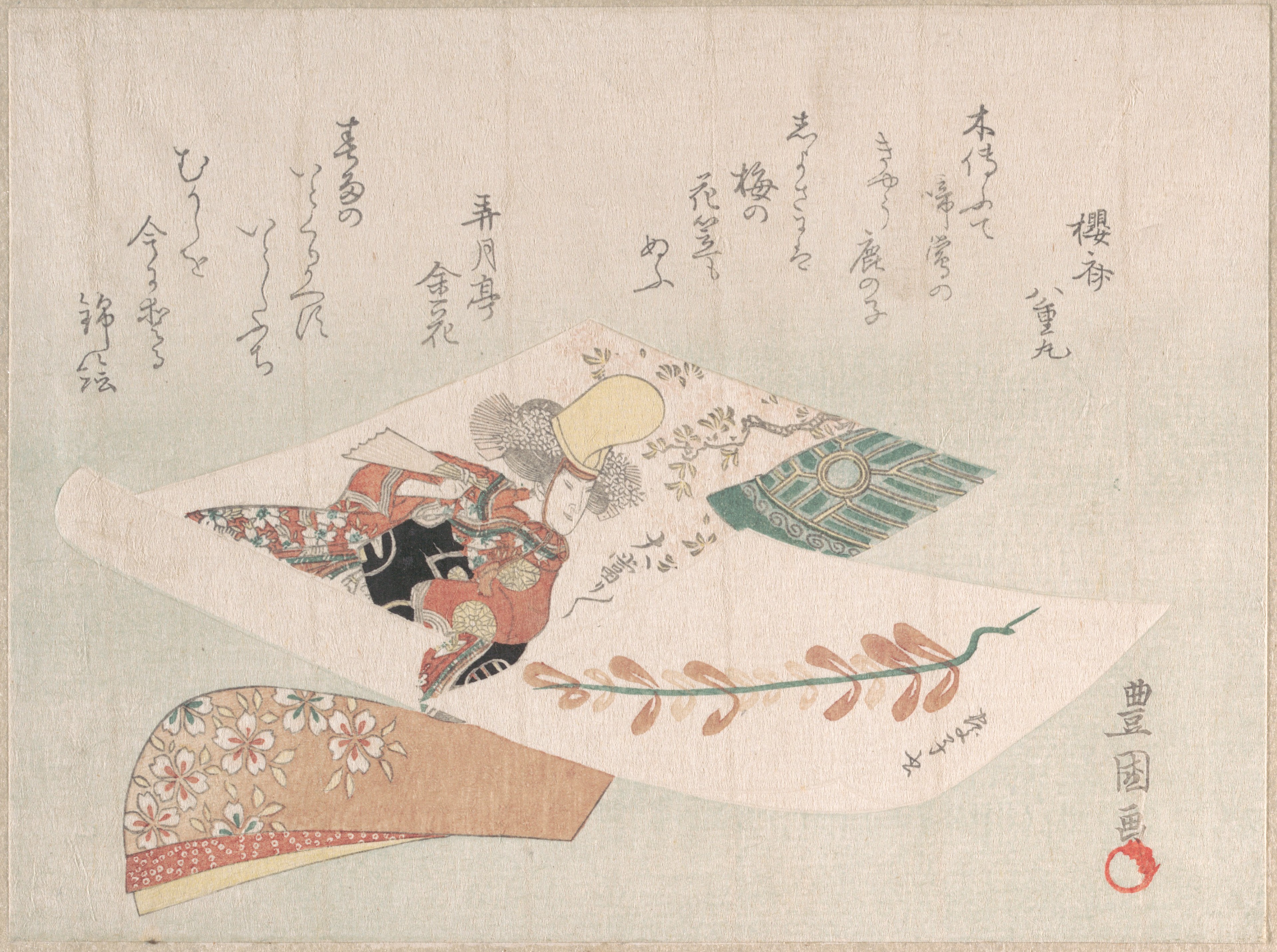
Representation of the Dance-Play "Dōjōji"
Woodblock print (surimono); ink and color on paper

The actors Sawamura Sojuro II as Satsuma Gengobei and Arashi Ryuzo II as Mawashi-otoko Yasuke in the play "Edo Sunago Kichirei Soga," performed at the Miyako Theater on the first month, 1795
c. 1795
Color woodblock print; oban
Frequently Asked Questions
Evening Bell at Kamakura, View of the Mountains of Awa Province from Tsurugaoka (Kamakura bansho, Tsurugaoka yori Boshu yama no zu), from the series "Eight Views of Famous Places (Meisho hakkei)" was created by Utagawa Toyokuni I (歌川豊国) in c. 1833/34.