
Evening Glow at Atami, True View of Oshima from Atami Harbor (Atami sekisho, Atamigahama yori Oshima no shinkei), from the series "Eight Views of Famous Places (Meisho hakkei)"
- Date:
- c. 1833/34
- Medium:
- Color woodblock print; oban
- Source:
- Art Institute of Chicago
Description
Evening Glow at Atami, True View of Oshima from Atami Harbor (Atami sekisho, Atamigahama yori Oshima no shinkei), from the series Eight Views of Famous Places (Meisho hakkei), dated 1828 in Art Institute of Chicago records, is another late landscape from Utagawa Toyokuni's cycle of Japanese meisho hakkei. The sekisho, or evening glow, motif is matched here with Atami, the hot-spring town on the Izu coast, with a view across the bay to the volcanic island of Oshima. The phrase shinkei, true view, is significant: it signals an emerging late Edo interest in topographically faithful representations of specific sites, even within a scheme that owes its overall structure to a classical Chinese model. As Edo ukiyo-e, the print engages with the rapidly expanding tourism economy of the Izu region, where bathing, sea views, and famous-place experience were intertwined for travelers from the capital. Toyokuni was most celebrated for yakusha-e, yet in his late series like this one he engaged seriously with the demands of landscape design, balancing atmospheric effect, recognizable geography, and figural interest. The Art Institute of Chicago preserves the sheet within its Toyokuni holdings as part of the broader story of how the Utagawa school turned to meisho-e as one of the great commercial formats of the nineteenth century, and as a document of the visual culture that grew up around Atami and Oshima in particular.
More Prints by Utagawa Toyokuni I

Segawa Kikunojō III as the Shop Boy Chōkichi
1796
Woodblock print (nishiki-e), ink and color on paper
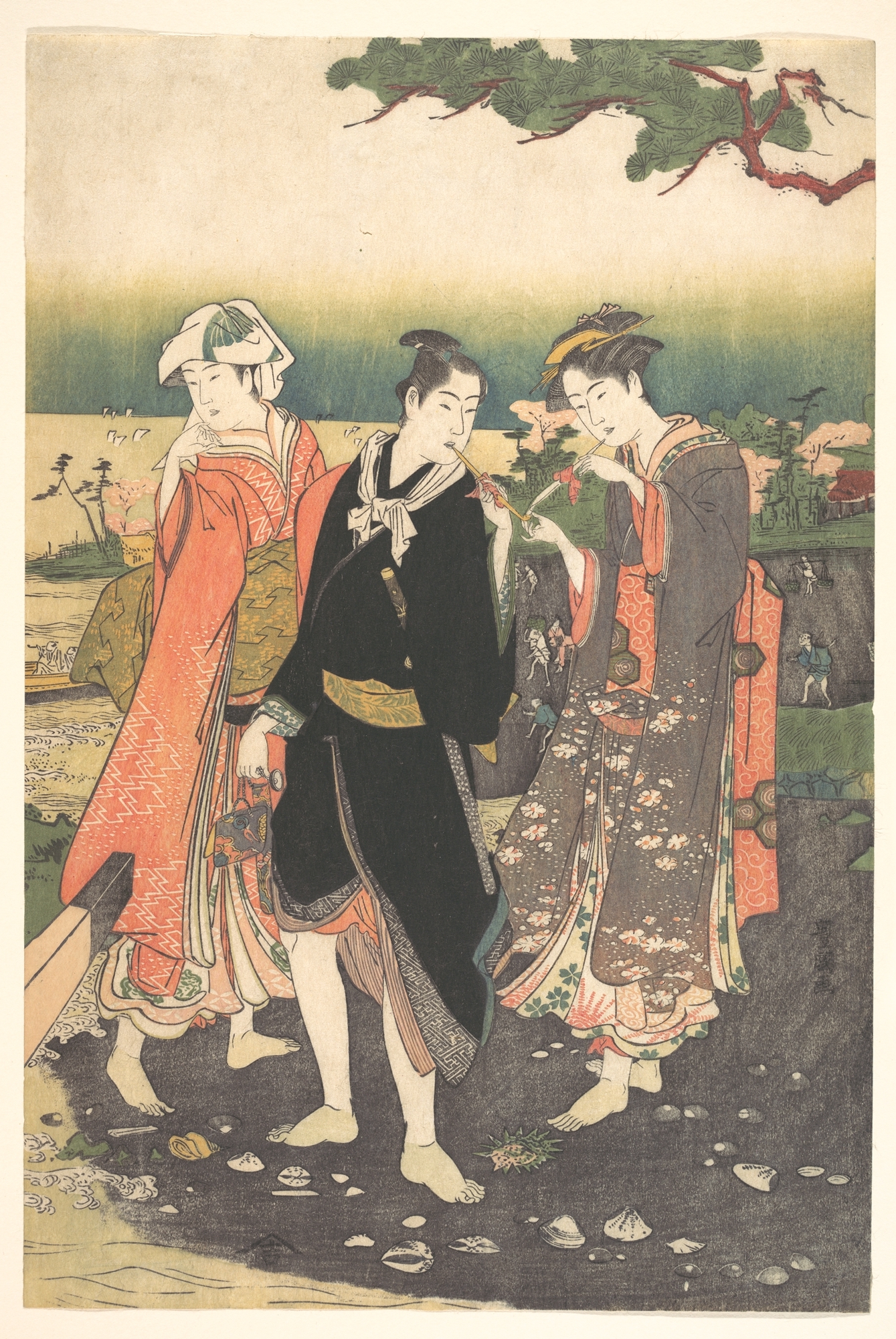
On Shinagawa Beach at Ebb-Tide
1769–1825
Woodblock print; ink and color on paper
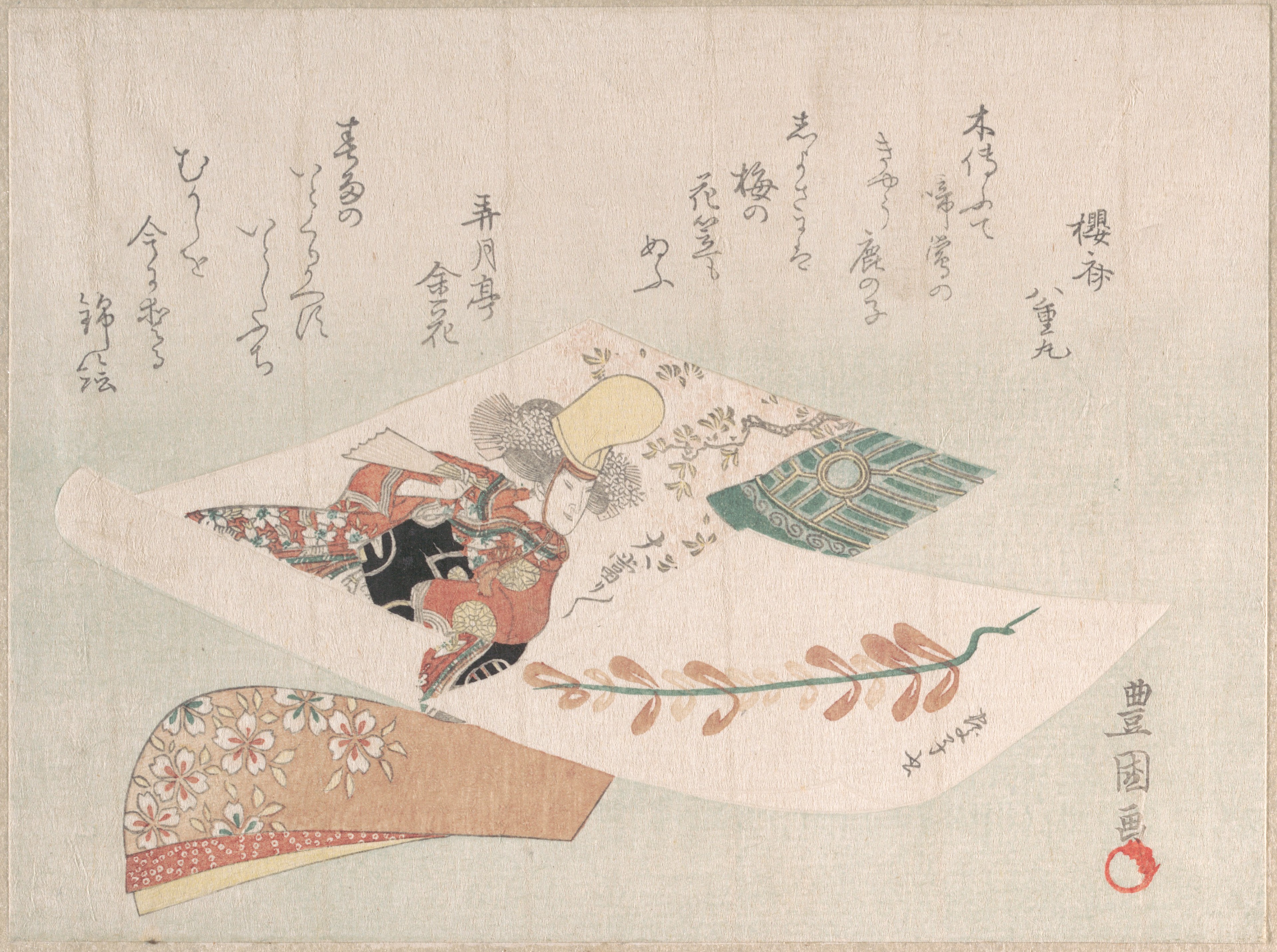
Representation of the Dance-Play "Dōjōji"
Woodblock print (surimono); ink and color on paper

The actors Sawamura Sojuro II as Satsuma Gengobei and Arashi Ryuzo II as Mawashi-otoko Yasuke in the play "Edo Sunago Kichirei Soga," performed at the Miyako Theater on the first month, 1795
c. 1795
Color woodblock print; oban
Frequently Asked Questions
Evening Glow at Atami, True View of Oshima from Atami Harbor (Atami sekisho, Atamigahama yori Oshima no shinkei), from the series "Eight Views of Famous Places (Meisho hakkei)" was created by Utagawa Toyokuni I (歌川豊国) in c. 1833/34.