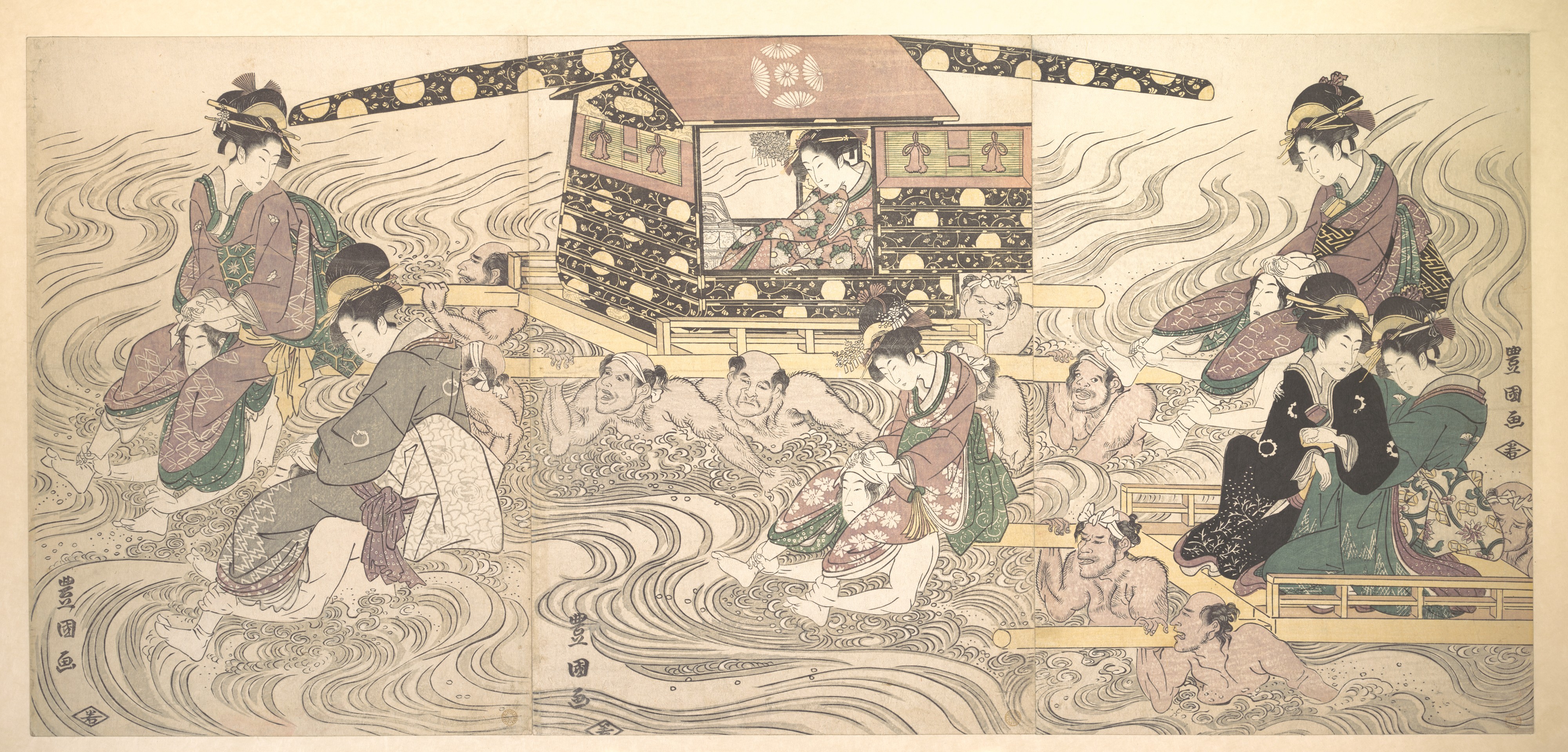
Fair Travellers Fording the River Oi
- Date:
- ca. 1800
- Medium:
- Triptych of woodblock prints; ink and color on paper
- Source:
- Metropolitan Museum of Art
Description
Utagawa Toyokuni I's "Fair Travellers Fording the River Oi" takes one of the Tōkaidō's most notorious obstacles — the unbridged Ōi River near Shimada — and reimagines its crossing through a procession of fashionable women. The Ōi was famous for its swift current and for the rules that forbade bridges or ferries, forcing travelers onto the shoulders of professional river-porters. Toyokuni's group of bijin, lifted clear of the water on porters and chairs, makes a visual joke of an arduous reality, presenting the Tōkaidō not as a hard road but as a stage for fashion and grouping. The Metropolitan Museum of Art holds the print as a strong example of how Edo ukiyo-e moved between theatrical and travel imagery; Utagawa Toyokuni's command of figural arrangement, sharpened on years of kabuki actor prints, translates effortlessly into a procession across a riverbed. The mitate spirit is everywhere: the porters in real life would have been weather-beaten laborers; here they are lean and graceful, their attention politely averted from their cargo. As the founding figure of the Utagawa lineage of yakusha-e, Toyokuni helped legitimize this kind of crossover composition, in which themes from travel literature, kabuki, and the licensed quarters all converged. The Met's holding allows close study of his draftsmanship — the way water is suggested with rhythmic curves, and the way the eye is led from porter to traveler across the print's full width. For collectors of Edo ukiyo-e, the sheet is a particularly elegant example of late-eighteenth-century mitate.
More Prints by Utagawa Toyokuni I

Kabuki Actor Iwai Kumesaburo with abacus

Segawa Kikunojō III as the Shop Boy Chōkichi
1796
Woodblock print (nishiki-e), ink and color on paper
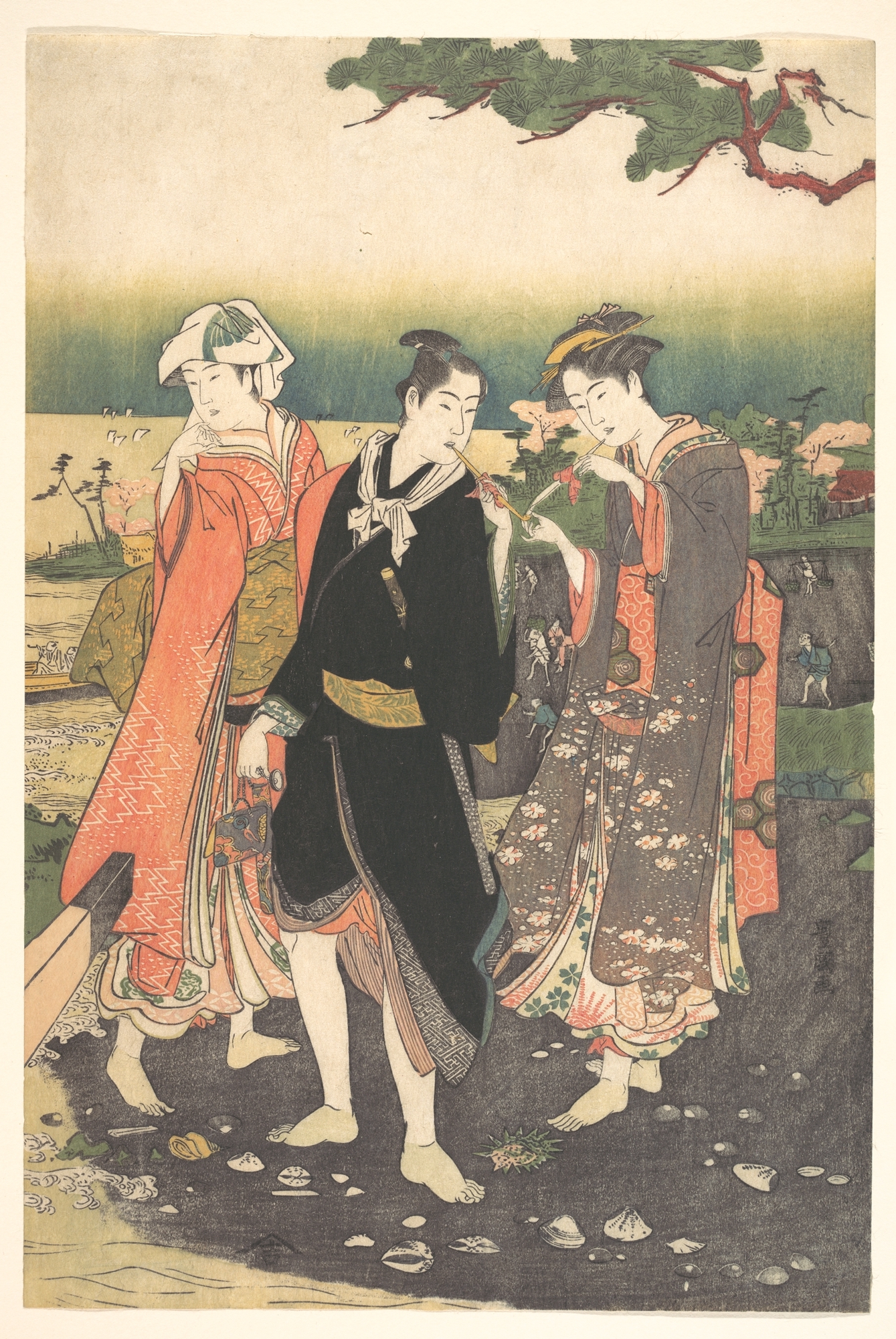
On Shinagawa Beach at Ebb-Tide
1769–1825
Woodblock print; ink and color on paper
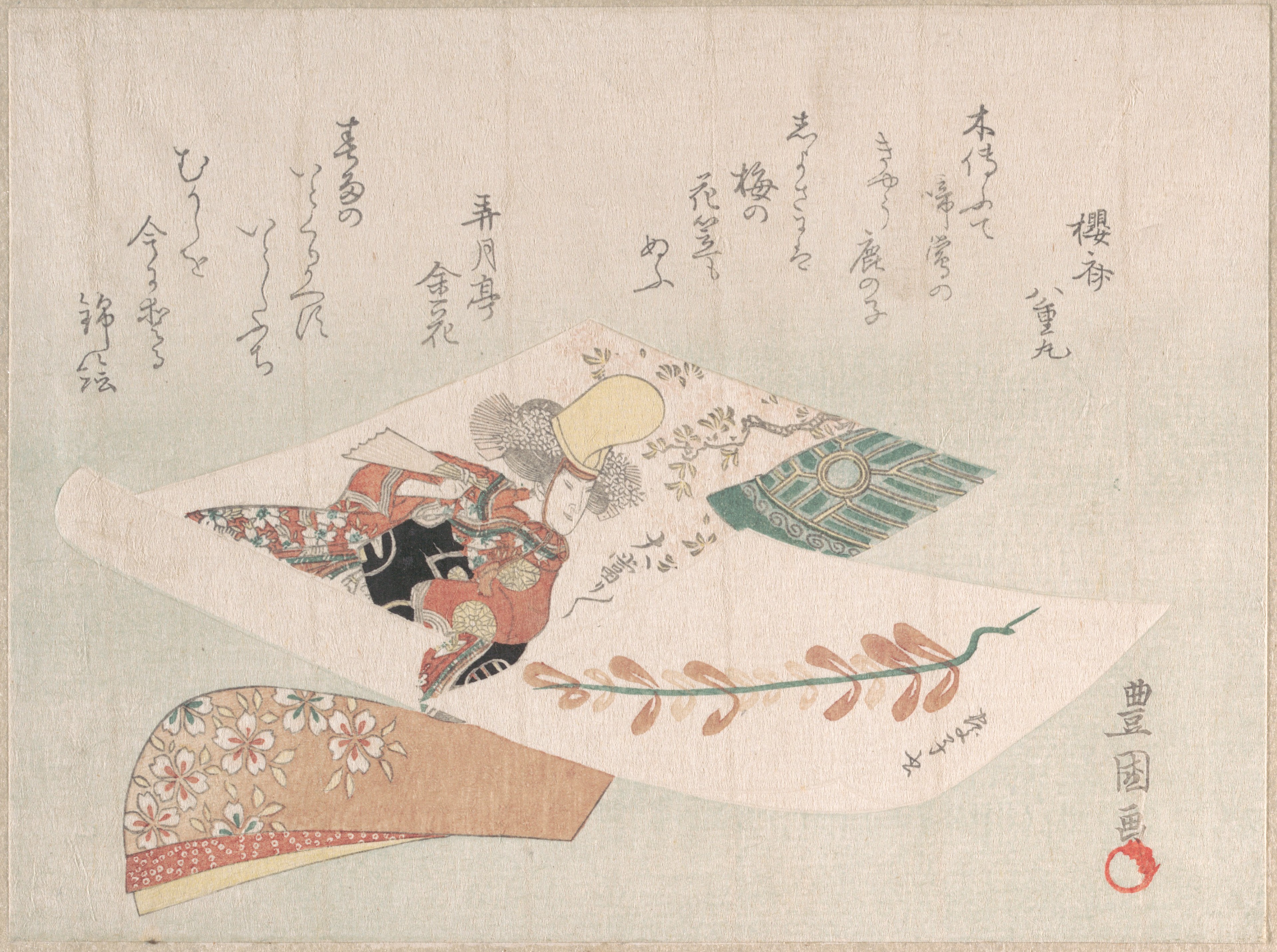
Representation of the Dance-Play "Dōjōji"
Woodblock print (surimono); ink and color on paper
Frequently Asked Questions
Fair Travellers Fording the River Oi was created by Utagawa Toyokuni I (歌川豊国) in ca. 1800.