
Flourishing of Edo Pictures Depicting Dances (Odori keiyo Edo-e no sakae)
- Date:
- 1858
- Medium:
- Color woodblock print; part of triptych
- Source:
- Art Institute of Chicago
Description
Flourishing of Edo Pictures Depicting Dances (Odori keiyo Edo-e no sakae), dated 1858, is a multi-sheet kabuki composition by Utagawa Toyokuni in the Art Institute of Chicago. The title celebrates the abundance of Edo dance pictures, presenting the print itself as an emblem of the city's rich theatrical culture and the unbroken vitality of yakusha-e as a genre. Such large-scale, multi-actor compositions had become a specialty of the Utagawa school by the late 1850s, packing recognizable likenesses of contemporary actors into elaborately staged group scenes that signaled the breadth of the kabuki repertoire and the depth of the publisher's roster. Toyokuni's signature in 1858 belongs to the lineage that carried the founding master's name through successive generations of the studio, sustaining the Utagawa-school brand as the dominant force in Edo ukiyo-e print production. The Tempo Reforms of the early 1840s, which had once forced designers to disguise actor identity, had long given way to renewed openness, and prints like this one once again labeled their performers in full. The Art Institute of Chicago preserves the design with the romanized title and English translation intact, allowing the work to be situated within the late-Edo culmination of the yakusha-e tradition. The composition stands as a self-conscious celebration of the print form just as Western photography was beginning to alter Japan's visual culture.
More Prints by Utagawa Toyokuni I

Segawa Kikunojō III as the Shop Boy Chōkichi
1796
Woodblock print (nishiki-e), ink and color on paper
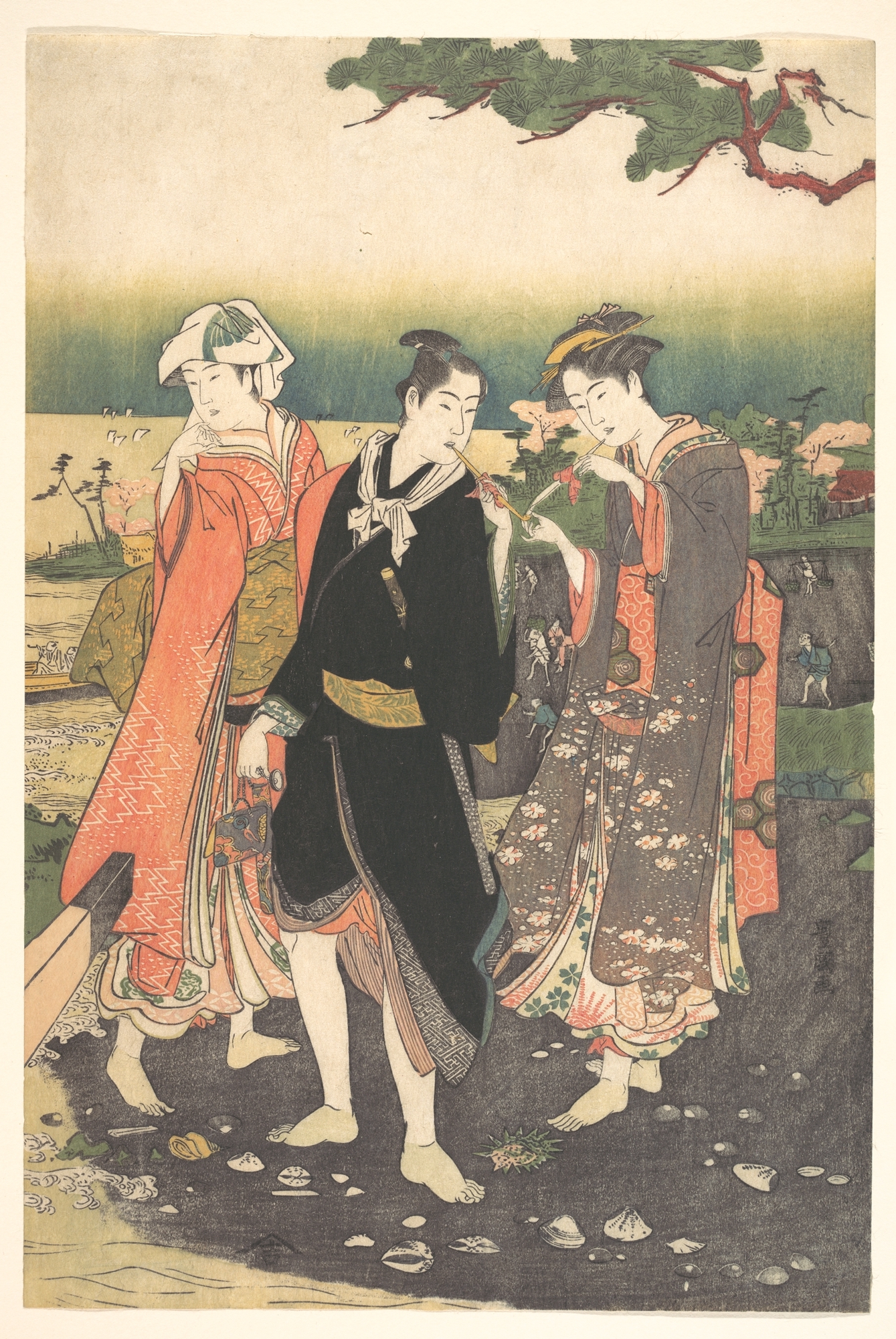
On Shinagawa Beach at Ebb-Tide
1769–1825
Woodblock print; ink and color on paper
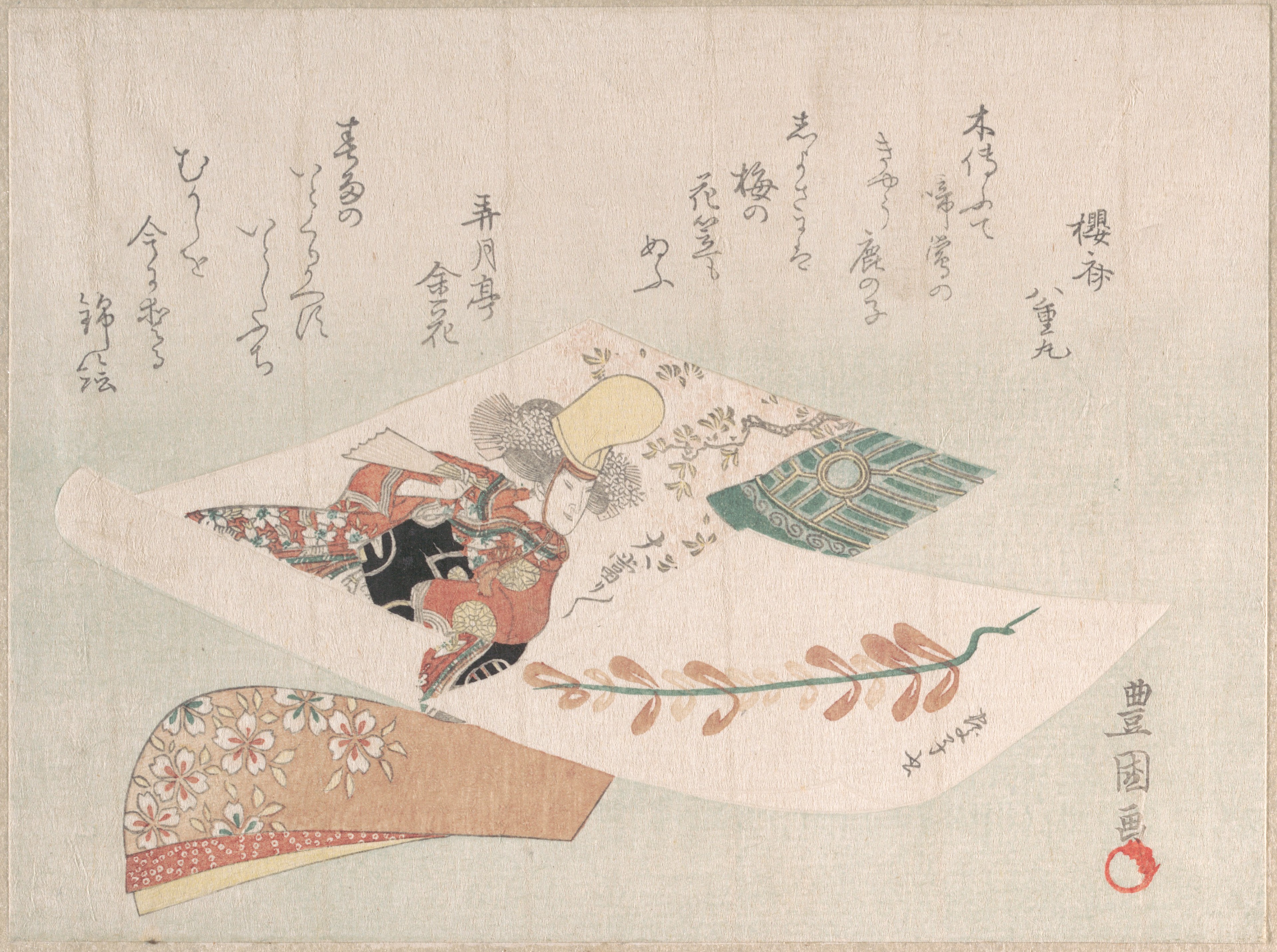
Representation of the Dance-Play "Dōjōji"
Woodblock print (surimono); ink and color on paper

The actors Sawamura Sojuro II as Satsuma Gengobei and Arashi Ryuzo II as Mawashi-otoko Yasuke in the play "Edo Sunago Kichirei Soga," performed at the Miyako Theater on the first month, 1795
c. 1795
Color woodblock print; oban
Frequently Asked Questions
Flourishing of Edo Pictures Depicting Dances (Odori keiyo Edo-e no sakae) was created by Utagawa Toyokuni I (歌川豊国) in 1858.