
Hand-mirrors of actors (Yakusha awase kagami)
- Date:
- 1804
- Medium:
- Woodblock printed books, 2 volumes
- Source:
- Art Institute of Chicago
Description
Hand-mirrors of Actors (Yakusha awase kagami) is a witty Edo ukiyo-e conceit by Utagawa Toyokuni I, in which the artist arranges actor portraits within mirror-shaped fields. The framing device plays on the dual associations of the mirror as a tool of self-examination and as a metaphor for fame: just as a celebrated kabuki actor's image is reflected back to the audience night after night, the woodblock print becomes a permanent mirror that returns that image whenever a collector chooses to look. As one of the foremost designers of yakusha-e in Edo, Toyokuni I uses this composition to compress multiple celebrities into a single sheet, encouraging viewers to compare faces, postures, and signature roles within a unified visual field. The Art Institute of Chicago preserves this impression, whose disciplined keylines, balanced color blocks, and confidently rendered facial portraits reflect the high production values demanded by Edo woodblock publishers. Such formally inventive sheets demonstrate how Utagawa Toyokuni continually experimented with framing devices to refresh the yakusha-e genre and keep its audience engaged amid intense market competition. They also model the conceptual play that the larger Utagawa school would inherit, in which actor portraits could be combined with shells, fans, scrolls, or other shaped fields. As a result, Hand-mirrors of Actors stands not only as a celebration of kabuki celebrity but as a small essay in how Edo ukiyo-e thinks about likeness, reflection, and the printed image.
More Prints by Utagawa Toyokuni I

Segawa Kikunojō III as the Shop Boy Chōkichi
1796
Woodblock print (nishiki-e), ink and color on paper
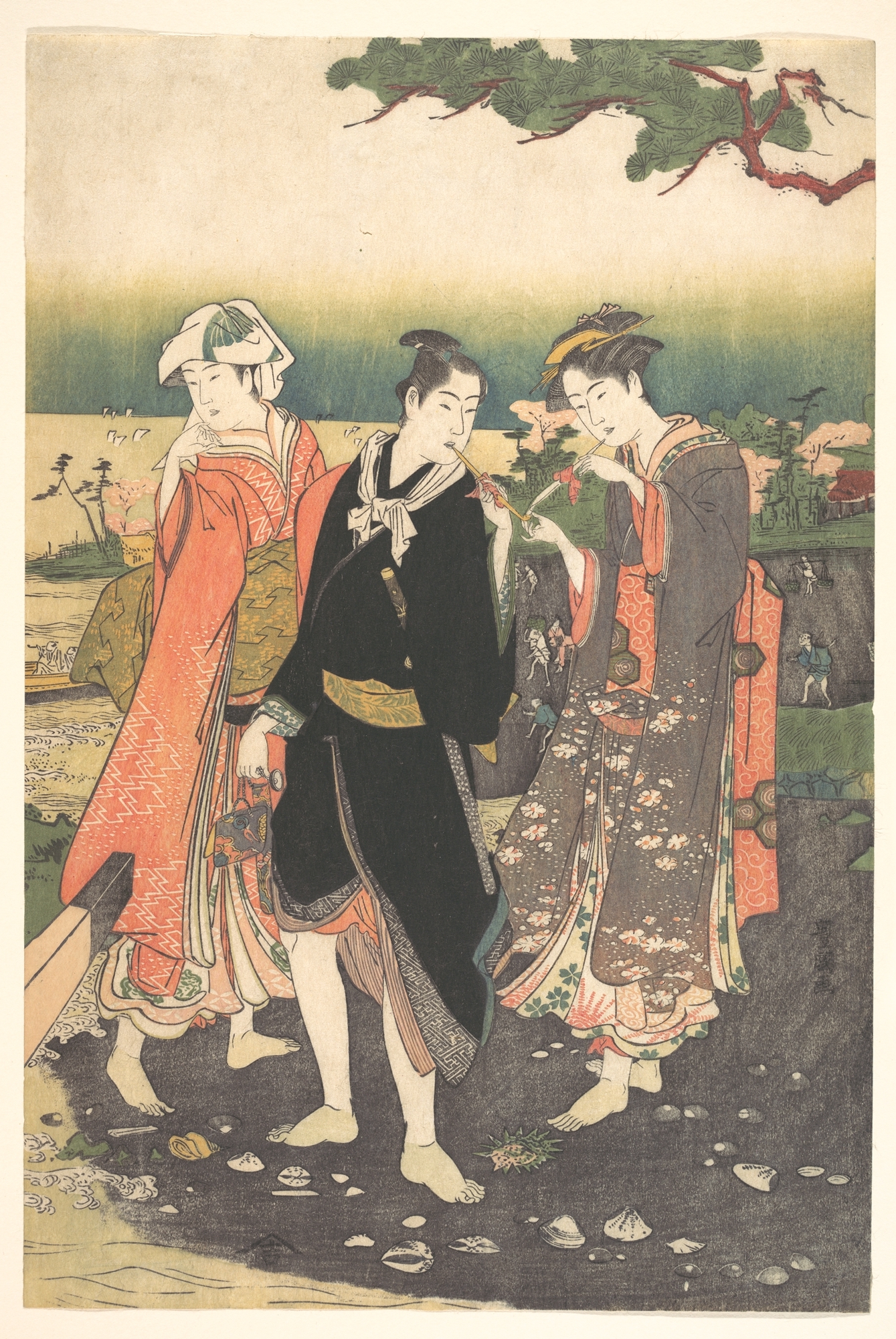
On Shinagawa Beach at Ebb-Tide
1769–1825
Woodblock print; ink and color on paper
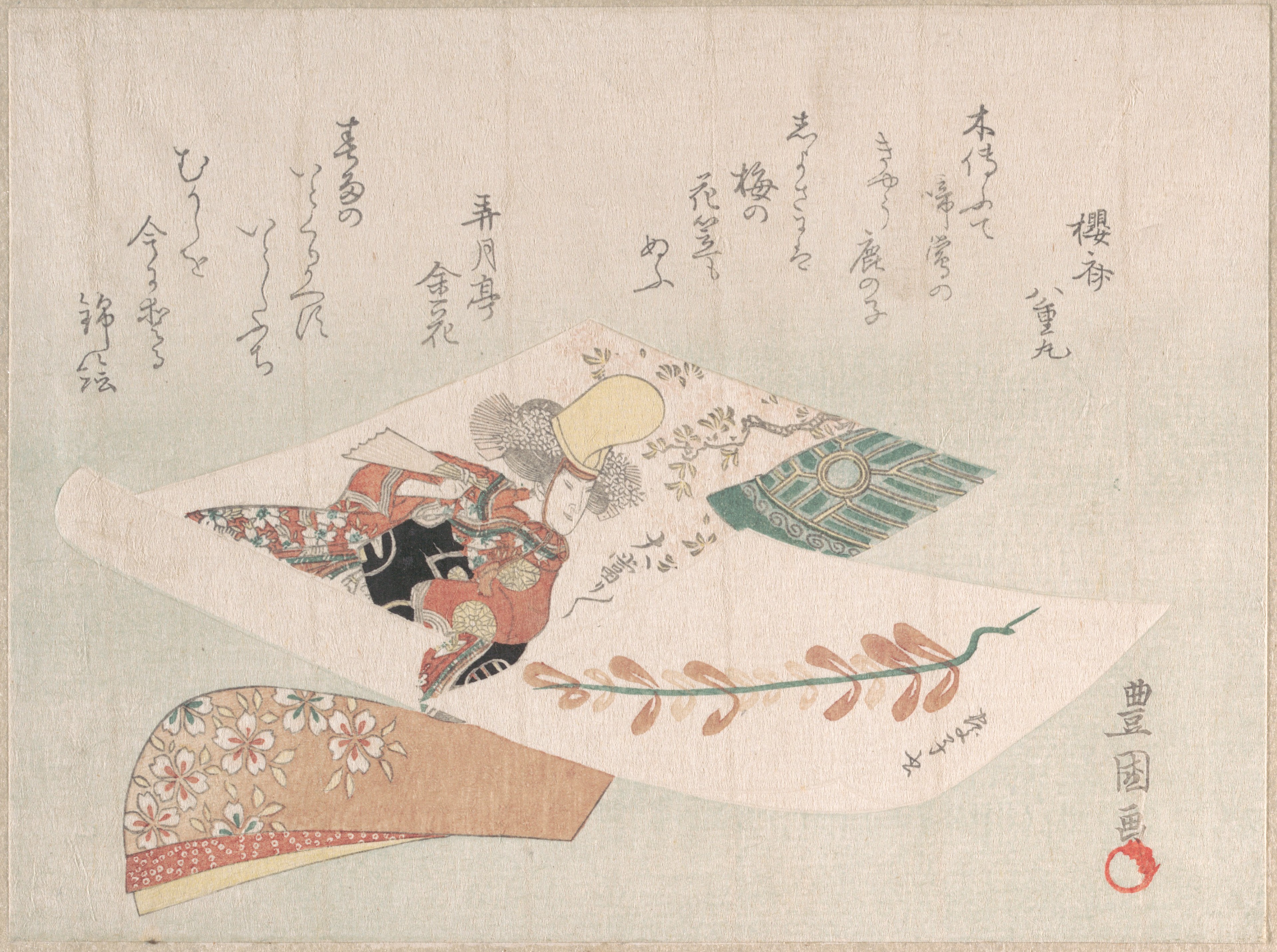
Representation of the Dance-Play "Dōjōji"
Woodblock print (surimono); ink and color on paper

The actors Sawamura Sojuro II as Satsuma Gengobei and Arashi Ryuzo II as Mawashi-otoko Yasuke in the play "Edo Sunago Kichirei Soga," performed at the Miyako Theater on the first month, 1795
c. 1795
Color woodblock print; oban
Frequently Asked Questions
Hand-mirrors of actors (Yakusha awase kagami) was created by Utagawa Toyokuni I (歌川豊国) in 1804.