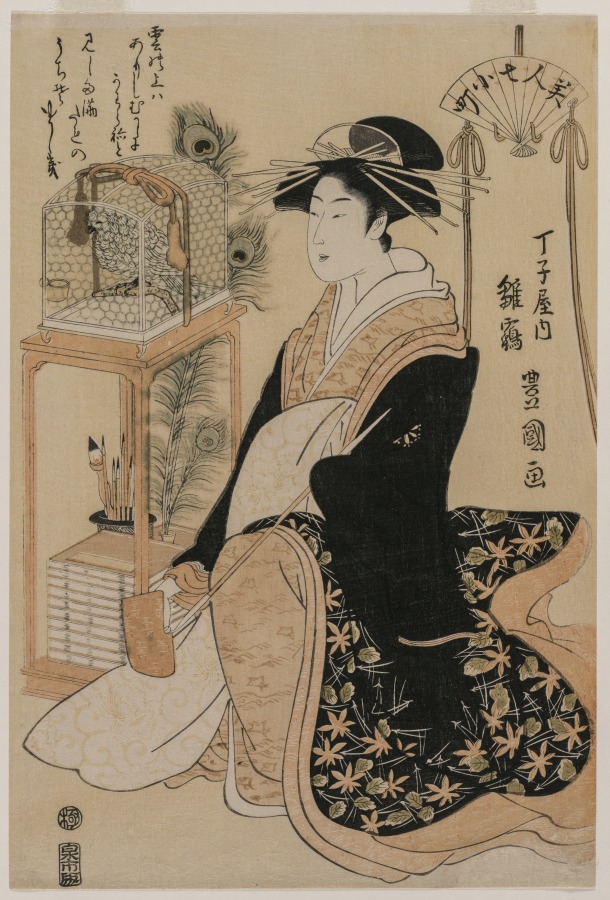
Hinazura of Chōjiya from the series Beauties as the Seven Komachi
- Date:
- c. 1793–97
- Medium:
- Color woodblock print; ink and color on paper
- Source:
- Cleveland Museum of Art
Description
Hinazura of Chōjiya from the series Beauties as the Seven Komachi is a bijin-ga design by Utagawa Toyokuni in the Cleveland Museum of Art. The Seven Komachi cycle drew on the legendary biography of the ninth-century poet Ono no Komachi, whose life provided a sequence of dramatic episodes that became popular subjects in Noh, Kabuki, and ukiyo-e alike. By the late eighteenth century, Edo ukiyo-e designers had developed the mitate convention, in which contemporary figures—most often celebrated beauties of the Yoshiwara—were aligned with these classical archetypes. Toyokuni's print features Hinazura of the Chōjiya, one of the major Yoshiwara houses, casting the courtesan in the symbolic role of one of the Seven Komachi episodes. The translation transforms the classical narrative into a fashionable present, allowing patrons of the pleasure quarter to see their familiar world refracted through the prestige of high poetry. Toyokuni's handling of patterned robes and slender, elegant posture is characteristic of his bijin-ga style of the 1790s, when his command of the female figure rivaled his standing as a designer of yakusha-e. The Cleveland Museum of Art assigns the print the date 1793, used here from the museum record. The sheet is a useful witness to how Edo ukiyo-e printmakers turned the visual conventions of court literature into vehicles for celebrity, commerce, and the layered, allusive humor of the floating world.
More Prints by Utagawa Toyokuni I

Segawa Kikunojō III as the Shop Boy Chōkichi
1796
Woodblock print (nishiki-e), ink and color on paper
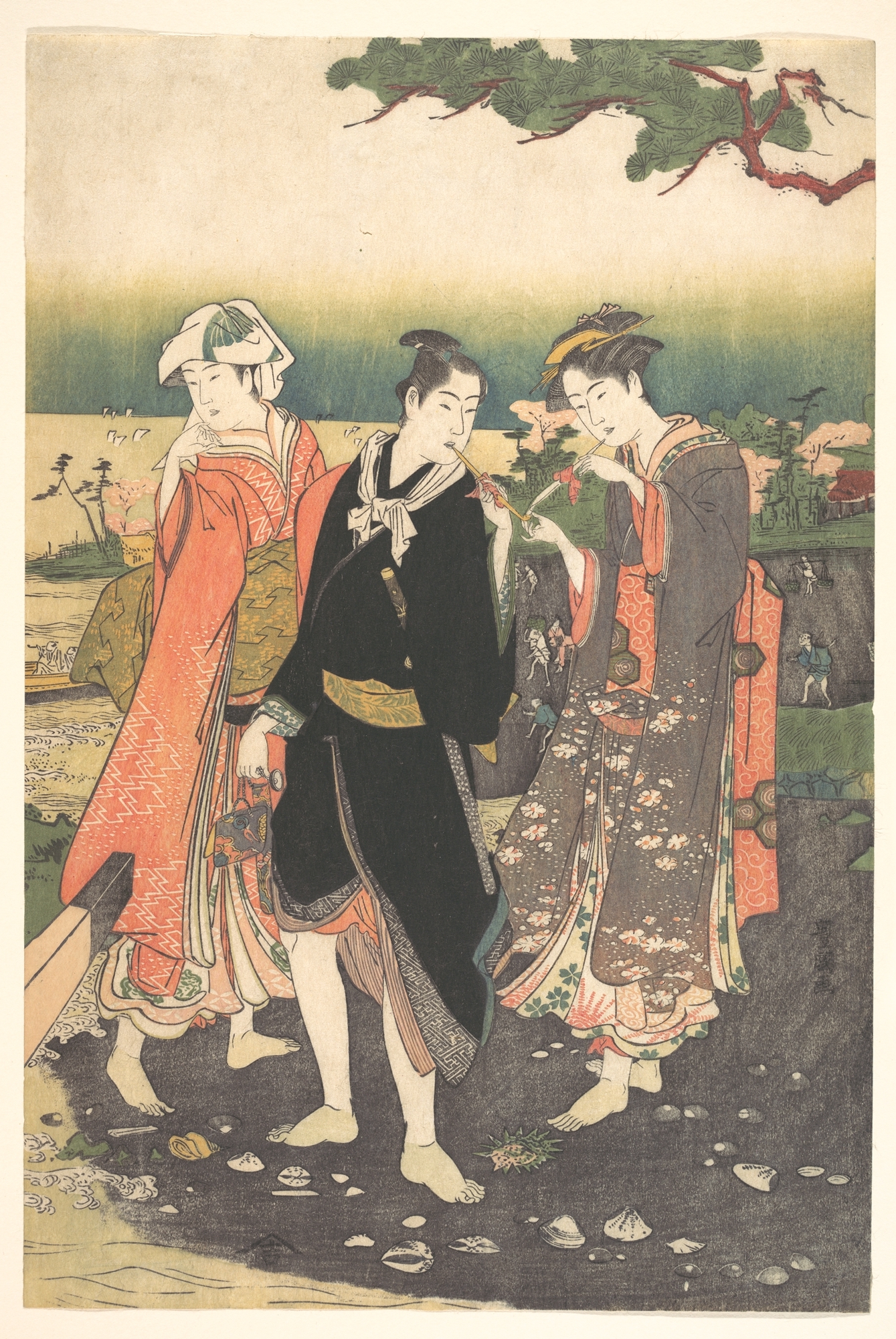
On Shinagawa Beach at Ebb-Tide
1769–1825
Woodblock print; ink and color on paper
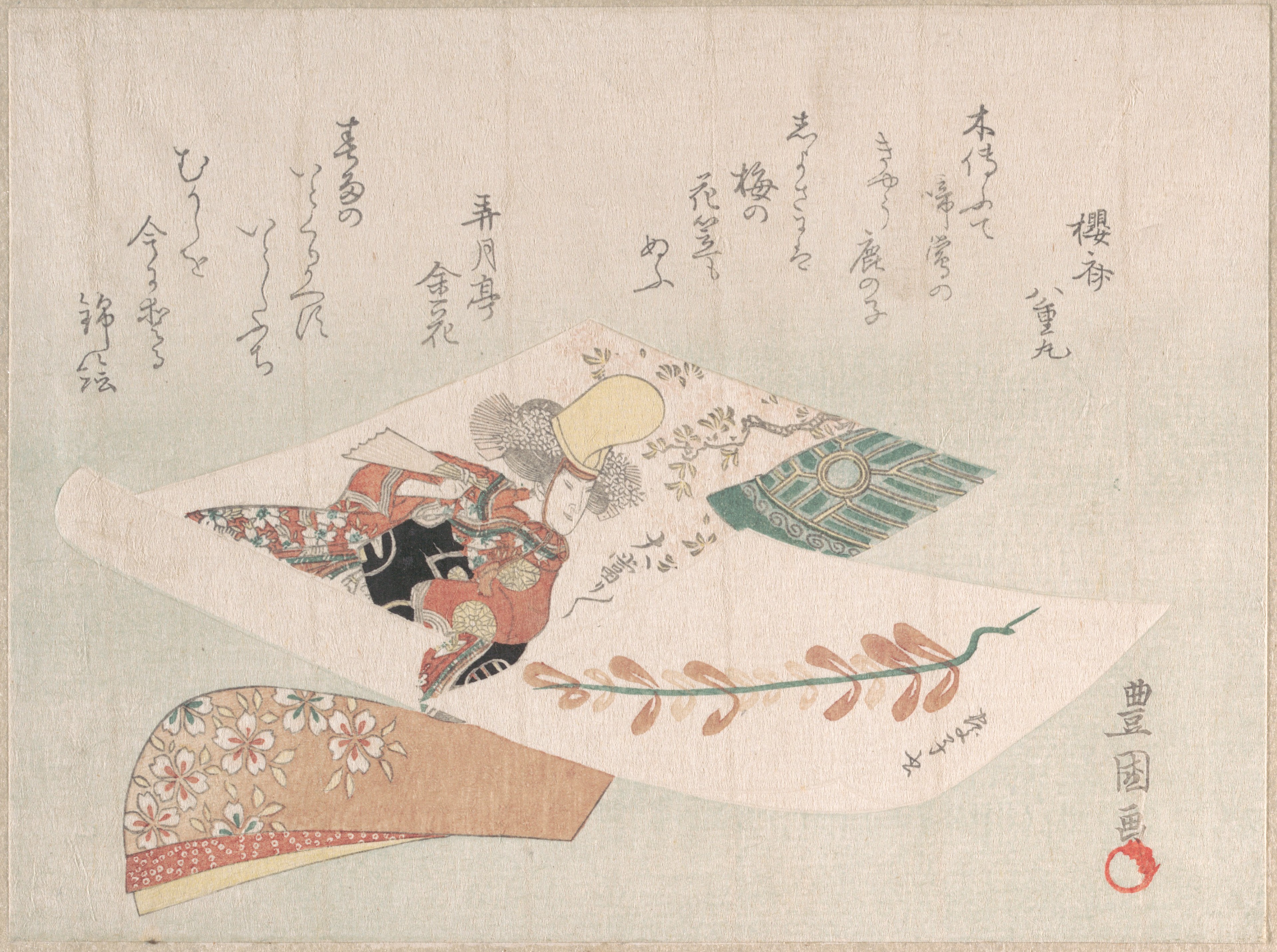
Representation of the Dance-Play "Dōjōji"
Woodblock print (surimono); ink and color on paper

The actors Sawamura Sojuro II as Satsuma Gengobei and Arashi Ryuzo II as Mawashi-otoko Yasuke in the play "Edo Sunago Kichirei Soga," performed at the Miyako Theater on the first month, 1795
c. 1795
Color woodblock print; oban
Frequently Asked Questions
Hinazura of Chōjiya from the series Beauties as the Seven Komachi was created by Utagawa Toyokuni I (歌川豊国) in c. 1793–97.