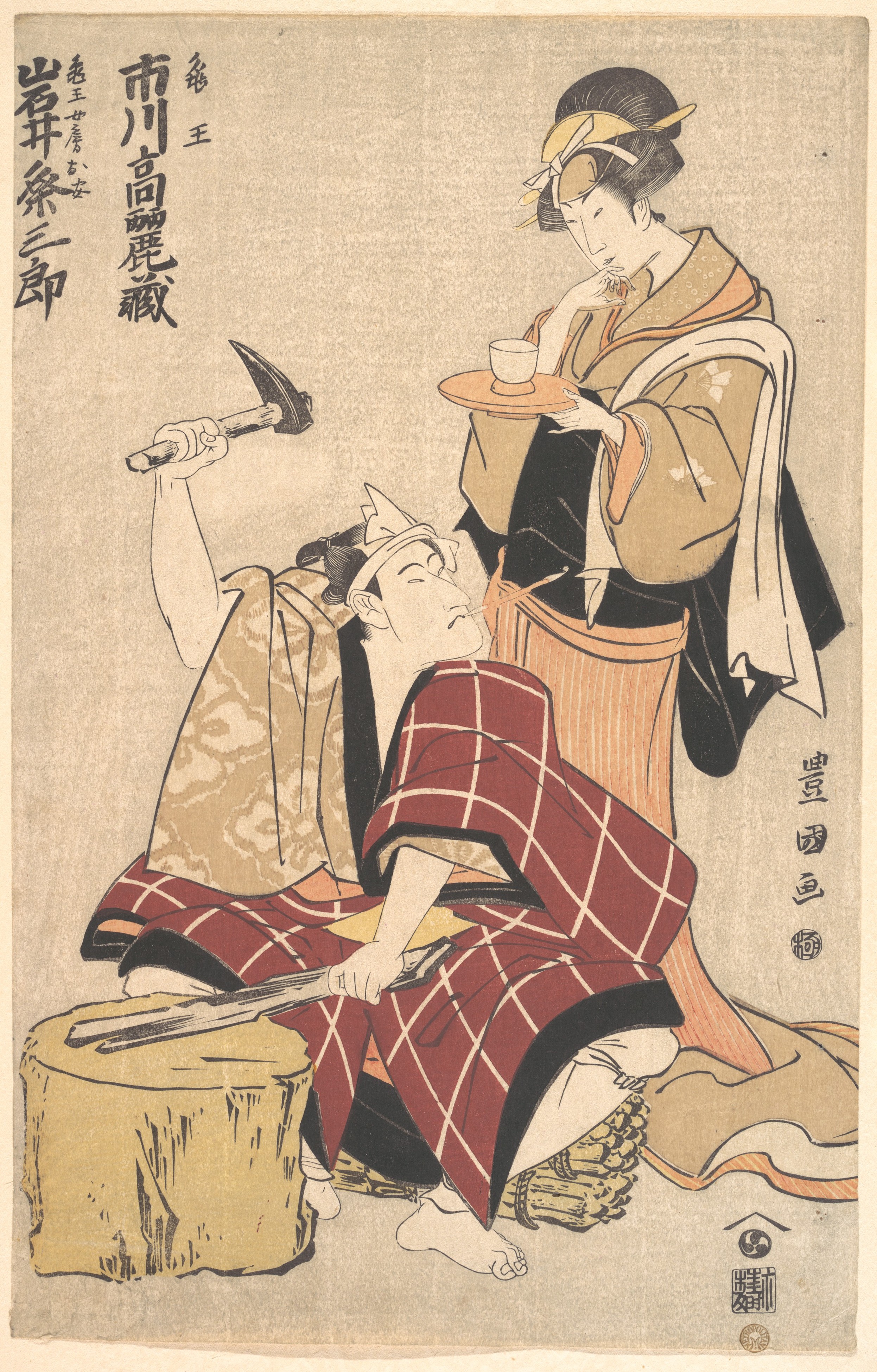
Ichikawa Komazō III in the Role of Kameō with Iwai Kumesaburō in the Role of Kameō's Wife, Oyasu, from the Play Shunkan futatsu omokage
- Date:
- 1798–99
- Medium:
- Woodblock print; ink and color on paper
- Source:
- Metropolitan Museum of Art
Description
Dated 1798 and held by the Metropolitan Museum of Art, this Utagawa Toyokuni print depicts a paired portrait of Ichikawa Komazo III in the role of Kameo with Iwai Kumesaburo as Kameo's wife Oyasu, drawn from the kabuki play "Shunkan futatsu omokage." The composition is a classic example of mature yakusha-e from the late 1790s, the period during which Toyokuni's reputation as the leading actor-portraitist of the Utagawa school was definitively consolidated. The Ichikawa and Iwai acting families occupied prestigious positions within the Edo kabuki hierarchy, and pairing their representatives in a single sheet was a powerful commercial proposition, drawing audiences from each fan base while documenting the on-stage chemistry of a specific production. Toyokuni renders both actors with the individualized facial features and stage-derived poses that yakusha-e collectors prized. The contrasting costume patterns and color palettes amplify the gender and emotional registers of the two roles while sustaining the visual coherence of the paired composition. The play "Shunkan futatsu omokage" reworked the classic Shunkan exile narrative through doubled ("futatsu omokage") characters, supporting the kind of layered identity play that kabuki dramaturgy excelled at and that yakusha-e was particularly well-suited to record. As a precisely dated late-Heisei work, the print is a key reference for Utagawa Toyokuni's mature workshop style and is an essential document for any study of late-eighteenth-century Edo ukiyo-e.
More Prints by Utagawa Toyokuni I

Segawa Kikunojō III as the Shop Boy Chōkichi
1796
Woodblock print (nishiki-e), ink and color on paper
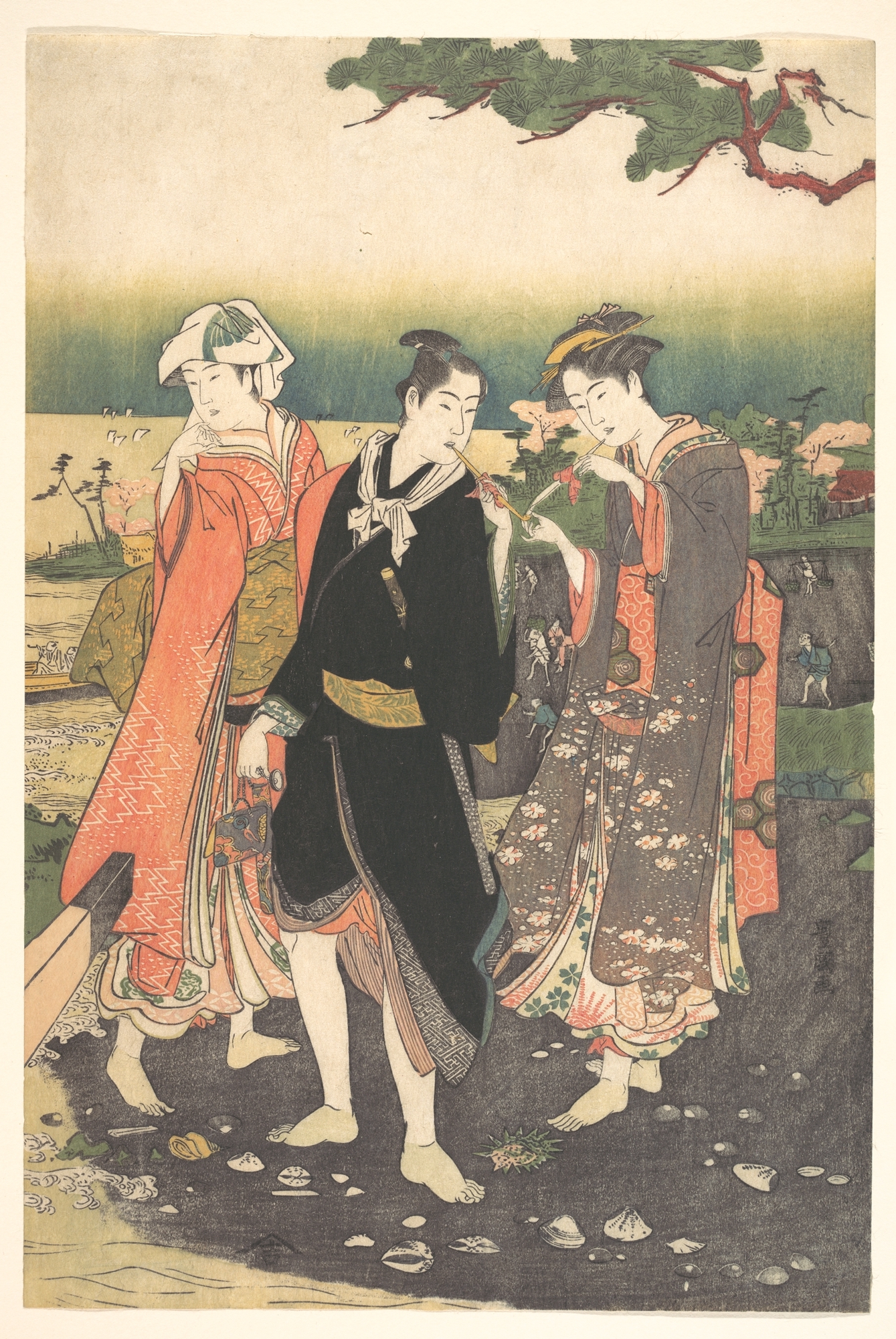
On Shinagawa Beach at Ebb-Tide
1769–1825
Woodblock print; ink and color on paper
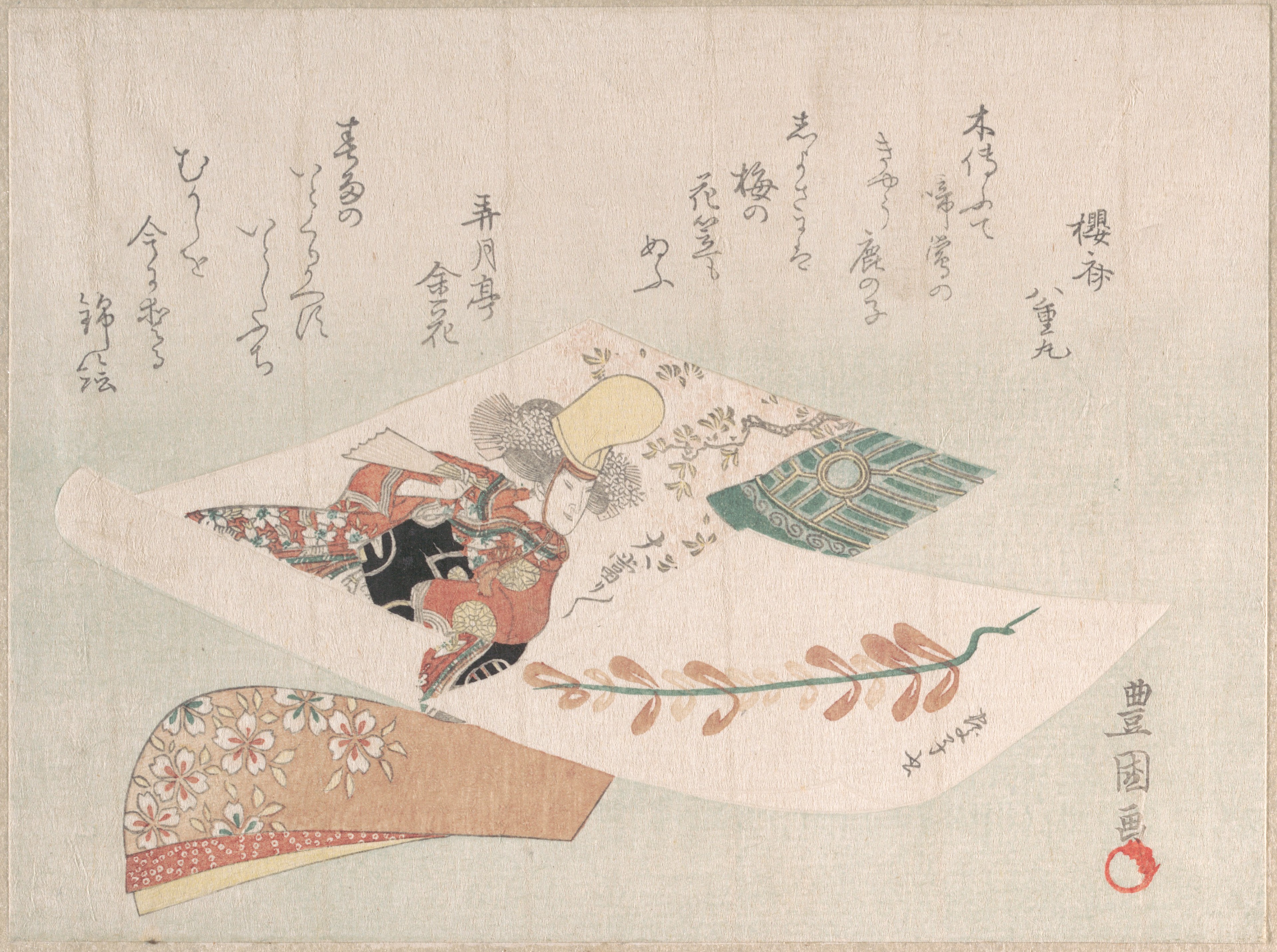
Representation of the Dance-Play "Dōjōji"
Woodblock print (surimono); ink and color on paper

The actors Sawamura Sojuro II as Satsuma Gengobei and Arashi Ryuzo II as Mawashi-otoko Yasuke in the play "Edo Sunago Kichirei Soga," performed at the Miyako Theater on the first month, 1795
c. 1795
Color woodblock print; oban
Frequently Asked Questions
Ichikawa Komazō III in the Role of Kameō with Iwai Kumesaburō in the Role of Kameō's Wife, Oyasu, from the Play Shunkan futatsu omokage was created by Utagawa Toyokuni I (歌川豊国) in 1798–99.