Iwai Kumesaburo II as the Courtesan Takao in Banzei Okuni Kabuki
- Date:
- c. 1827
- Medium:
- Color woodblock print; uchiwa-e
- Source:
- Art Institute of Chicago
Description
This 1822 print by Utagawa Toyokuni shows the onnagata Iwai Kumesaburo II in the role of the famous courtesan Takao in the kabuki play "Banzei Okuni Kabuki." Takao was the name borne by a succession of celebrated tayu, or top-ranking courtesans, of the Edo Yoshiwara quarter; their lives were repeatedly fictionalized in plays, stories, and popular prints. The reference in the play title to Okuni, the legendary founder of kabuki, knits the production into a wider mythology about the origins of the theater itself, and Toyokuni's yakusha-e accordingly carries unusual cultural weight.
Kumesaburo II was one of the most admired onnagata of the early nineteenth century, and the role of Takao gave him scope for the full repertory of female-role technique: refined posture, elaborate hairstyle, layered kimono of luxurious textiles, and the slow, deliberate gestures that signaled high status in the pleasure quarter. Toyokuni renders the figure with the rich palette and confident line of his late style, and the print's composition allows the courtesan's costume to fill the sheet without crowding the recognizable face. The Edo ukiyo-e formula for actor portraiture is here applied to a role that demands the height of stylization.
Now in the Art Institute of Chicago, the print testifies to the continued vitality of yakusha-e in the 1820s, when Toyokuni's school had begun to share the field with his pupils and successors. As a portrait of Kumesaburo II at a peak moment, and as a record of a specific kabuki production, the design also illuminates the deep connection between Edo's theatrical and pleasure-quarter cultures, both of which Toyokuni's career so eloquently chronicled.
More Prints by Utagawa Toyokuni I

Segawa Kikunojō III as the Shop Boy Chōkichi
1796
Woodblock print (nishiki-e), ink and color on paper
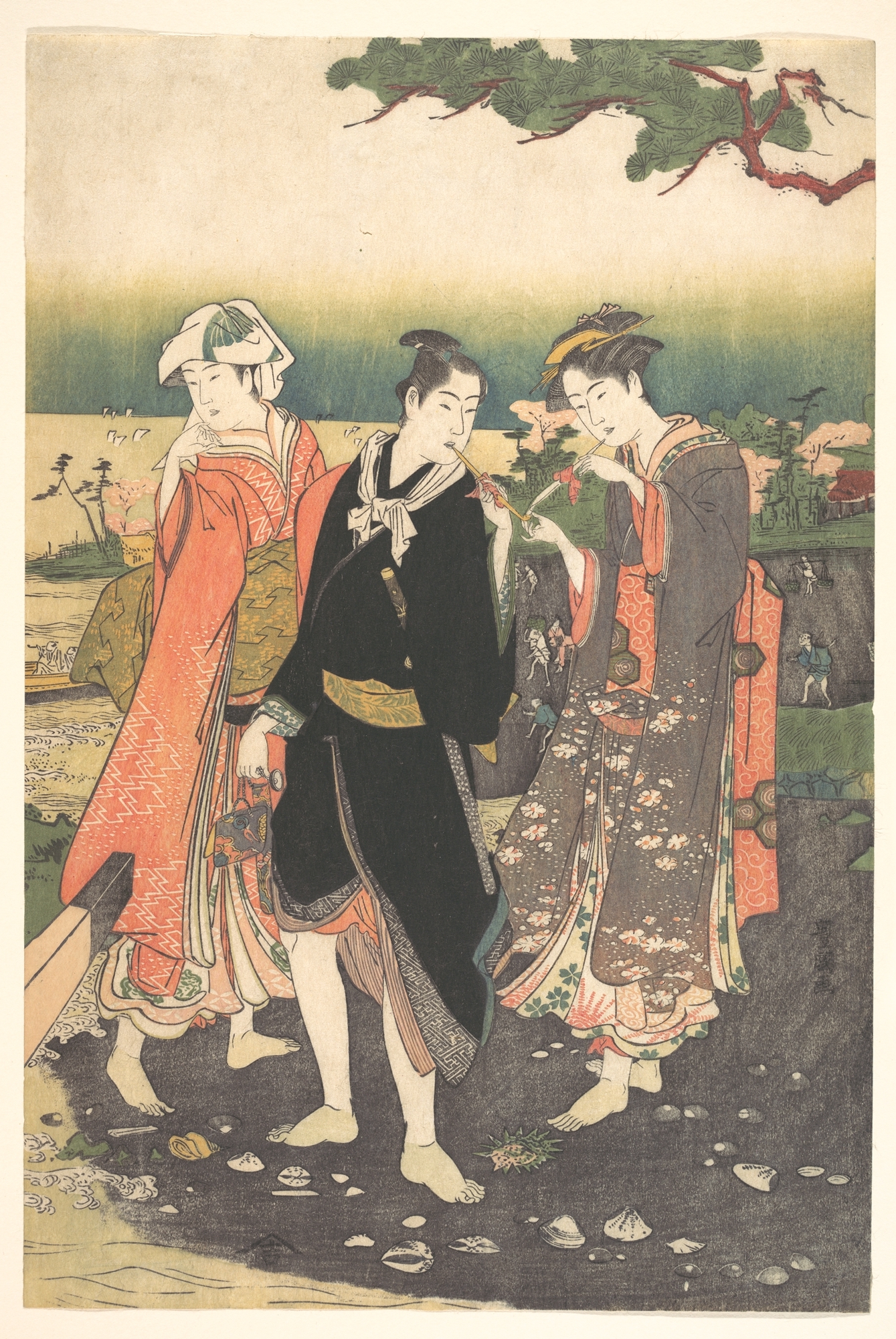
On Shinagawa Beach at Ebb-Tide
1769–1825
Woodblock print; ink and color on paper
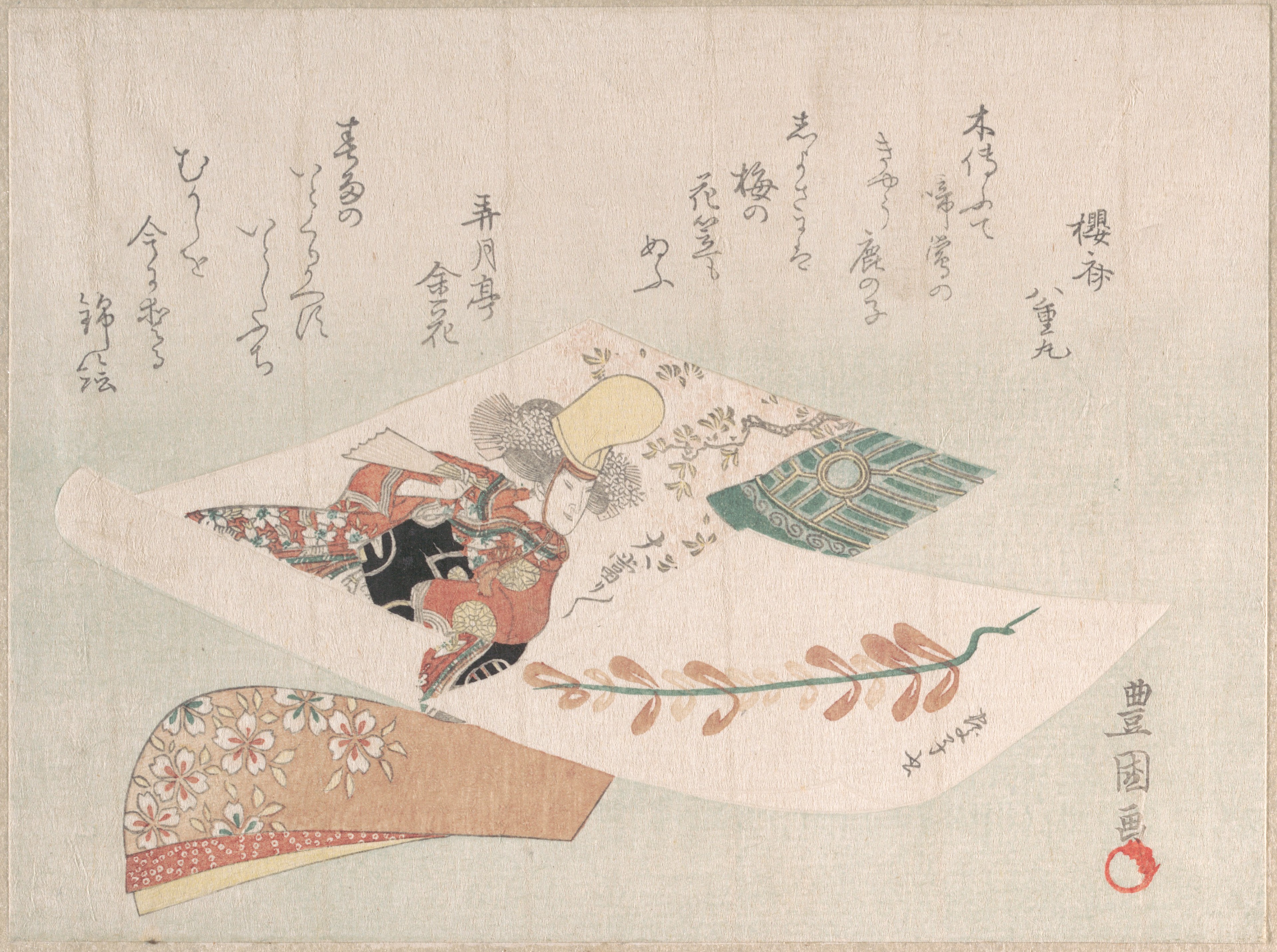
Representation of the Dance-Play "Dōjōji"
Woodblock print (surimono); ink and color on paper

The actors Sawamura Sojuro II as Satsuma Gengobei and Arashi Ryuzo II as Mawashi-otoko Yasuke in the play "Edo Sunago Kichirei Soga," performed at the Miyako Theater on the first month, 1795
c. 1795
Color woodblock print; oban
Frequently Asked Questions
Iwai Kumesaburo II as the Courtesan Takao in Banzei Okuni Kabuki was created by Utagawa Toyokuni I (歌川豊国) in c. 1827.