
Kabuki Actor Sawamura Sōjūrō III, from the series Portraits of Kabuki Actors on Stage (Yakusha butai no sugata-e)
- Date:
- ca. 1794
- Medium:
- Woodblock print; ink and color on paper
- Source:
- Metropolitan Museum of Art
Description
From his career-defining series Yakusha butai no sugata-e (Portraits of Kabuki Actors on Stage, also translated as Views of Actors on Stage), Utagawa Toyokuni I (1769-1825) here depicts Sawamura Sōjūrō III. The series, published beginning in 1794 by Izumiya Ichibei in the same months that the elusive Tōshūsai Sharaku's actor portraits appeared, was the breakthrough that established Toyokuni as the dominant designer of yakusha-e in Edo. Where Sharaku's prints presented dramatic close-ups with exaggerated psychological intensity—and were apparently a commercial disappointment—Toyokuni's series showed actors in full body on stage, with backgrounds and props sufficient to identify the specific play and scene to informed viewers. The Edo market preferred Toyokuni overwhelmingly, and the long arc of his commercial success rested on this foundation. Sawamura Sōjūrō III (1753-1801), known by the yagō Kinokuniya, was among the most admired Edo actors of his generation, celebrated for refined male roles. Toyokuni's portrayal of him isolates the actor in characteristic stance with crest and costume rendered precisely enough for the original viewer to identify the role and the production. The series demonstrates the Utagawa school's house standards of confident draughtsmanship, disciplined color registration, and integrated theatrical narrative that Toyokuni had developed under his teacher Utagawa Toyoharu and would transmit to a generation of pupils. The Metropolitan Museum of Art's recorded date of 1784 predates the series by a decade and reflects cataloguing convention; the impression itself belongs to the 1794-96 cycle and is preserved in the Metropolitan Museum of Art.
More Prints by Utagawa Toyokuni I

Kabuki Actor Iwai Kumesaburo with abacus

Segawa Kikunojō III as the Shop Boy Chōkichi
1796
Woodblock print (nishiki-e), ink and color on paper
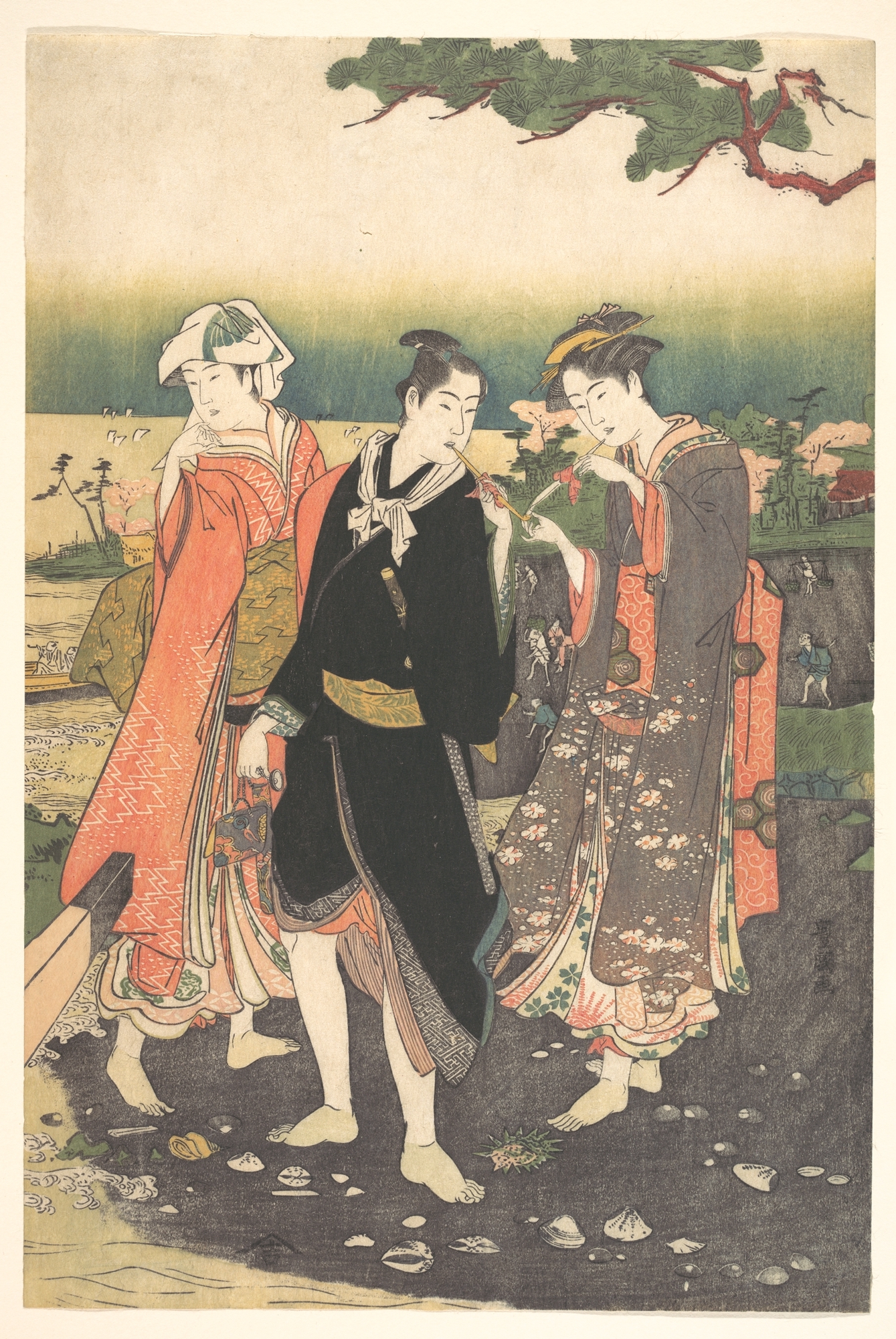
On Shinagawa Beach at Ebb-Tide
1769–1825
Woodblock print; ink and color on paper
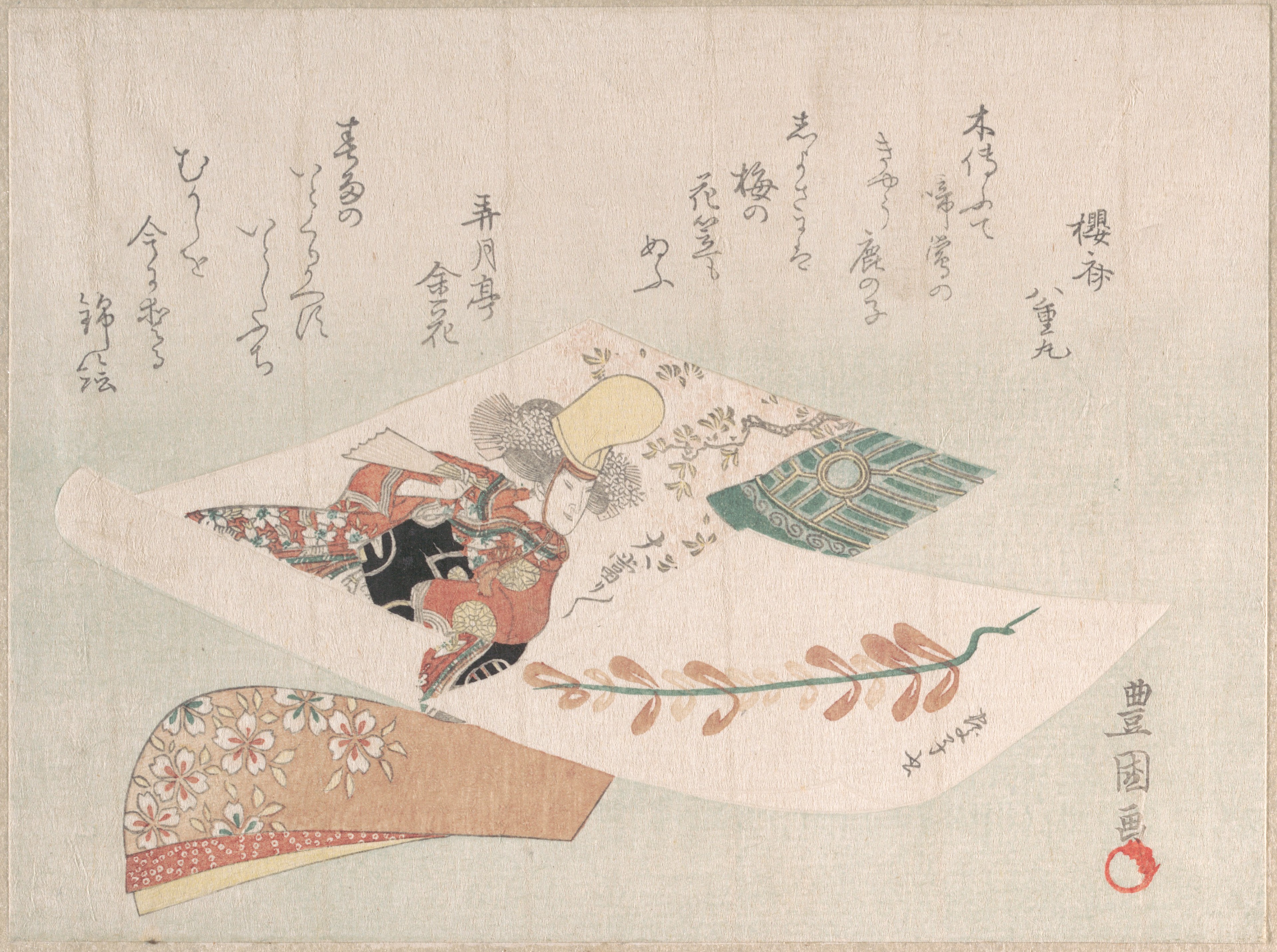
Representation of the Dance-Play "Dōjōji"
Woodblock print (surimono); ink and color on paper
Frequently Asked Questions
Kabuki Actor Sawamura Sōjūrō III, from the series Portraits of Kabuki Actors on Stage (Yakusha butai no sugata-e) was created by Utagawa Toyokuni I (歌川豊国) in ca. 1794.