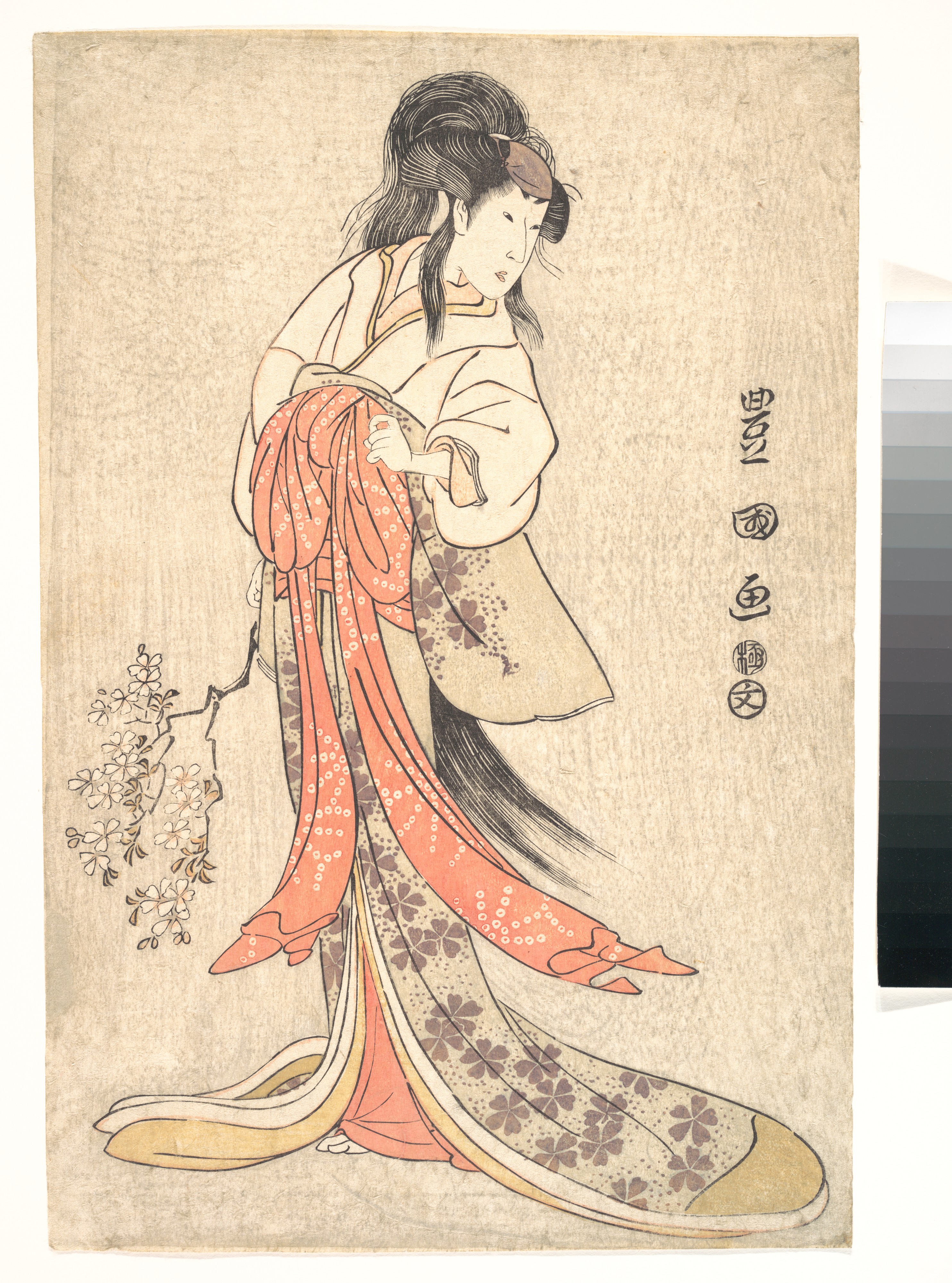
Kabuki Actor Segawa Kikunojō III in a Mad Female Role
- Date:
- 1798 (Kansei 9)
- Medium:
- Woodblock print; ink and color on paper
- Source:
- Metropolitan Museum of Art
Description
Utagawa Toyokuni I's "Kabuki Actor Segawa Kikunojō III in a Mad Female Role" exemplifies the yakusha-e for which the Utagawa school became famous in the closing years of the eighteenth century. Segawa Kikunojō III was the leading onnagata of his generation, and Toyokuni captures him in one of the kyōran-mono — the "madness pieces" in which a female protagonist, undone by separation or betrayal, performs an extended dance of distraction. Held by the Metropolitan Museum of Art, the print belongs to a body of Toyokuni's kabuki actor prints that helped define how Edo ukiyo-e visualized celebrity. The mad-woman role demanded a specific iconography: hair partly loosened, sleeves trailing, body turned in a moment of inward focus. Toyokuni offers all of these without lapsing into caricature; the face remains identifiable as Kikunojō, the famous onnagata whose performances were dissected in fan publications and tracked across multiple seasons. As founder of the Utagawa lineage of yakusha-e, Utagawa Toyokuni I set the visual conventions by which his pupils Kunisada and Kuniyoshi would later work, and the Met's impression is a useful demonstration of those conventions still fresh and unornamented. Collectors of Edo ukiyo-e prize Kikunojō prints both for the actor's historical importance — he stood at the apex of his profession — and for the way Toyokuni's portraits of him preserve a memory of stagecraft that left no other visual record. The Metropolitan's online catalogue documents the work without speculation.
More Prints by Utagawa Toyokuni I

Segawa Kikunojō III as the Shop Boy Chōkichi
1796
Woodblock print (nishiki-e), ink and color on paper
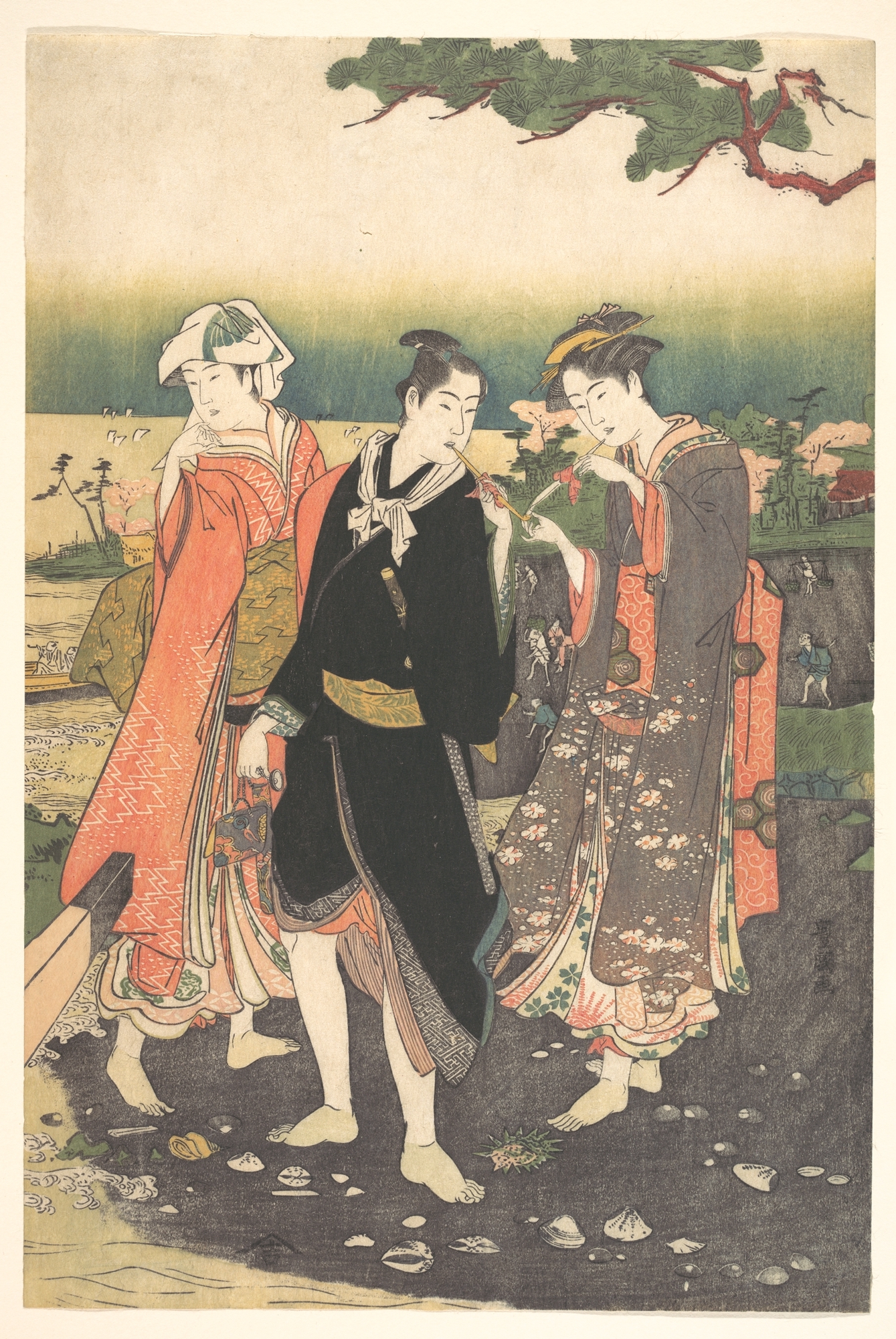
On Shinagawa Beach at Ebb-Tide
1769–1825
Woodblock print; ink and color on paper
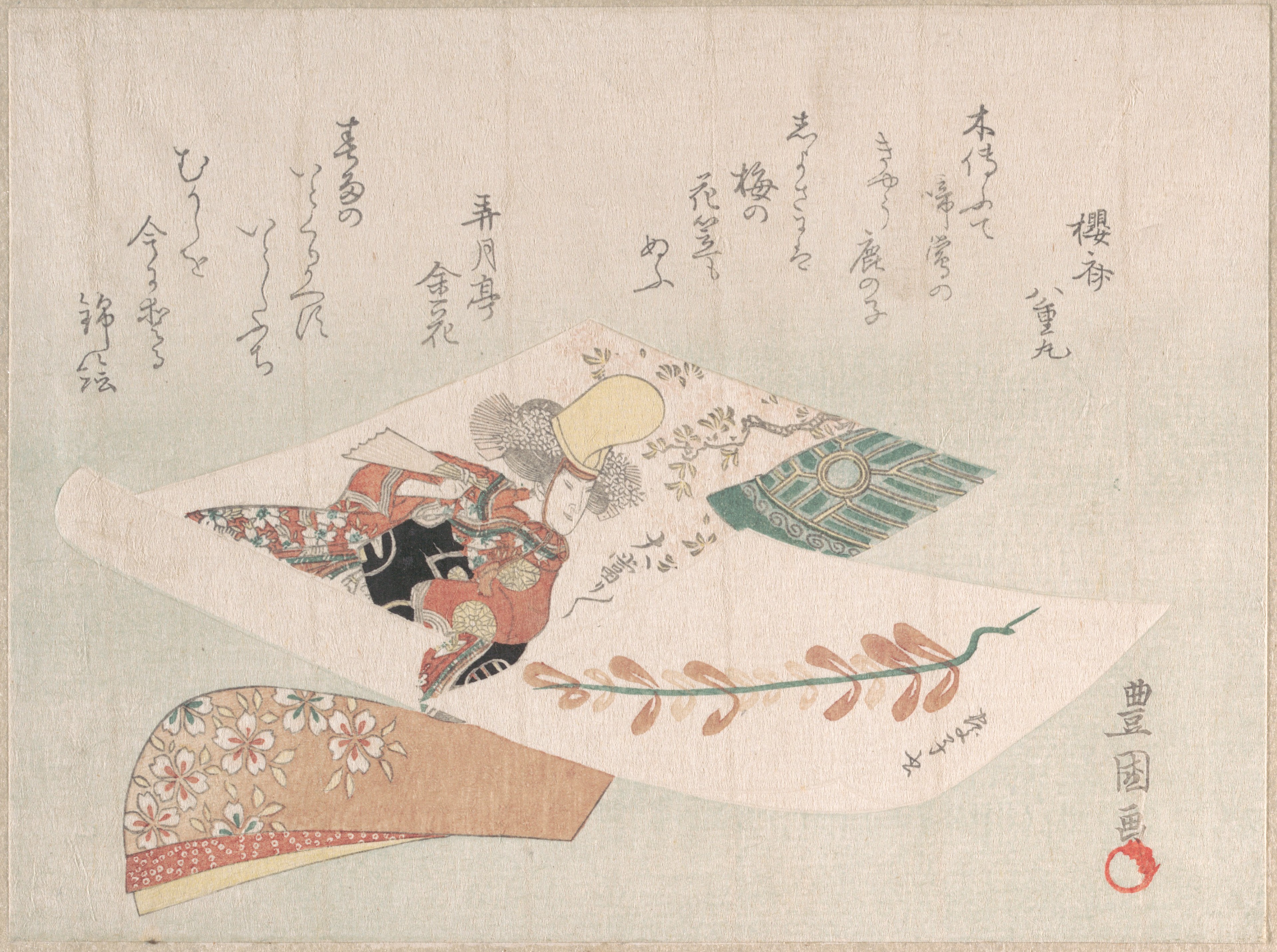
Representation of the Dance-Play "Dōjōji"
Woodblock print (surimono); ink and color on paper

The actors Sawamura Sojuro II as Satsuma Gengobei and Arashi Ryuzo II as Mawashi-otoko Yasuke in the play "Edo Sunago Kichirei Soga," performed at the Miyako Theater on the first month, 1795
c. 1795
Color woodblock print; oban
Frequently Asked Questions
Kabuki Actor Segawa Kikunojō III in a Mad Female Role was created by Utagawa Toyokuni I (歌川豊国) in 1798 (Kansei 9).