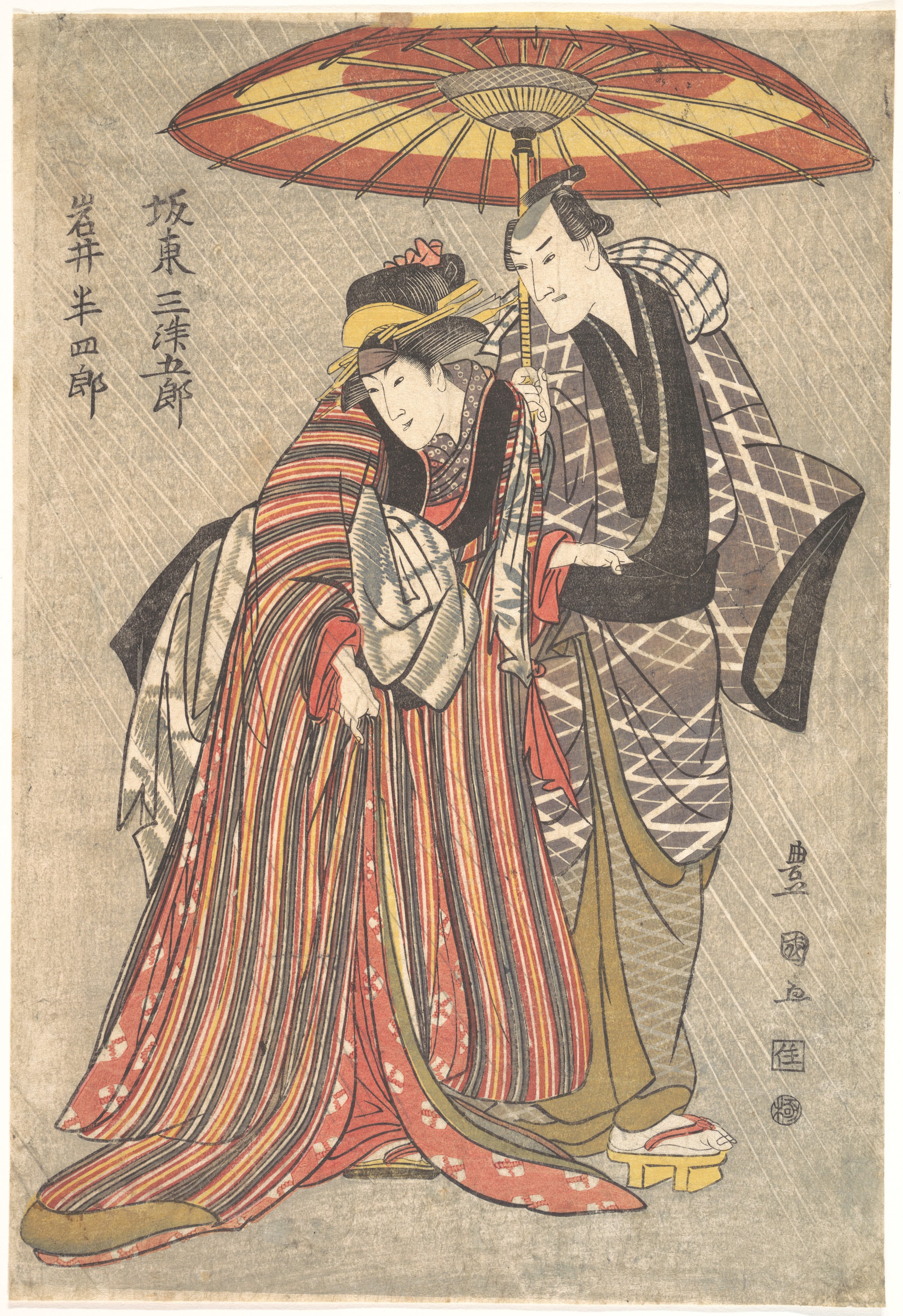
Kabuki Actors: Bando Mitsugorō and Iwai Hanshirō
- Date:
- ca. 1800
- Medium:
- Woodblock print; ink and color on paper
- Source:
- Metropolitan Museum of Art
Description
Kabuki Actors: Bandō Mitsugorō and Iwai Hanshirō is a yakusha-e print by Utagawa Toyokuni in the Metropolitan Museum of Art. Bandō Mitsugorō and Iwai Hanshirō were among the most followed stage names in Edo Kabuki, with successive generations of actors using the names through the eighteenth and nineteenth centuries. To pair them in a single print was to assemble a particularly potent combination of theatrical celebrity, and Toyokuni's image draws on that resonance. The two figures stand close, their stances and costumes describing the roles they have taken on. As in his other multi-figure actor prints, Toyokuni uses the spatial logic of the stage to organize the composition, allowing the relationship between the actors to do narrative work that would have been immediately legible to Edo theatergoers. The Met catalogues this impression with the date 1790, used here from the museum record. The work belongs to the productive late 1780s and early 1790s in Toyokuni's career, when the foundations of his great yakusha-e production were being laid. As a representative double portrait, it shows how Edo ukiyo-e designers turned the stardom system of the Kabuki theater into a stable visual format, with the actor pairing serving as one of the most reliable building blocks for both serial and single-sheet print projects.
More Prints by Utagawa Toyokuni I

Kabuki Actor Iwai Kumesaburo with abacus

Segawa Kikunojō III as the Shop Boy Chōkichi
1796
Woodblock print (nishiki-e), ink and color on paper
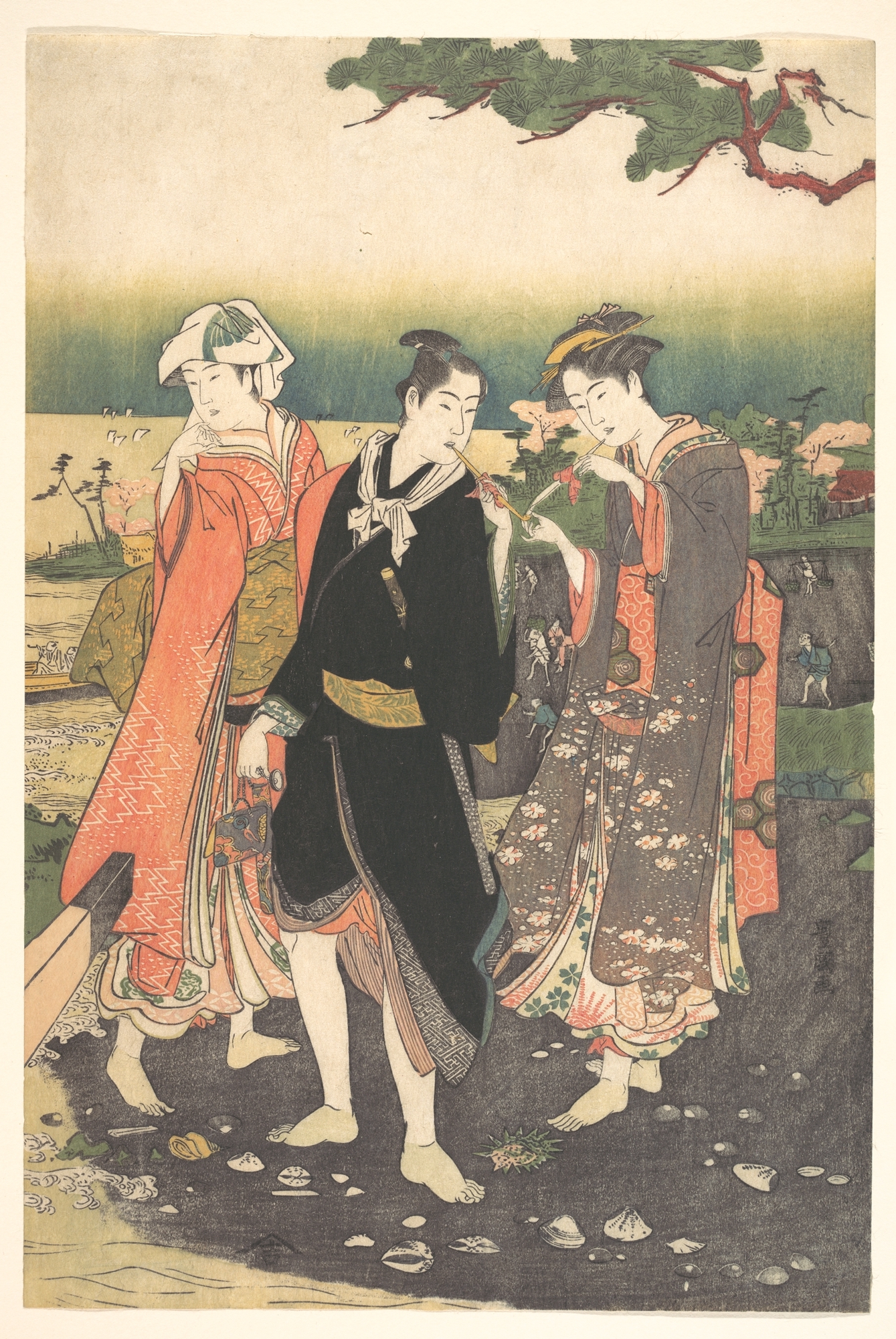
On Shinagawa Beach at Ebb-Tide
1769–1825
Woodblock print; ink and color on paper
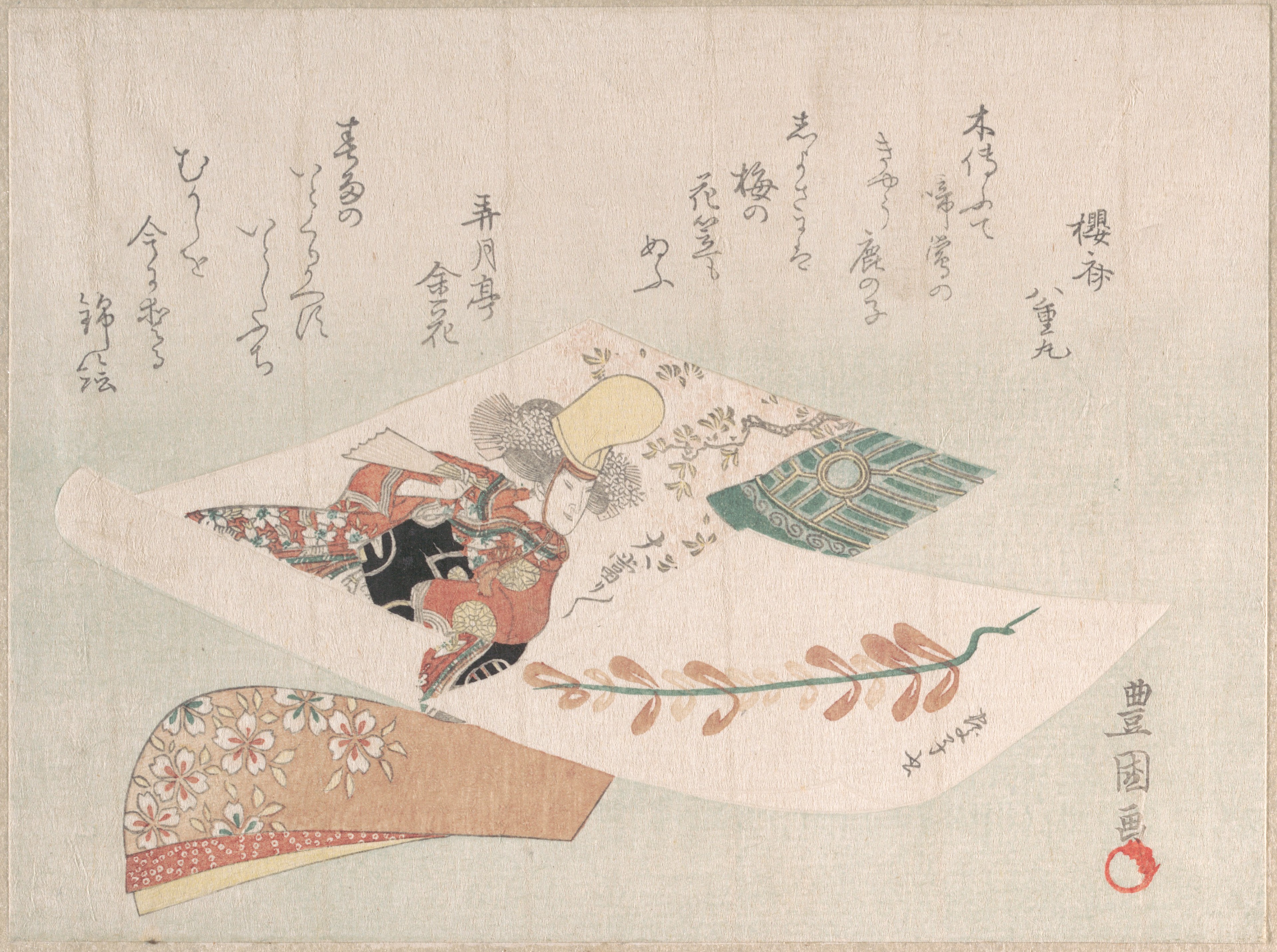
Representation of the Dance-Play "Dōjōji"
Woodblock print (surimono); ink and color on paper
Frequently Asked Questions
Kabuki Actors: Bando Mitsugorō and Iwai Hanshirō was created by Utagawa Toyokuni I (歌川豊国) in ca. 1800.