
Kabuki Actors Iwai Kumasaburo and Bando Mitsugoro
- Source:
- ukiyo-e.org
Description
Kabuki Actors Iwai Kumasaburō and Bandō Mitsugorō, by Utagawa Toyokuni and held by the Art Gallery of Greater Victoria (digitized via ukiyo-e.org as dscn2042), pairs two leading members of the Edo stage. The Iwai onnagata line specialized in female roles and supplied some of the era's most celebrated stars, while the Bandō Mitsugorō line was associated with versatile dance and action roles, including the signature Bandō Mitsugorō III's celebrated jitsugoto (mature male) performances of the early nineteenth century. Toyokuni — as head of the Utagawa school and the dominant designer of yakusha-e in Edo ukiyo-e — repeatedly paired actors of these two lines in the kabuki repertoire's many male-female encounters, from love scenes to confrontation pieces. His drawing balances individual recognizable likeness with strong silhouette, so each actor reads clearly while the two together form a coherent stage tableau. The Art Gallery of Greater Victoria's holding, like many North American institutional collections, was assembled in part during the international fascination with Japanese woodblock prints in the late nineteenth and early twentieth centuries, and continues to support scholarly access to the actor-portrait tradition. The print stands as both a document of a particular kabuki casting and an example of the Utagawa school's mature visual idiom.
More Prints by Utagawa Toyokuni I

Segawa Kikunojō III as the Shop Boy Chōkichi
1796
Woodblock print (nishiki-e), ink and color on paper
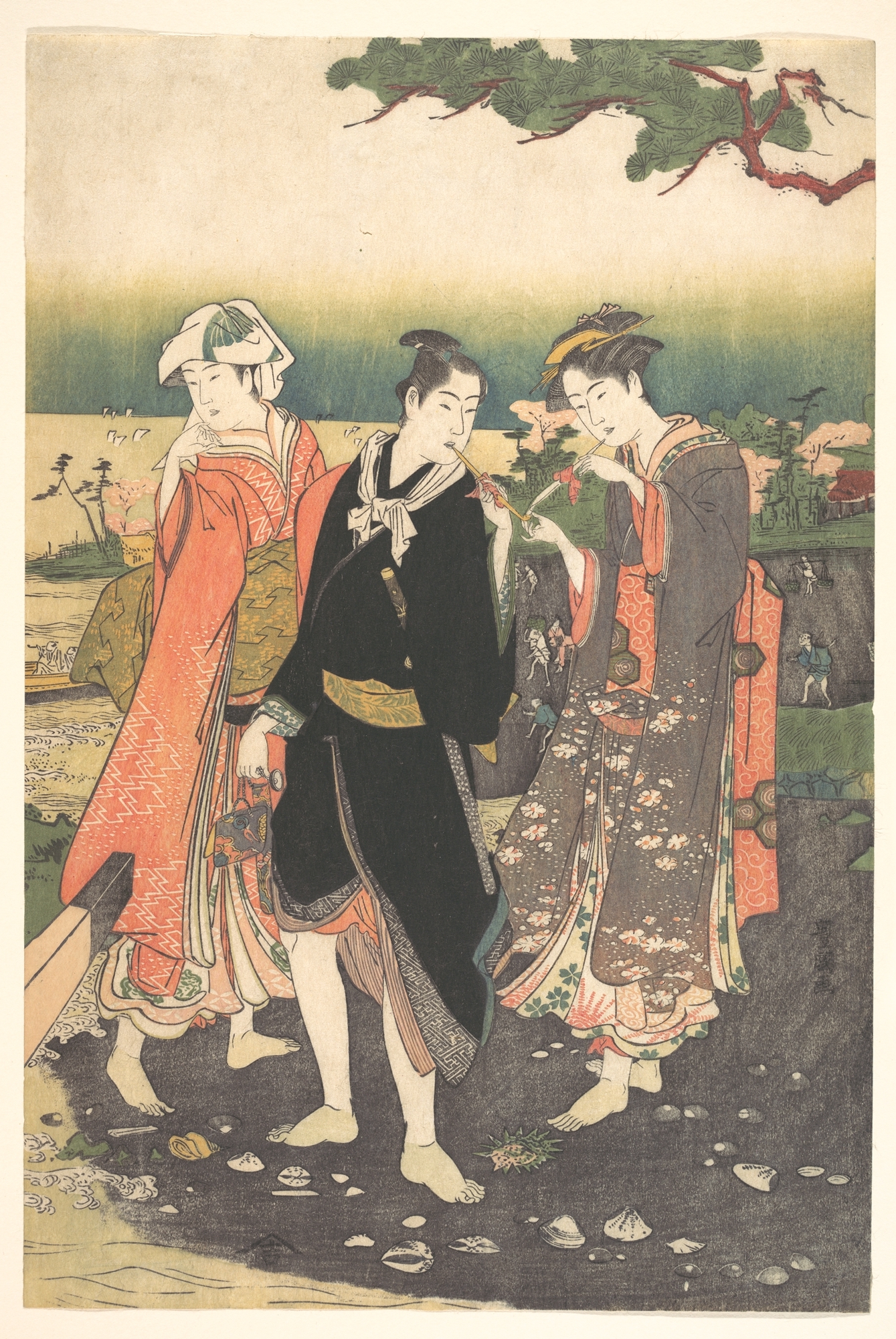
On Shinagawa Beach at Ebb-Tide
1769–1825
Woodblock print; ink and color on paper
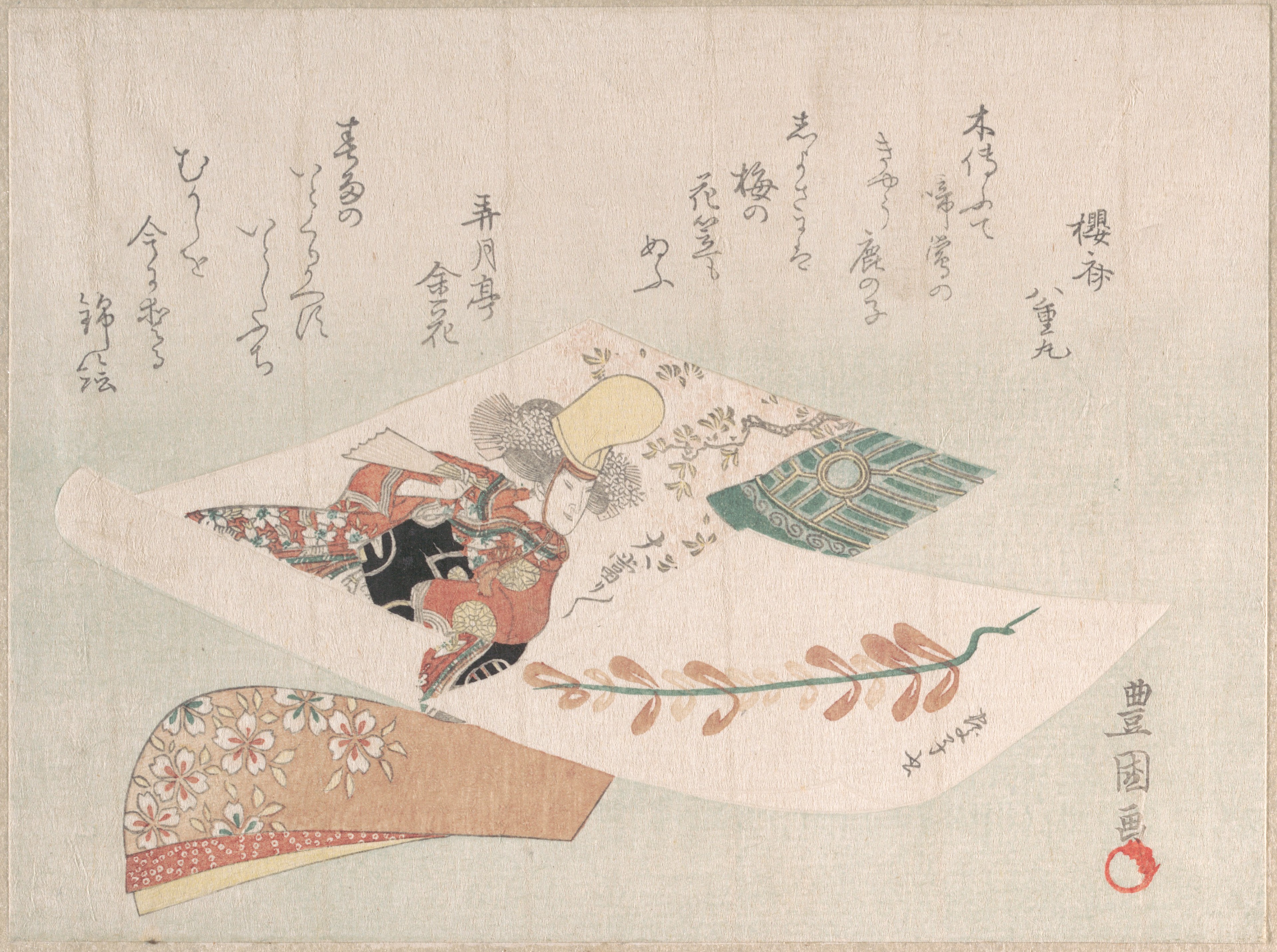
Representation of the Dance-Play "Dōjōji"
Woodblock print (surimono); ink and color on paper

The actors Sawamura Sojuro II as Satsuma Gengobei and Arashi Ryuzo II as Mawashi-otoko Yasuke in the play "Edo Sunago Kichirei Soga," performed at the Miyako Theater on the first month, 1795
c. 1795
Color woodblock print; oban
Frequently Asked Questions
Kabuki Actors Iwai Kumasaburo and Bando Mitsugoro was created by Utagawa Toyokuni I (歌川豊国).