
Kacho chaya
- Date:
- c. 1792/93
- Medium:
- Color woodblock print; oban triptych
- Source:
- Art Institute of Chicago
Description
Utagawa Toyokuni I's "Kachō Chaya" returns to the Bird-and-Flower Teahouse, one of Edo's celebrated suburban gathering places, in a separate composition documented by the Art Institute of Chicago. The teahouse — its name literally meaning bird and flower — drew the kind of repeat clientele that kept Edo's leisure economy in motion, and Toyokuni's interest in the location reflects both its real-world popularity and its usefulness as a setting for bijinga. Although Utagawa Toyokuni built his career on kabuki actor prints, the yakusha-e for which the Utagawa school became synonymous, his teahouse and outing scenes form an important parallel current. In them, the same figural discipline that animates his stage portraits is redirected onto townswomen at leisure, with garden architecture and seasonal vegetation providing the supporting cast. The Art Institute of Chicago's holding allows a direct comparison between Toyokuni's various treatments of the Kachōjaya, illuminating how Edo ukiyo-e returned repeatedly to a beloved subject without exhausting it. Each version flatters the establishment, ratifies the fashions on display, and provides buyers with a portable token of a pleasure they had either enjoyed or aspired to. The Utagawa school's later dominance of the Edo print market would build on exactly this kind of design — locally specific, fashion-forward, and produced with publisher and artist alike attuned to consumer demand. The Art Institute's catalogue records the work without speculation. For students and collectors of Edo ukiyo-e, the print is a representative late-eighteenth-century example.
More Prints by Utagawa Toyokuni I

Kabuki Actor Iwai Kumesaburo with abacus

Segawa Kikunojō III as the Shop Boy Chōkichi
1796
Woodblock print (nishiki-e), ink and color on paper
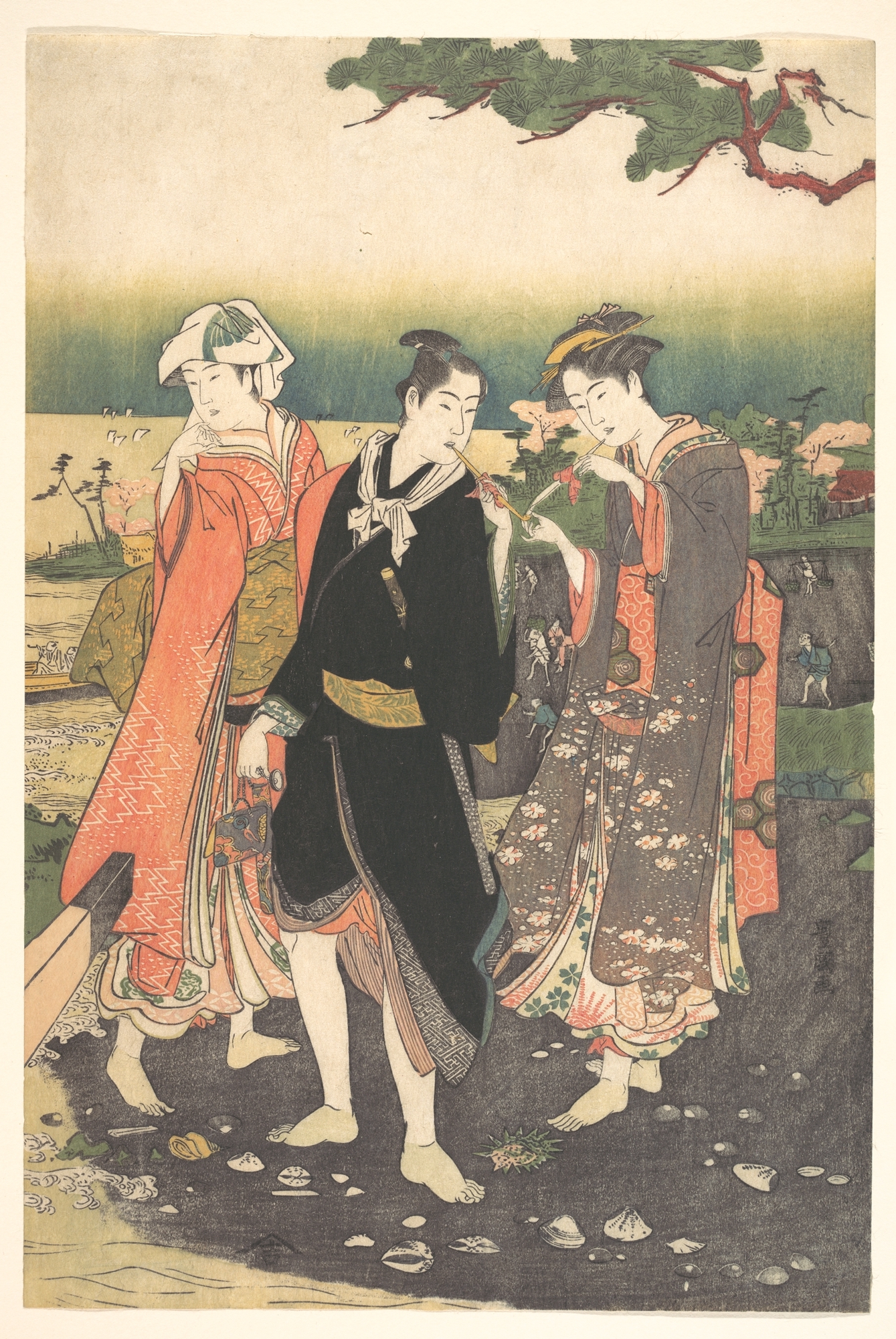
On Shinagawa Beach at Ebb-Tide
1769–1825
Woodblock print; ink and color on paper
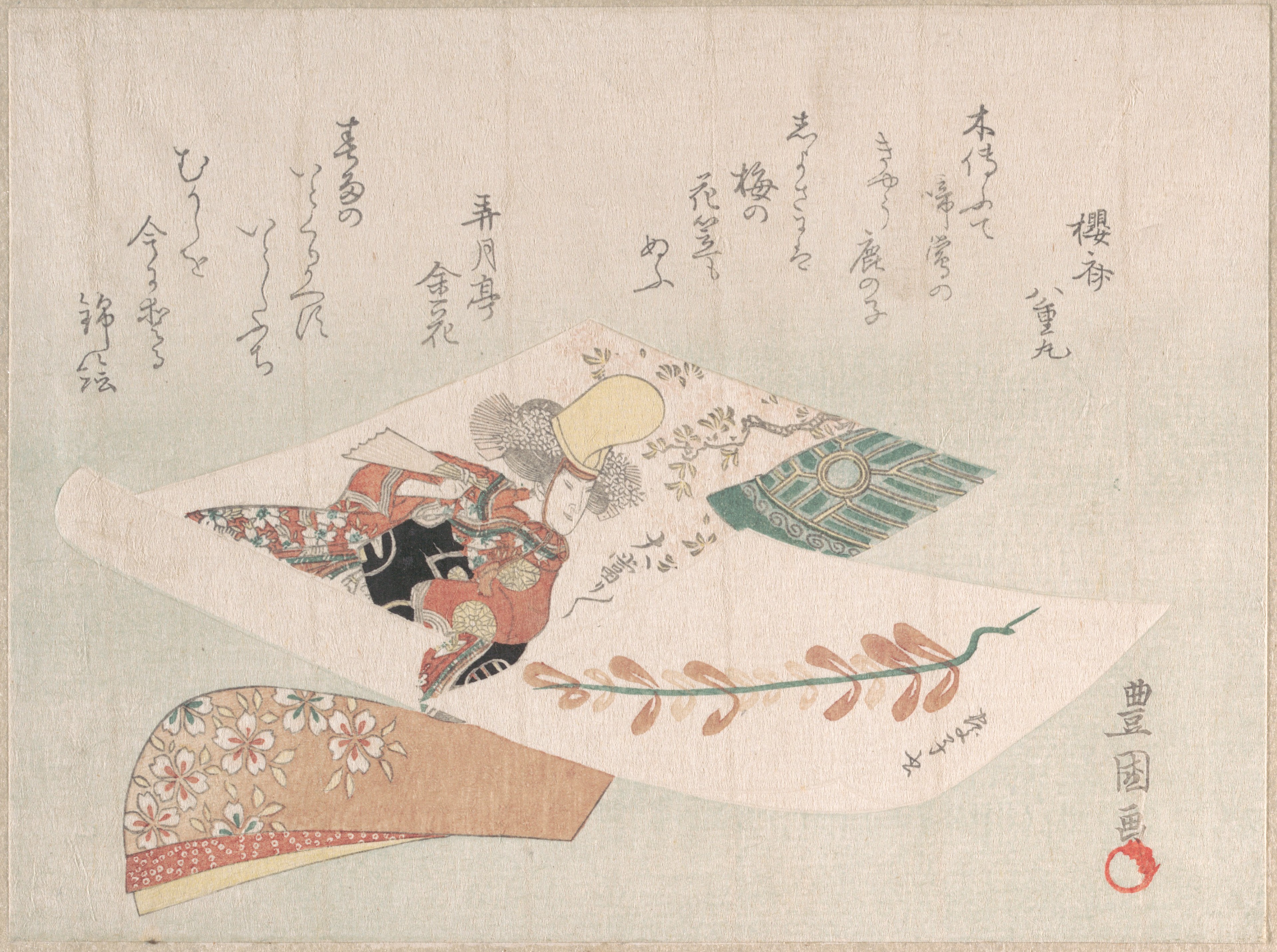
Representation of the Dance-Play "Dōjōji"
Woodblock print (surimono); ink and color on paper
Frequently Asked Questions
Kacho chaya was created by Utagawa Toyokuni I (歌川豊国) in c. 1792/93.