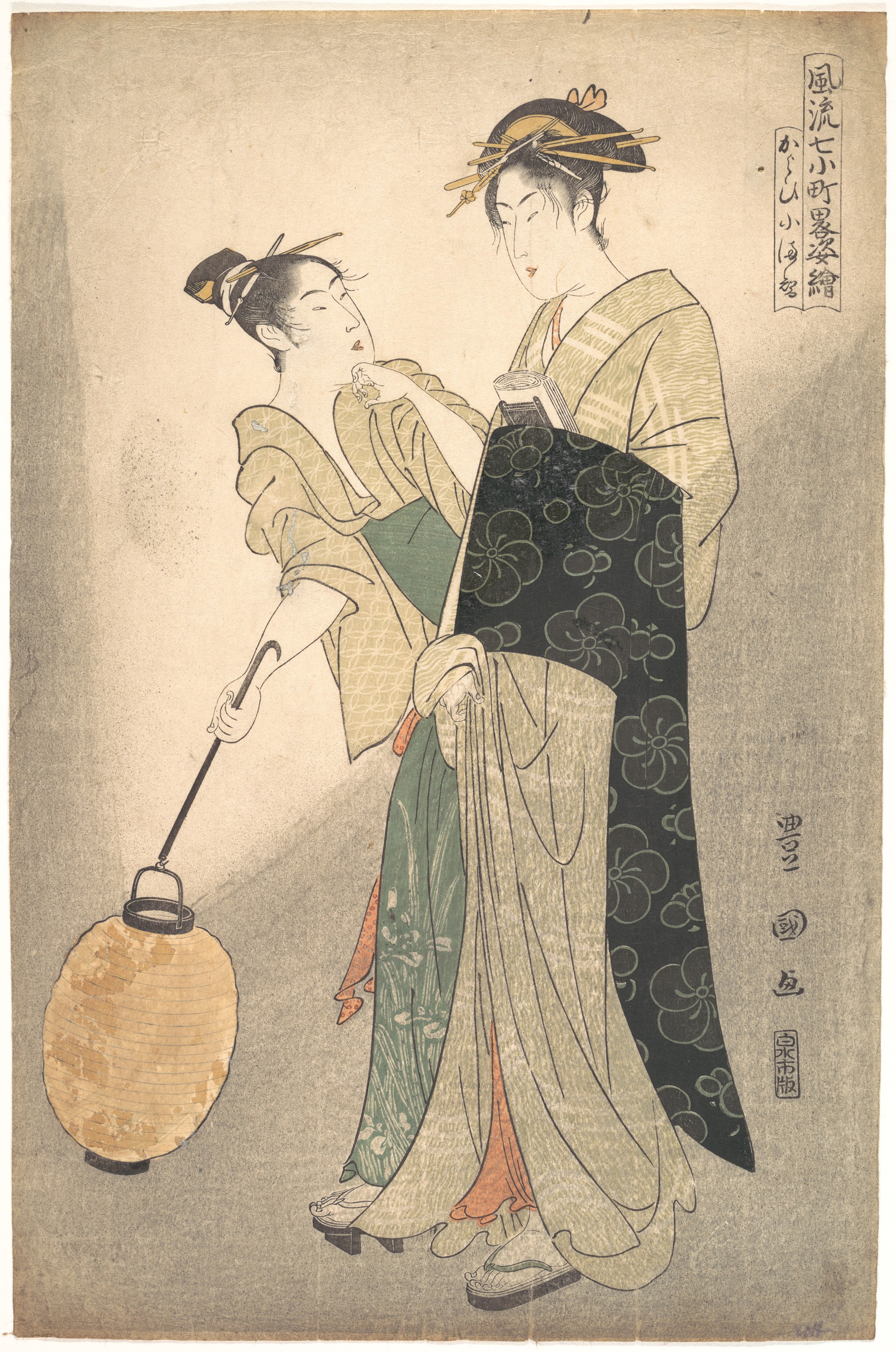
Kayoi Komachi, from the series "Seven Episodes of the Poet Komachi"
- Date:
- ca. 1795
- Medium:
- Woodblock print; ink and color on paper
- Source:
- Metropolitan Museum of Art
Description
Kayoi Komachi, from the series Seven Episodes of the Poet Komachi, is a bijin-ga design by Utagawa Toyokuni preserved in the Metropolitan Museum of Art. The Komachi cycle gathered seven canonical scenes from the legend of Ono no Komachi, the ninth-century poet whose biography, real and embroidered, became a foundational subject in Japanese visual culture. Kayoi Komachi recounts the story of Fukakusa no Shōshō, a suitor required by Komachi to visit her on a hundred successive nights to prove his devotion; the episode resonates as a study of obsessive love and unattainable beauty. In Toyokuni's series the seven episodes are translated into fashionable contemporary figures, with each sheet pairing a Komachi narrative with a present-day Edo presence. The print works within the mitate tradition, where classical poetry and modern fashion meet to flatter both the cultivated viewer and the publishing market. Toyokuni's woman is elegantly costumed, her stance and gaze carrying the residue of the original story while remaining firmly anchored in late eighteenth-century Edo style. The Met catalogues this impression with the date 1785, taken from the museum record. The sheet contributes to the rich body of Edo ukiyo-e in which literary allusion and bijin-ga elegance combine, demonstrating Toyokuni's facility with subjects that extended beyond yakusha-e into the dense intertextuality of classical reference.
More Prints by Utagawa Toyokuni I

Kabuki Actor Iwai Kumesaburo with abacus

Segawa Kikunojō III as the Shop Boy Chōkichi
1796
Woodblock print (nishiki-e), ink and color on paper
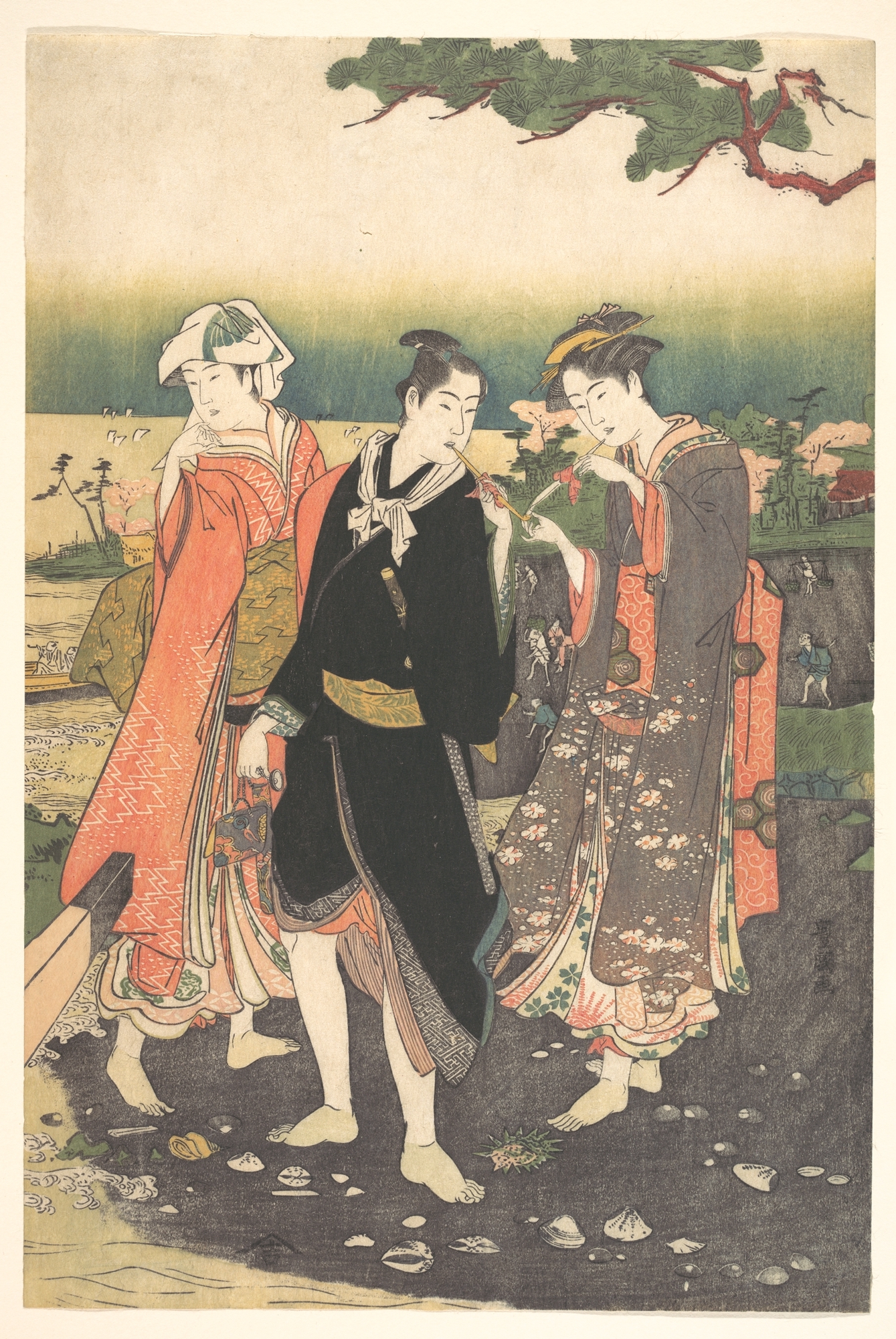
On Shinagawa Beach at Ebb-Tide
1769–1825
Woodblock print; ink and color on paper
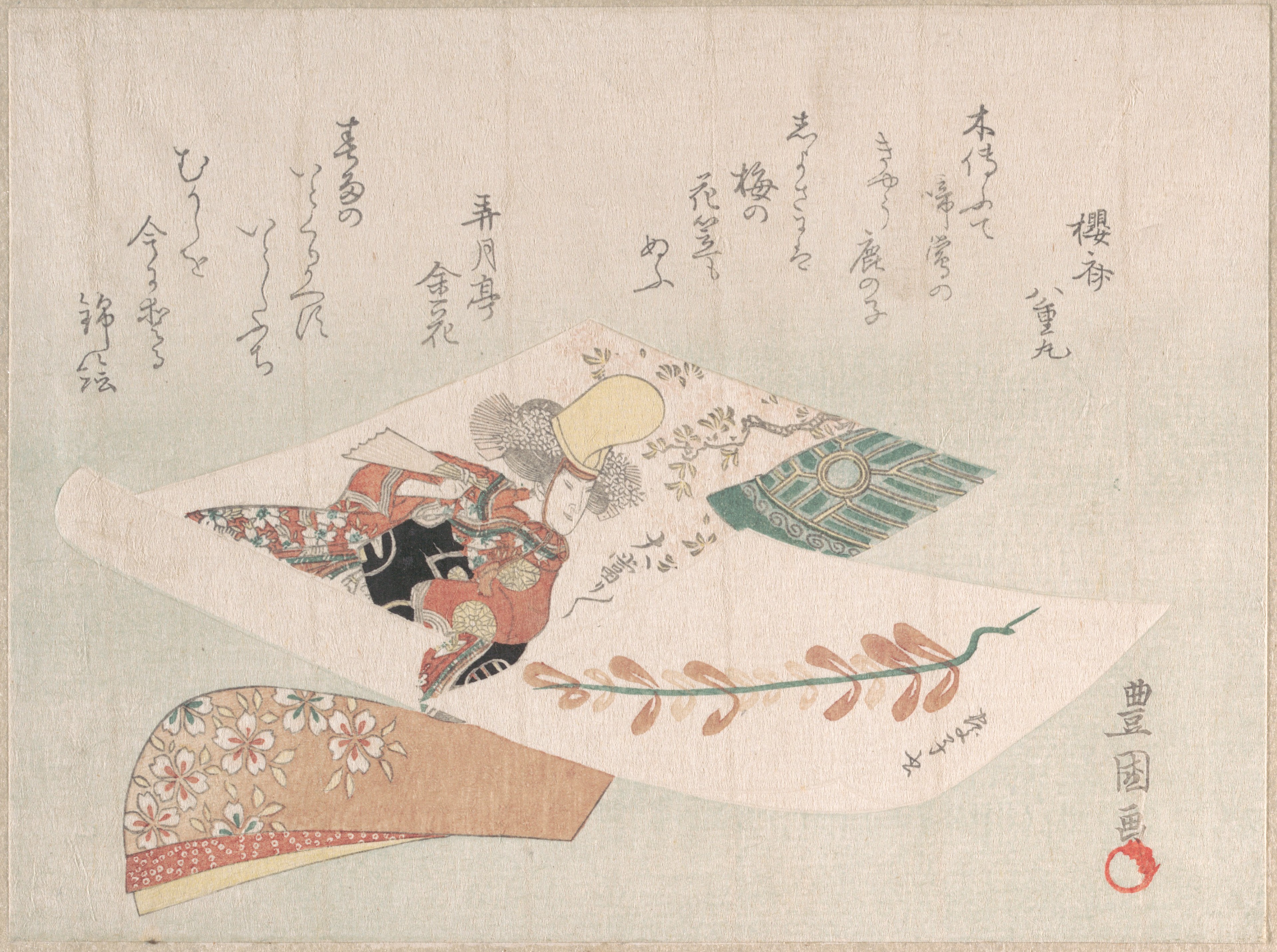
Representation of the Dance-Play "Dōjōji"
Woodblock print (surimono); ink and color on paper
Frequently Asked Questions
Kayoi Komachi, from the series "Seven Episodes of the Poet Komachi" was created by Utagawa Toyokuni I (歌川豊国) in ca. 1795.