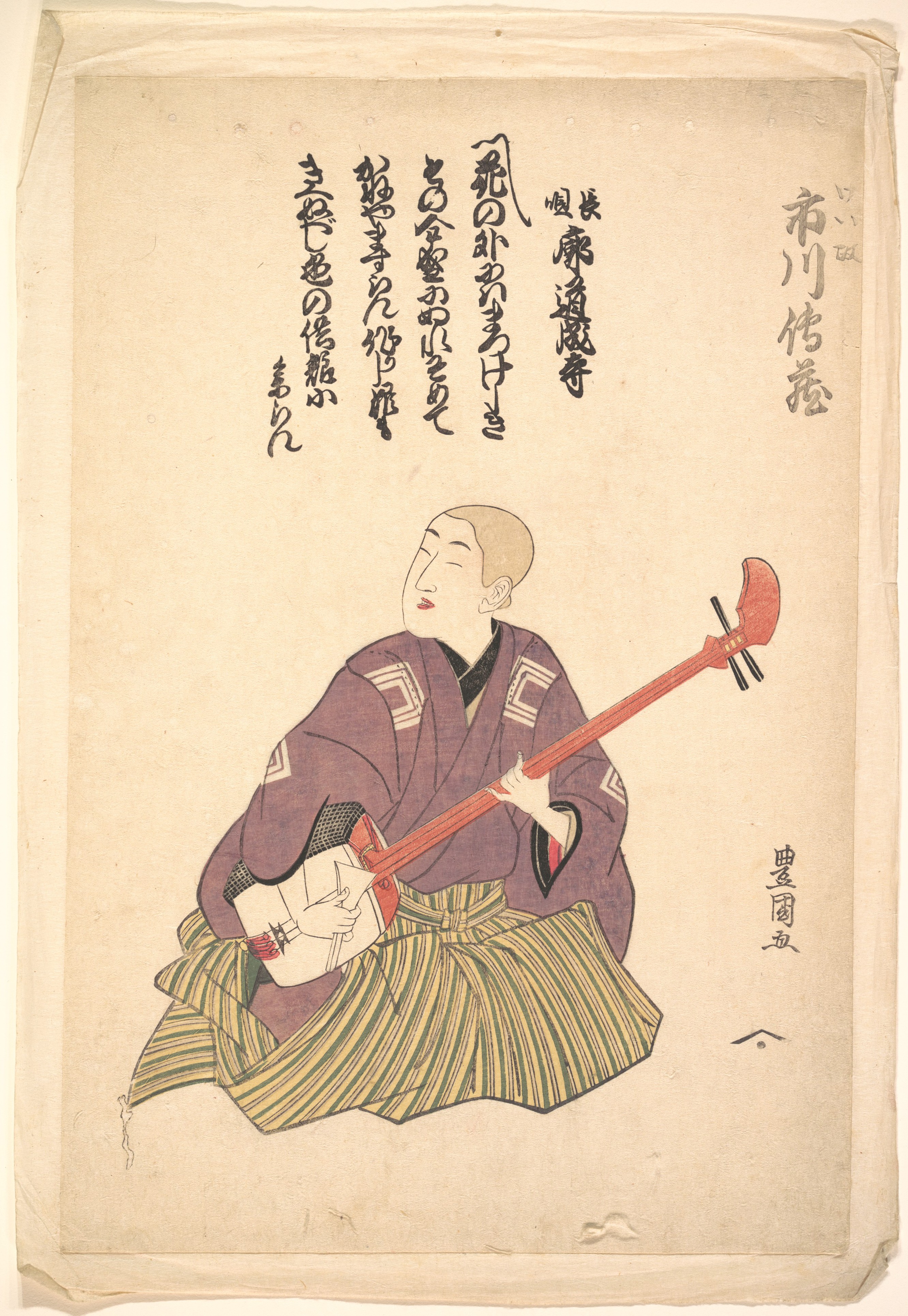
Keisei Ichikawa Denzo
- Date:
- ca. 1797–1800
- Medium:
- Woodblock print; ink and color on paper
- Source:
- Metropolitan Museum of Art
Description
Keisei Ichikawa Denzo, dated 1797, is a hybrid courtesan-and-actor woodblock print by Utagawa Toyokuni in the Metropolitan Museum of Art. The title links the keisei, a poetic Edo term for a high-ranking courtesan, with the kabuki actor Ichikawa Denzo, in a typical late eighteenth-century device that pictured a male performer in the role or guise of a celebrated Yoshiwara beauty. By 1797 Toyokuni had achieved widespread celebrity as the dominant designer of yakusha-e in the Utagawa school, and a sheet of this date belongs to the prime moment of his Actor Portraits in the Mirror of the Stage (Yakusha butai no sugata-e) series, which redefined how Edo ukiyo-e represented kabuki celebrity. Mitate-style portraits crossing actor and courtesan identities offered audiences a sophisticated pleasure built on knowledge of both worlds and on awareness of the conventions of female-role onnagata performance in the kabuki theater. The Metropolitan Museum of Art preserves the print as part of its Utagawa-school holdings and catalogues it with the romanized title and the actor name intact. As a documented 1797 work the design provides important evidence of the visual idiom that made Toyokuni the leading yakusha-e designer of his generation, and it shows how the Utagawa school used courtesan iconography to deepen rather than dilute the theatrical celebrity at the heart of its market.
More Prints by Utagawa Toyokuni I

Segawa Kikunojō III as the Shop Boy Chōkichi
1796
Woodblock print (nishiki-e), ink and color on paper
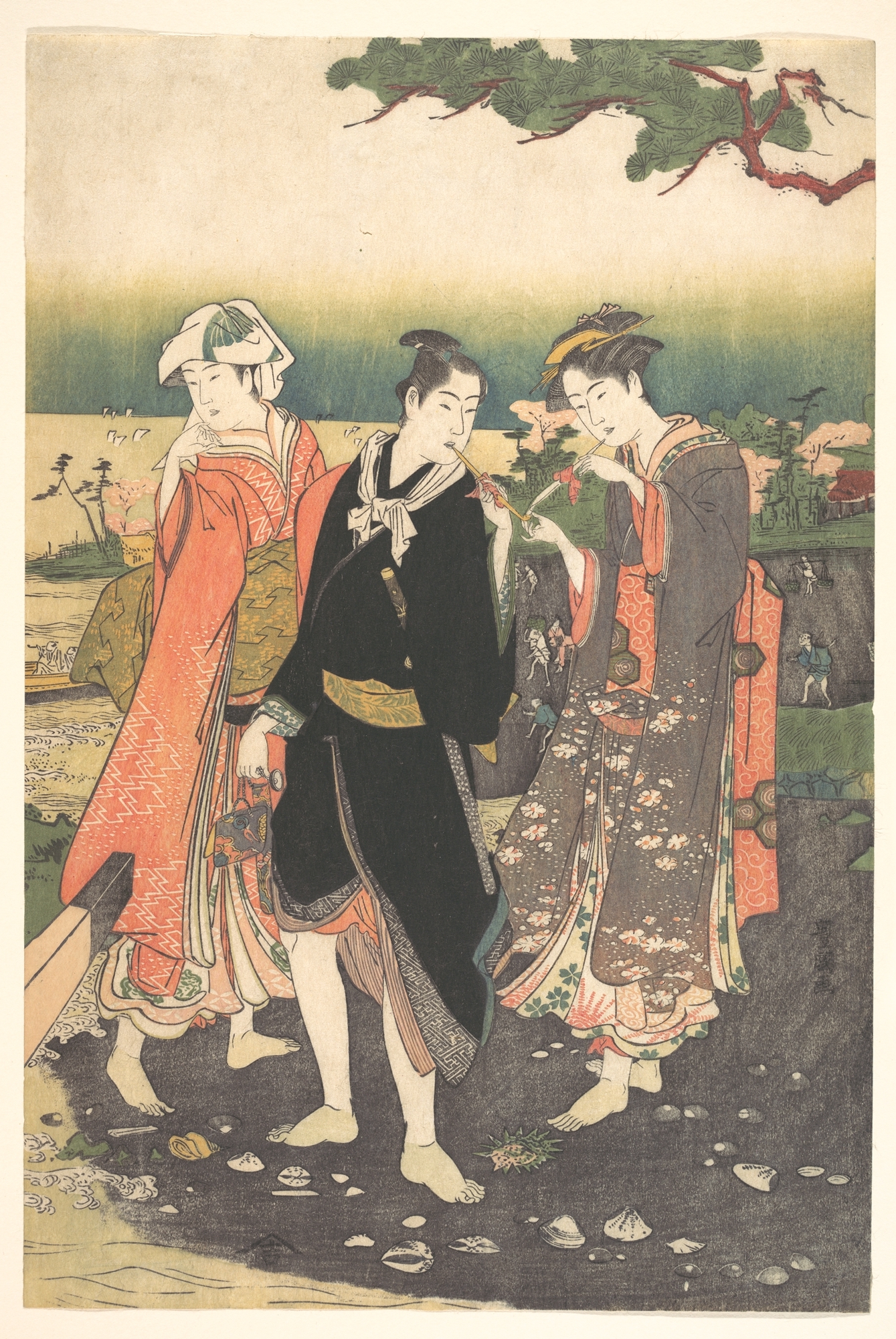
On Shinagawa Beach at Ebb-Tide
1769–1825
Woodblock print; ink and color on paper
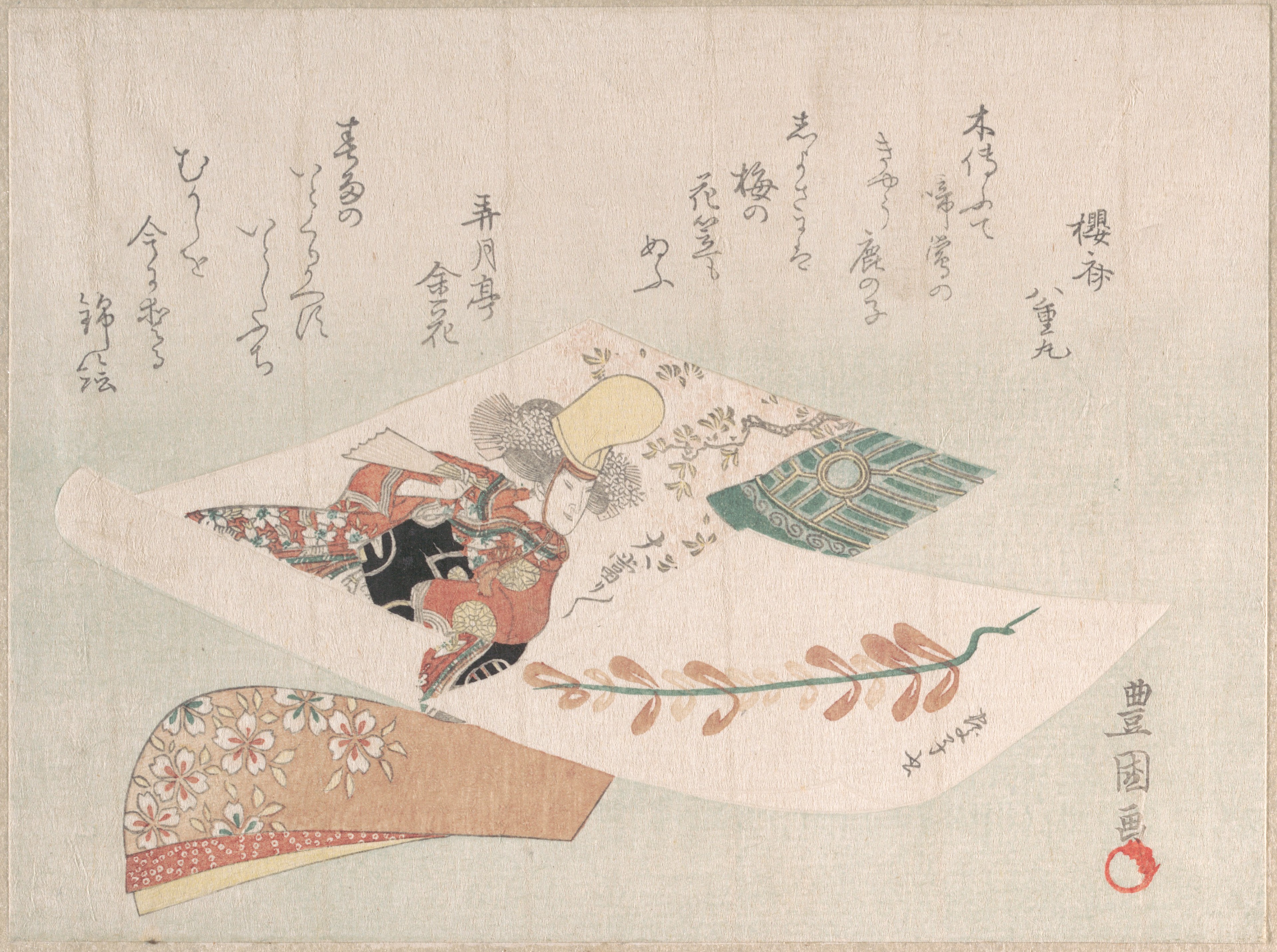
Representation of the Dance-Play "Dōjōji"
Woodblock print (surimono); ink and color on paper

The actors Sawamura Sojuro II as Satsuma Gengobei and Arashi Ryuzo II as Mawashi-otoko Yasuke in the play "Edo Sunago Kichirei Soga," performed at the Miyako Theater on the first month, 1795
c. 1795
Color woodblock print; oban
Frequently Asked Questions
Keisei Ichikawa Denzo was created by Utagawa Toyokuni I (歌川豊国) in ca. 1797–1800.