
Kisaragi (First Month) / Juni-ka-getsu no uchi (From a Series of the Twelve Months)
- Source:
- ukiyo-e.org
Description
From a Juni-ka-getsu no uchi (Series of the Twelve Months), Utagawa Toyokuni I (1769-1825) here depicts the second lunar month, Kisaragi—despite the museum record's translation as 'First Month,' the term kisaragi refers in classical usage to the second lunar month, traditionally the month of plum blossoms and the late winter transition into spring. (The 'First Month' rendering may reflect a cataloguing slip or a series-internal numbering convention.) Twelve-month series in Edo ukiyo-e adapted the venerable court poetic framework of monthly observances into popular print, supplying designers with a structured rotation of seasonal motifs across which they could showcase bijinga subject matter. Toyokuni's typical handling of such series combined elegantly dressed women with subtle environmental cues—plum branches for kisaragi, fans for high summer, snow for winter—allowing the viewer to anchor the figures within the calendrical cycle. The genre carried associations of refined taste because it explicitly invoked the court poetic tradition, lending classical dignity to the floating world's beauties. Toyokuni's contribution to the genre demonstrates his command of bijinga alongside the yakusha-e that built his reputation, and shows the Utagawa school's commercial breadth across all major print subjects. The impression is documented via ukiyo-e.org from a holding in the British Museum, whose Japanese print collection includes extensive Toyokuni and Utagawa-school material acquired across the nineteenth and twentieth centuries. Such collections preserve the breadth of his output well beyond the actor portraits for which he is best remembered.
More Prints by Utagawa Toyokuni I

Segawa Kikunojō III as the Shop Boy Chōkichi
1796
Woodblock print (nishiki-e), ink and color on paper
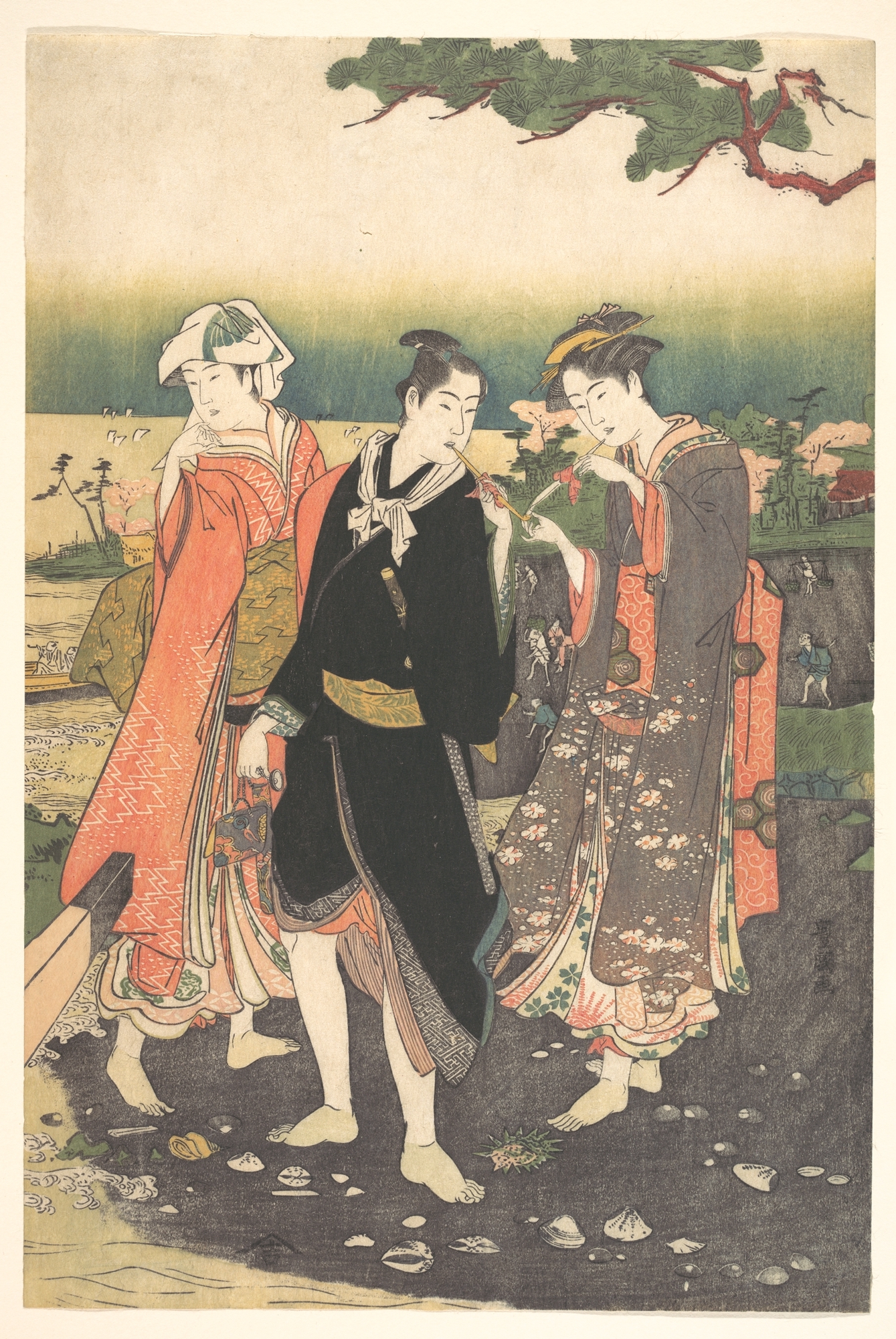
On Shinagawa Beach at Ebb-Tide
1769–1825
Woodblock print; ink and color on paper
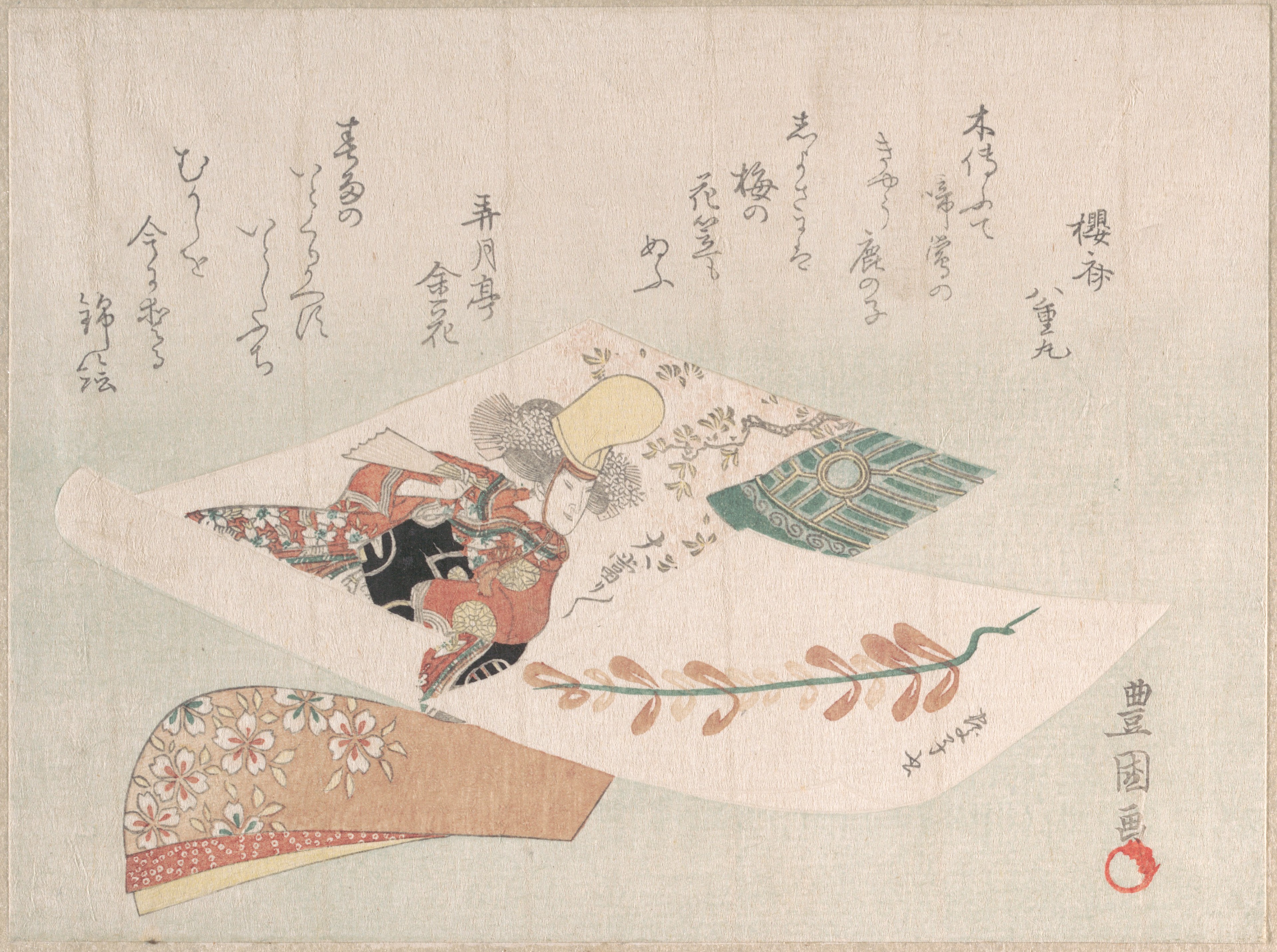
Representation of the Dance-Play "Dōjōji"
Woodblock print (surimono); ink and color on paper

The actors Sawamura Sojuro II as Satsuma Gengobei and Arashi Ryuzo II as Mawashi-otoko Yasuke in the play "Edo Sunago Kichirei Soga," performed at the Miyako Theater on the first month, 1795
c. 1795
Color woodblock print; oban
Frequently Asked Questions
Kisaragi (First Month) / Juni-ka-getsu no uchi (From a Series of the Twelve Months) was created by Utagawa Toyokuni I (歌川豊国).