Kiyomizu mode no Kagekiyo, Moyo no azami (Kagekiyo on a Kiyomizu Pilgrimage, Thistle) / Tosei mitate sanju-rokkasen 當盛見立 三十六花撰 (Contemporary Kabuki Actors Likened to Thirty-Six Flowers (Immortals of Poetry))
- Source:
- ukiyo-e.org
Description
Kiyomizu mōde no Kagekiyo / Moyō no azami (Kagekiyo on a Kiyomizu Pilgrimage / Thistle) belongs to Utagawa Toyokuni's series Tōsei mitate sanjū-rokkasen — Contemporary Kabuki Actors Likened to Thirty-Six Flowers (Immortals of Poetry). Digitized through ukiyo-e.org from the British Museum (image AN00431557), the sheet sits within a sophisticated mitate-e project that triangulates a classical literary roster (the thirty-six immortal poets of Heian-period waka tradition), the floral language of contemporary urban culture, and the current kabuki stage. In this design, Toyokuni pairs the role of Kagekiyo on his Kiyomizu pilgrimage — a figure from the Heike-related repertoire — with the thistle (azami), one of the flowers in the symbolic system, allowing literate Edo viewers to read across registers. As the leading designer of yakusha-e and head of the Utagawa school, Toyokuni had the cultural authority to pull off such an ambitious classical pairing without losing the immediate appeal of star recognition. Each design in the series combined a strong central figure, embedded floral motif, and inscribed waka or playful verse, layering meaning for the cultivated buyer. The British Museum impression preserves the saturated mineral colour and confident outline that made the series one of the most decorative achievements of late-Edo ukiyo-e mitate publishing.
More Prints by Utagawa Toyokuni I

Segawa Kikunojō III as the Shop Boy Chōkichi
1796
Woodblock print (nishiki-e), ink and color on paper
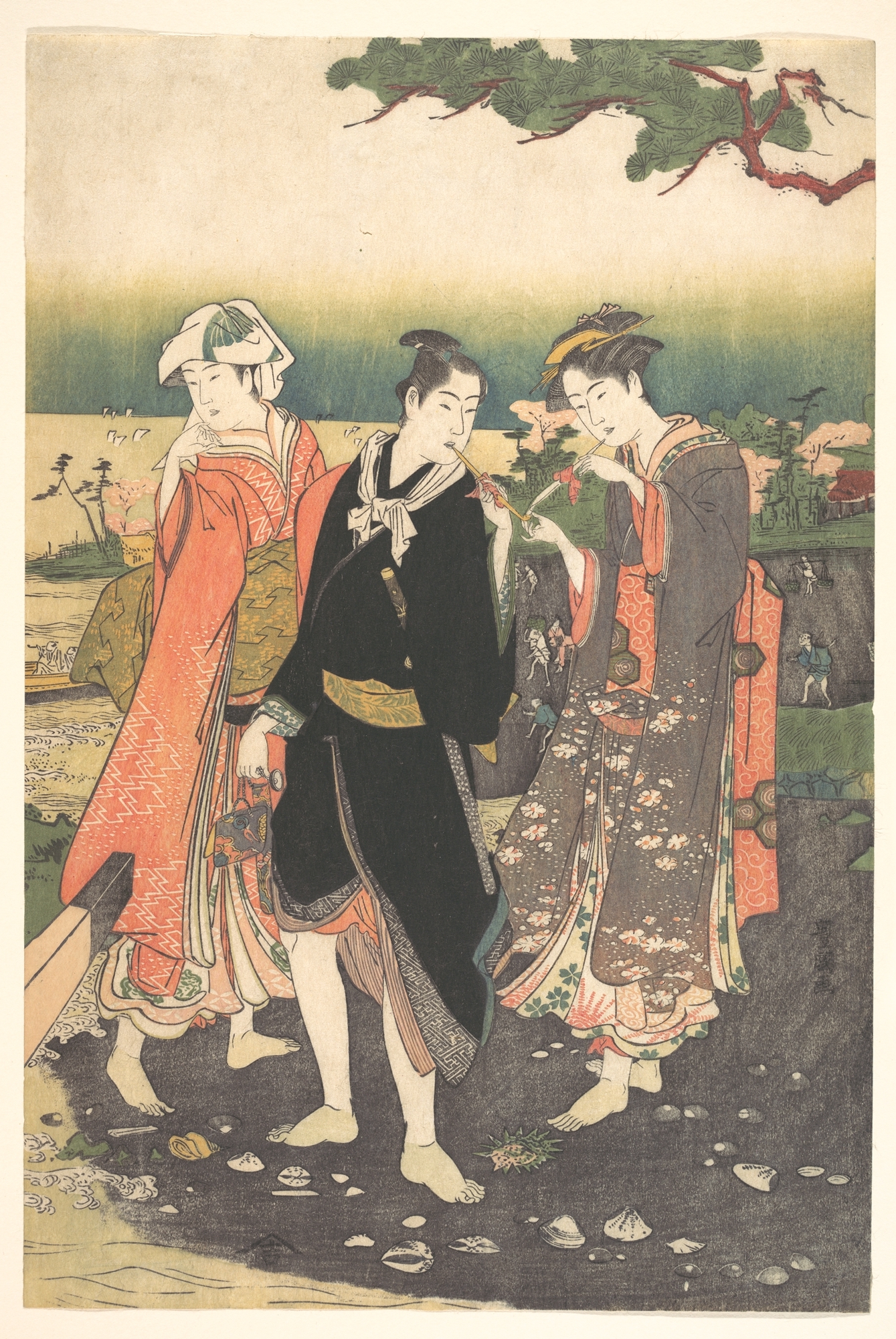
On Shinagawa Beach at Ebb-Tide
1769–1825
Woodblock print; ink and color on paper
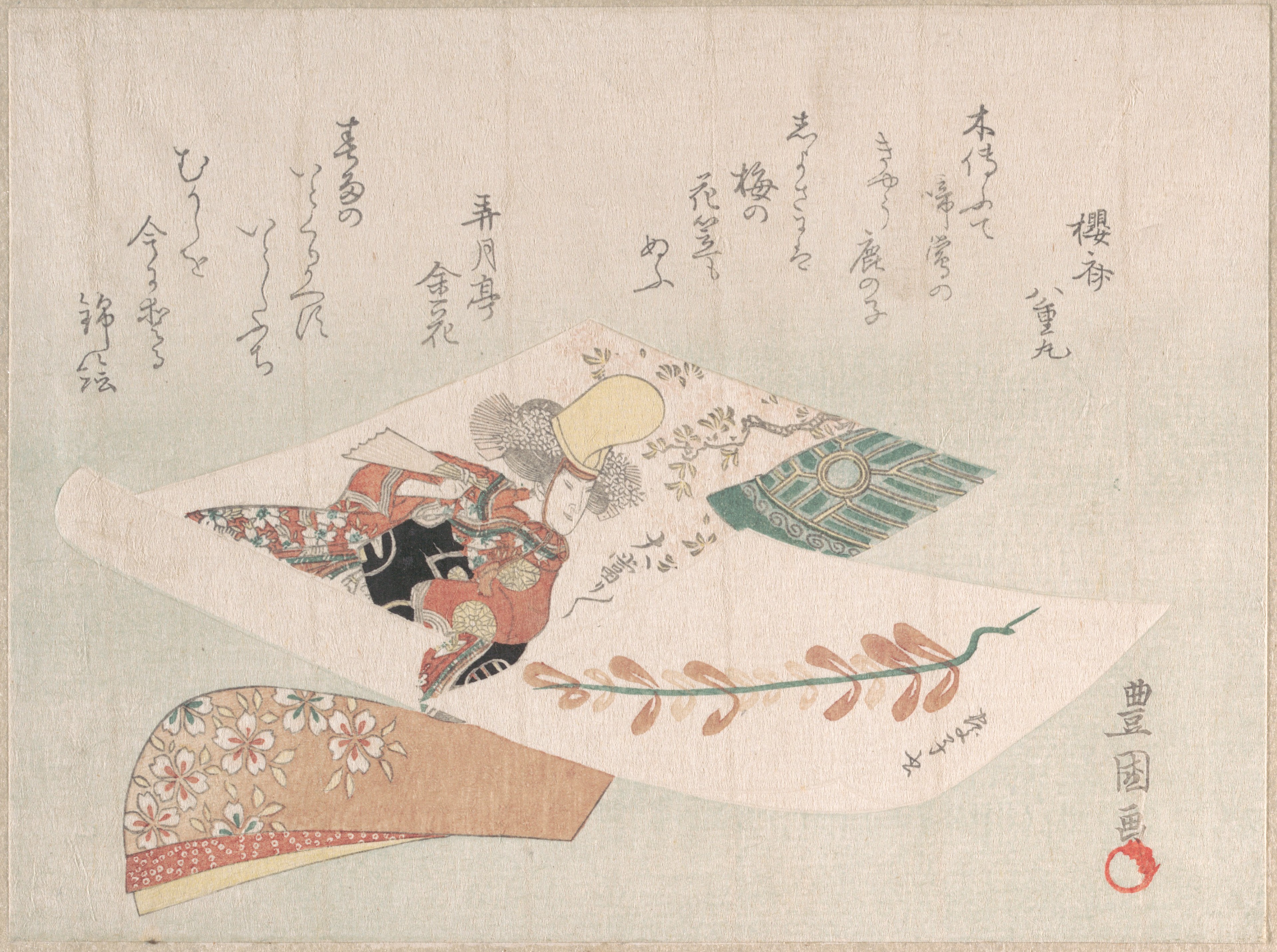
Representation of the Dance-Play "Dōjōji"
Woodblock print (surimono); ink and color on paper

The actors Sawamura Sojuro II as Satsuma Gengobei and Arashi Ryuzo II as Mawashi-otoko Yasuke in the play "Edo Sunago Kichirei Soga," performed at the Miyako Theater on the first month, 1795
c. 1795
Color woodblock print; oban
More Birds & Flowers Prints
Frequently Asked Questions
Kiyomizu mode no Kagekiyo, Moyo no azami (Kagekiyo on a Kiyomizu Pilgrimage, Thistle) / Tosei mitate sanju-rokkasen 當盛見立 三十六花撰 (Contemporary Kabuki Actors Likened to Thirty-Six Flowers (Immortals of Poetry)) was created by Utagawa Toyokuni I (歌川豊国).
Kiyomizu mode no Kagekiyo, Moyo no azami (Kagekiyo on a Kiyomizu Pilgrimage, Thistle) / Tosei mitate sanju-rokkasen 當盛見立 三十六花撰 (Contemporary Kabuki Actors Likened to Thirty-Six Flowers (Immortals of Poetry)) depicts birds & flowers.