
Ladies behind screen in a daimyo's mansion
- Date:
- n.d.
- Medium:
- Color woodblock print; sheet from oban pentaptych
- Source:
- Art Institute of Chicago
Description
Ladies behind screen in a daimyo's mansion, listed by the Art Institute of Chicago with a date of 1769, takes the viewer into the inner quarters of a samurai household. Utagawa Toyokuni stages the figures behind a sliding fusuma or kicho screen, so that they appear partly veiled by the architecture even as their kimono and gestures remain legible. The structure is a familiar device in Edo ukiyo-e: the screen creates a sense of decorum and discretion while inviting the viewer into a space normally closed to outsiders. The composition rewards close looking, as Toyokuni uses the screen's edge and pictorial motifs to play formal games with the picture plane. Although the subject is grand, the mansion of a daimyo, the visual rhythms remain those of the printmaker's craft: layered planes, careful repetition of pattern, and a balance between negative space and densely worked surface. Toyokuni would become best known as the foremost designer of yakusha-e in his generation, yet sheets like this one show how thoroughly his eye was trained on the architecture of indoor life, where bodies, textiles, and partitions could be combined into stable yet expressive groups. The Art Institute of Chicago preserves the print as part of its Toyokuni holdings, where it functions both as a refined exercise in interior staging and as a window into the social geography of Edo, in which the elite household became a setting that ukiyo-e artists could enter only through imagination and image-making.
More Prints by Utagawa Toyokuni I

Segawa Kikunojō III as the Shop Boy Chōkichi
1796
Woodblock print (nishiki-e), ink and color on paper
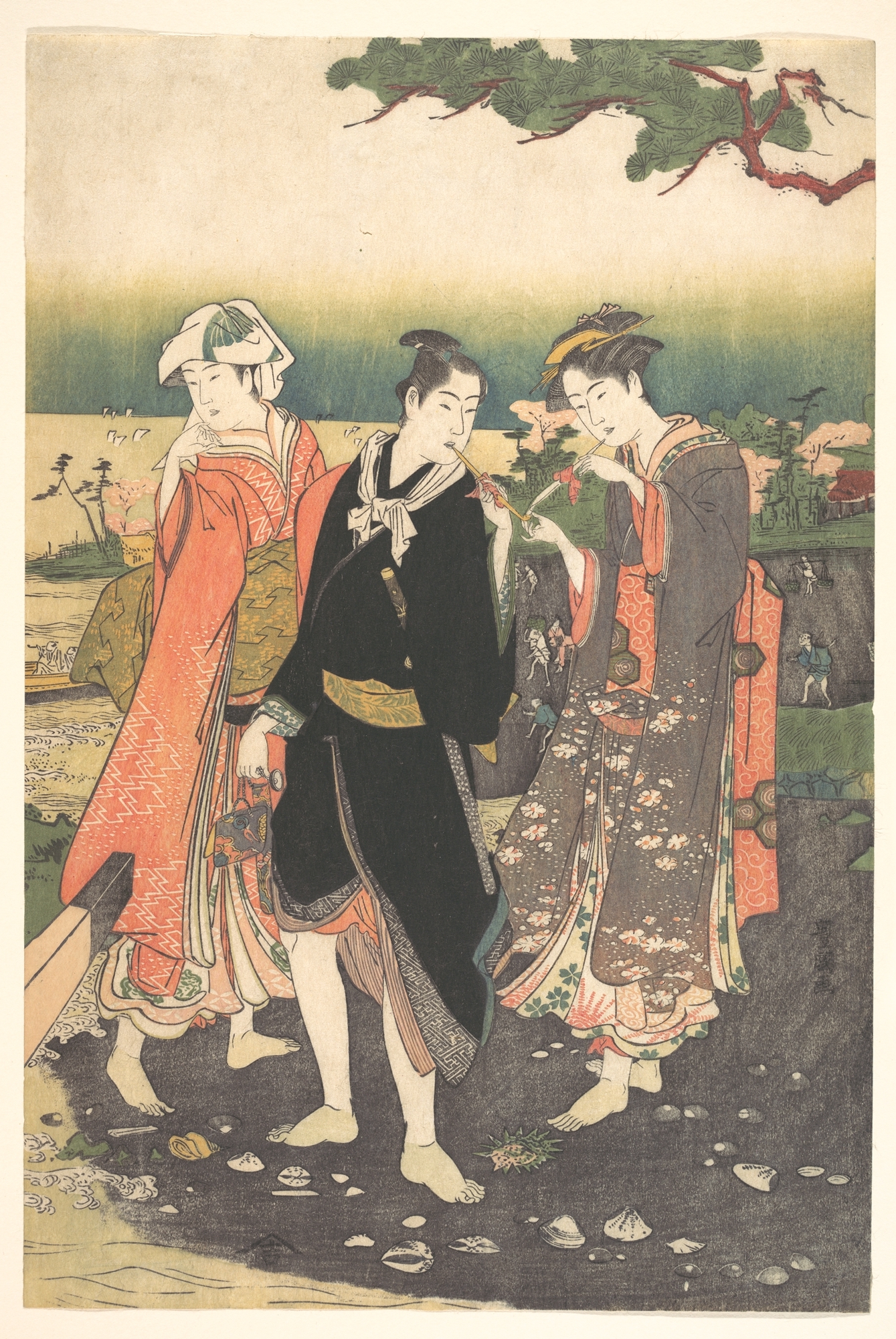
On Shinagawa Beach at Ebb-Tide
1769–1825
Woodblock print; ink and color on paper
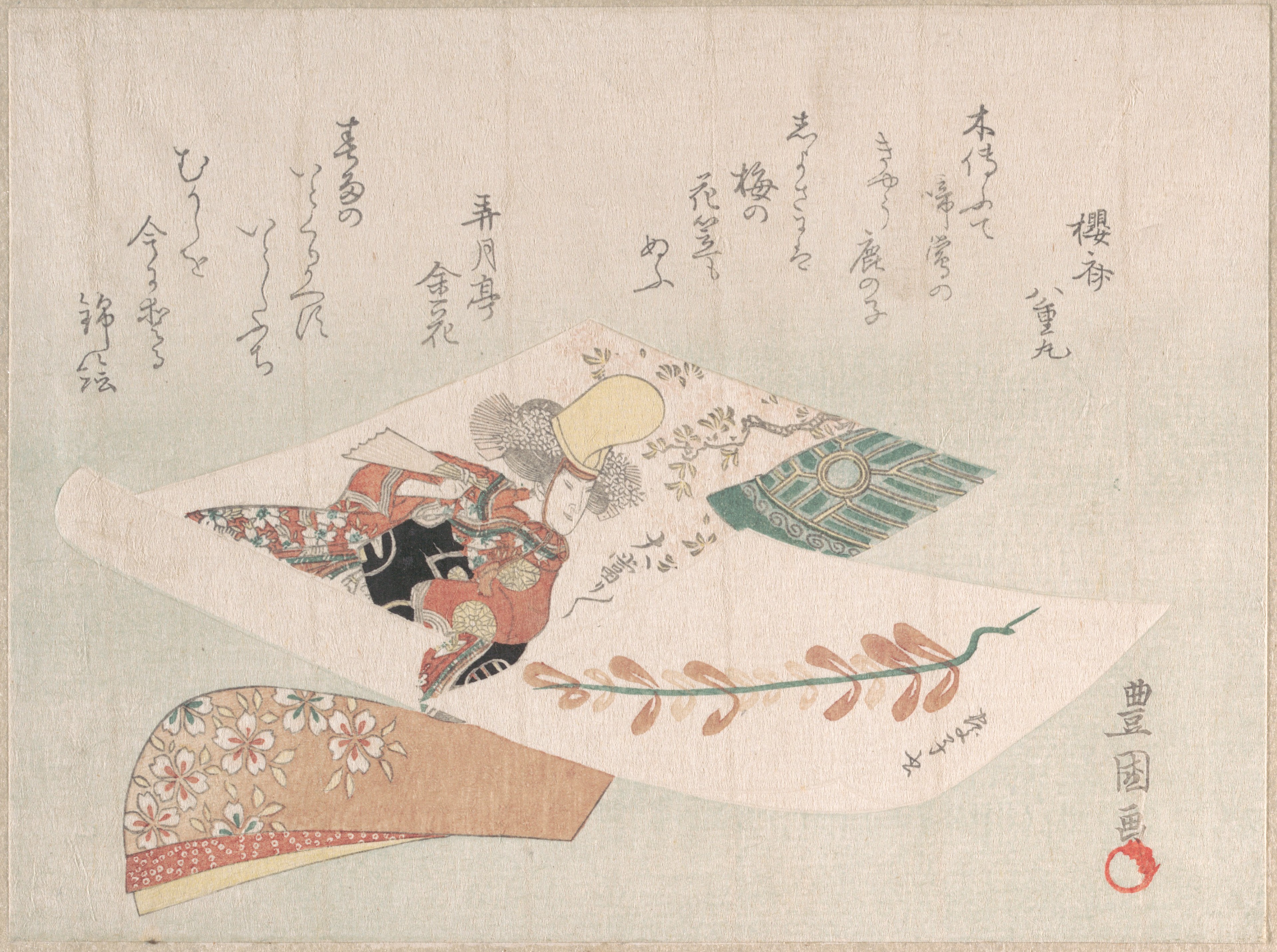
Representation of the Dance-Play "Dōjōji"
Woodblock print (surimono); ink and color on paper

The actors Sawamura Sojuro II as Satsuma Gengobei and Arashi Ryuzo II as Mawashi-otoko Yasuke in the play "Edo Sunago Kichirei Soga," performed at the Miyako Theater on the first month, 1795
c. 1795
Color woodblock print; oban
Frequently Asked Questions
Ladies behind screen in a daimyo's mansion was created by Utagawa Toyokuni I (歌川豊国) in n.d..