
Memorial Portrait of the Actor Segawa Senjo (Segawa Kikunojo III)
- Date:
- 1810
- Medium:
- Color woodblock print; oban
- Source:
- Art Institute of Chicago
Description
This memorial portrait, designed by Utagawa Toyokuni in 1810, marks the death of the great onnagata Segawa Kikunojo III, who in retirement took the name Segawa Senjo. Kikunojo III was one of the most beloved female-role specialists of the Edo stage, and his passing prompted an outpouring of shini-e by the leading print designers, of whom Toyokuni was foremost. The Edo ukiyo-e tradition of memorial portraits served both a commercial and a quasi-devotional function, providing fans with a keepsake that could also stand in for personal mourning.
The print presents the actor in subdued attire, often associated in shini-e with the white robe worn at death or with the Buddhist habit of a retired layman. Inscriptions on such sheets typically include the actor's posthumous Buddhist name, the date of death, and verses composed by colleagues, admirers, or the deceased himself. Toyokuni's design balances the conventions of the genre against the demands of yakusha-e: the likeness must be recognizable and dignified, signaling the loss of a unique theatrical voice while avoiding the dramatic poses that characterized commercial actor prints.
The Art Institute of Chicago holds the sheet as part of its survey of nineteenth-century Edo print culture. As a record of Kikunojo III's celebrity, the print invites consideration of how the onnagata role was honored across the boundary between life and death, and how the print industry crystallized that honor in a portable, affordable image. Toyokuni's shini-e thus join his theatrical portraits and his bijinga in mapping the full emotional range of Edo's relationship to its stars.
More Prints by Utagawa Toyokuni I

Segawa Kikunojō III as the Shop Boy Chōkichi
1796
Woodblock print (nishiki-e), ink and color on paper
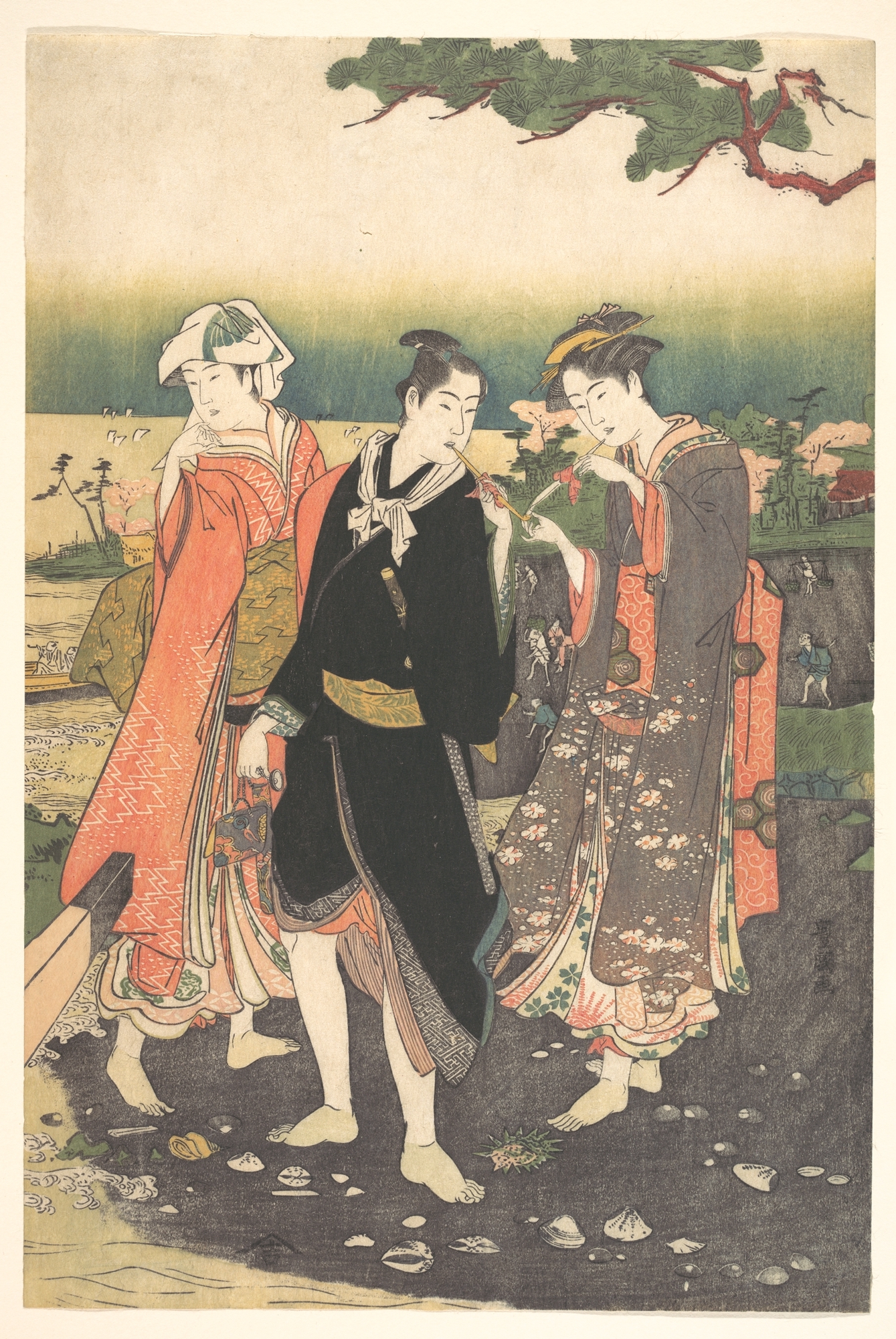
On Shinagawa Beach at Ebb-Tide
1769–1825
Woodblock print; ink and color on paper
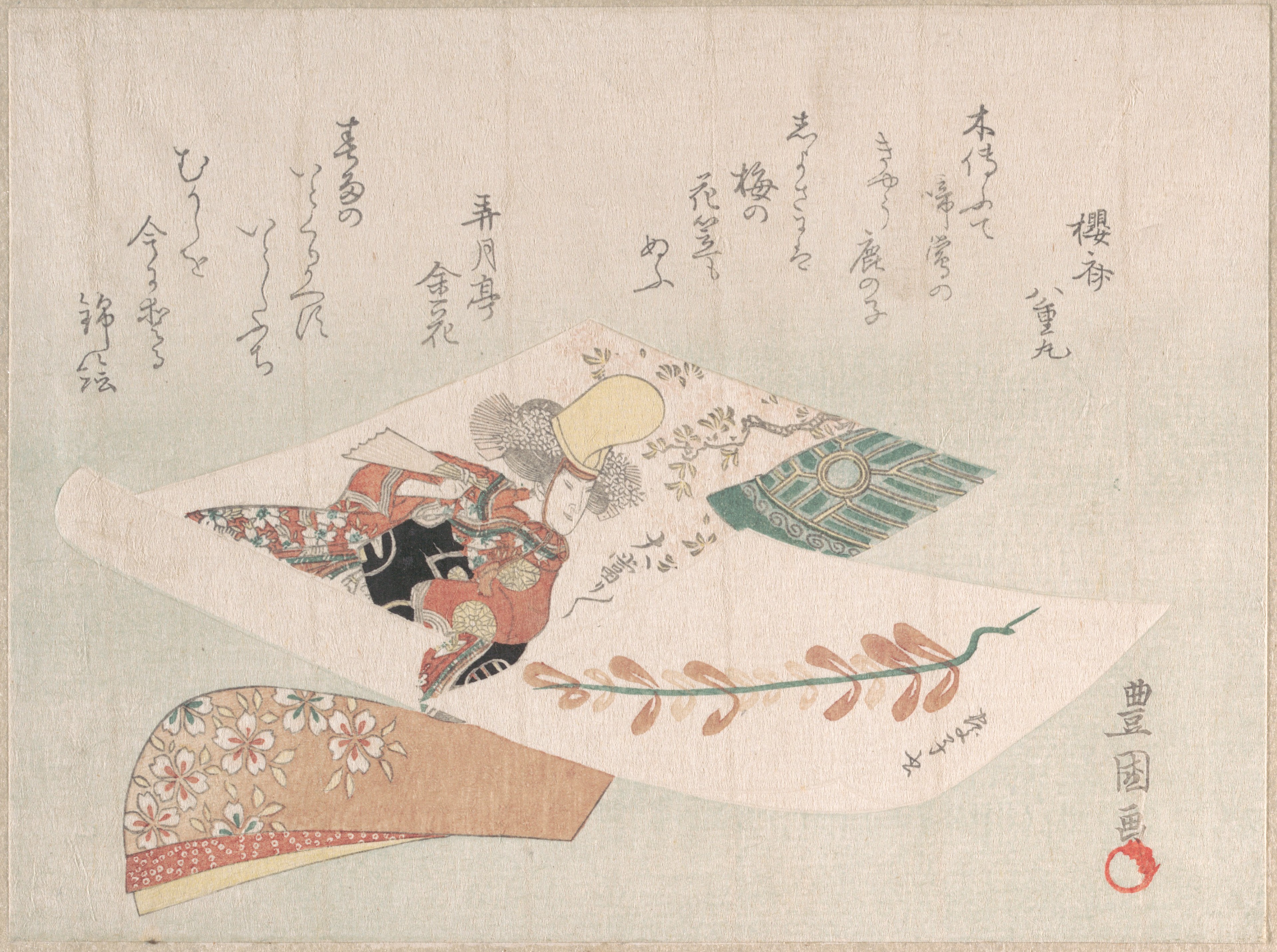
Representation of the Dance-Play "Dōjōji"
Woodblock print (surimono); ink and color on paper

The actors Sawamura Sojuro II as Satsuma Gengobei and Arashi Ryuzo II as Mawashi-otoko Yasuke in the play "Edo Sunago Kichirei Soga," performed at the Miyako Theater on the first month, 1795
c. 1795
Color woodblock print; oban
Frequently Asked Questions
Memorial Portrait of the Actor Segawa Senjo (Segawa Kikunojo III) was created by Utagawa Toyokuni I (歌川豊国) in 1810.