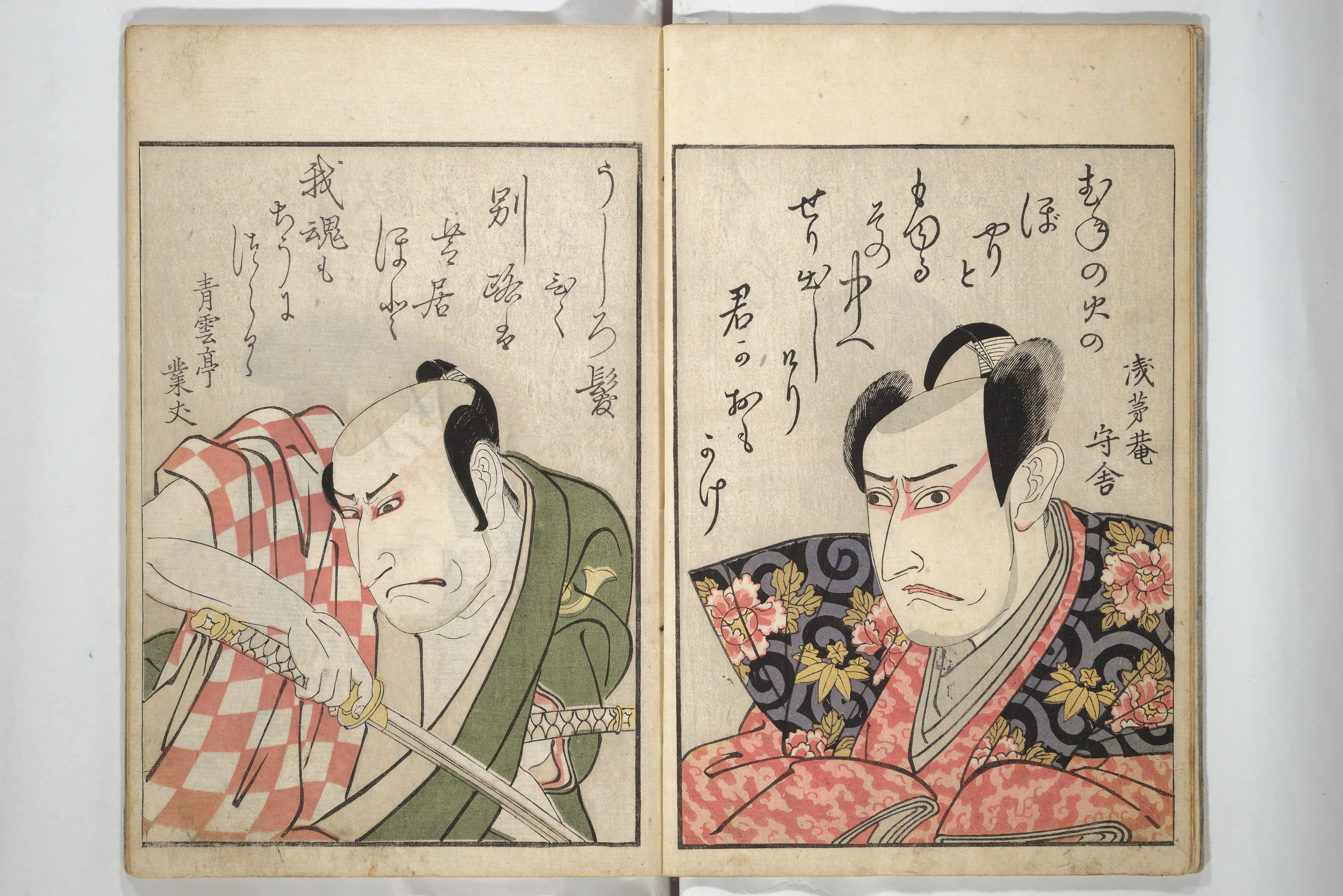
Mirror Images of Kabuki Actors (Yakusha awase kagami) 俳優相貎鏡
- Date:
- 1804
- Medium:
- Set of two woodblock printed books; ink and color on paper
- Source:
- Metropolitan Museum of Art
Description
Dated 1804 and held by the Metropolitan Museum of Art, "Mirror Images of Kabuki Actors" (Yakusha awase kagami) by Utagawa Toyokuni is a yakusha-e print whose title invokes the long Japanese cultural metaphor of the kagami (mirror) as a tool for reflecting truth, virtue, and likeness. The title positions the print as a kind of definitive showcase of kabuki actors, presenting them in their stage roles for the appreciative scrutiny of fans, collectors, and connoisseurs. The early nineteenth-century moment was a particularly creative one for Edo ukiyo-e: Toyokuni had become the leading yakusha-e designer of his generation, and the Utagawa school under his leadership was pushing the conventions of actor portraiture toward sharper individualization and stronger compositional dynamism. The 1804 date places the print at a sensitive political moment as well, since the shogunal authorities in that very year sanctioned several leading print artists, including Toyokuni's colleague Utamaro, for publishing prints that were deemed politically inappropriate. The Utagawa workshop continued production through this disruption with the kind of careful navigation that print artists routinely practiced. Toyokuni's yakusha-e in this period exemplifies the workshop's compositional confidence: confident curving outlines, individualized facial features, and patterned costumes whose textile motifs functioned as character signals. For researchers studying Utagawa Toyokuni's mature style and the broader history of yakusha-e in early-nineteenth-century Edo ukiyo-e, this 1804 print is an important and well-preserved reference document.
More Prints by Utagawa Toyokuni I

Segawa Kikunojō III as the Shop Boy Chōkichi
1796
Woodblock print (nishiki-e), ink and color on paper
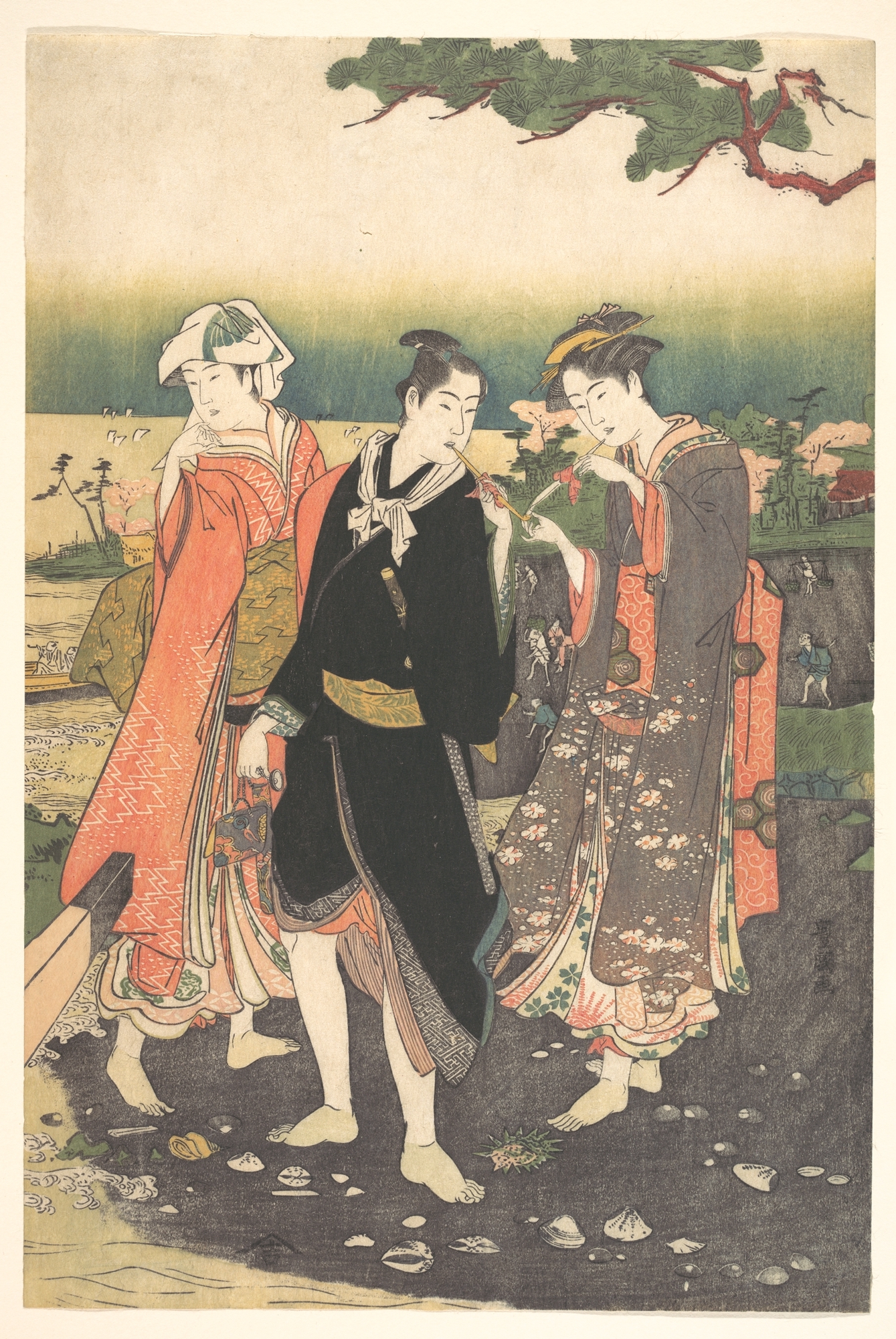
On Shinagawa Beach at Ebb-Tide
1769–1825
Woodblock print; ink and color on paper
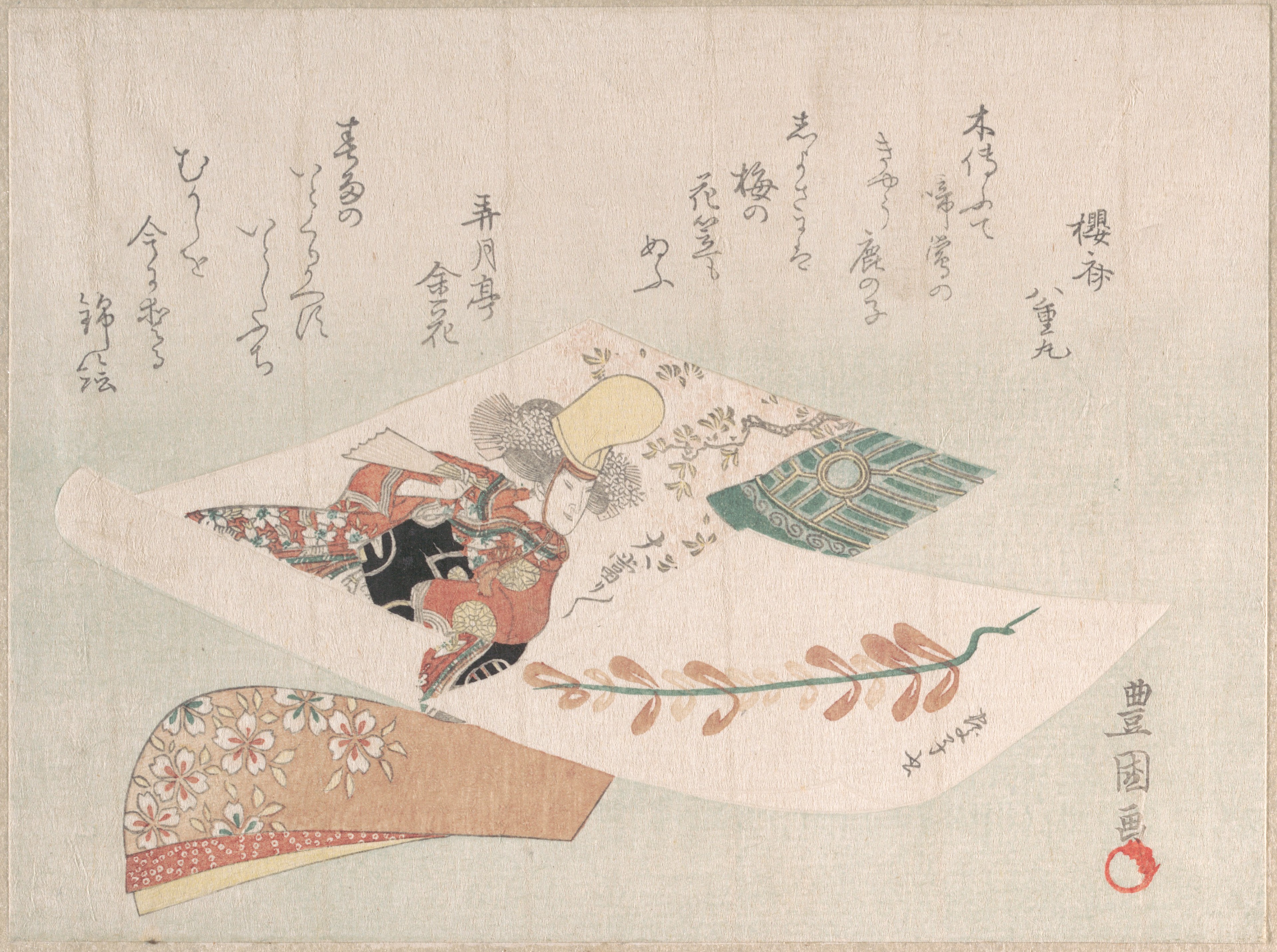
Representation of the Dance-Play "Dōjōji"
Woodblock print (surimono); ink and color on paper

The actors Sawamura Sojuro II as Satsuma Gengobei and Arashi Ryuzo II as Mawashi-otoko Yasuke in the play "Edo Sunago Kichirei Soga," performed at the Miyako Theater on the first month, 1795
c. 1795
Color woodblock print; oban
Frequently Asked Questions
Mirror Images of Kabuki Actors (Yakusha awase kagami) 俳優相貎鏡 was created by Utagawa Toyokuni I (歌川豊国) in 1804.