
Nakamura Daikichi as Hige no Ikyu, Matsumoto Koshiro as Agemaki no Sukeroku, Seki Sanjuro as Shirozake uri Shinbei, Onoe Kikugoro as Agemaki 中村大吉の髭の意休、松本幸四郎のあげまきの助六、関三十郎の白酒売新兵衛、尾上菊五郎のあげまき
- Source:
- ukiyo-e.org
Description
This Utagawa Toyokuni design assembles four of the canonical figures from Sukeroku yukari no Edo zakura, the perennial Yoshiwara-set kabuki play that has stood at the heart of Edo ukiyo-e iconography since the eighteenth century. The cast is named with care: Nakamura Daikichi as the bearded antagonist Hige no Ikyu, Matsumoto Koshiro as the dashing hero Agemaki no Sukeroku, Seki Sanjuro as the sweet-sake seller Shirozake-uri Shinbei (a comic disguise of Sukeroku's brother Soga no Juro), and Onoe Kikugoro as the great courtesan Agemaki. Each role carries its own iconographic kit: Ikyu's grey beard and dark Edo-cloth haori, Sukeroku's purple headband and oiled hair, Shinbei's flat sake-shop apron, and Agemaki's towering hairpins and richly embroidered uchikake. Toyokuni arranges the figures so that the contrast between Sukeroku and Ikyu, the play's central confrontation, dominates the composition, while the courtesan and the sake seller occupy the flanking positions that the stage itself prescribed. The British Museum impression (AN00601601_001) is accessible at https://ukiyo-e.org/image/bm/AN00601601_001_l. As yakusha-e, the print is both record and advertisement: it preserves a specific casting that would have been ephemeral in performance, and at the same time it sells the visual language of Sukeroku, one of the most marketable kabuki brands of the Edo period, to consumers of Utagawa-school prints.
More Prints by Utagawa Toyokuni I

Segawa Kikunojō III as the Shop Boy Chōkichi
1796
Woodblock print (nishiki-e), ink and color on paper
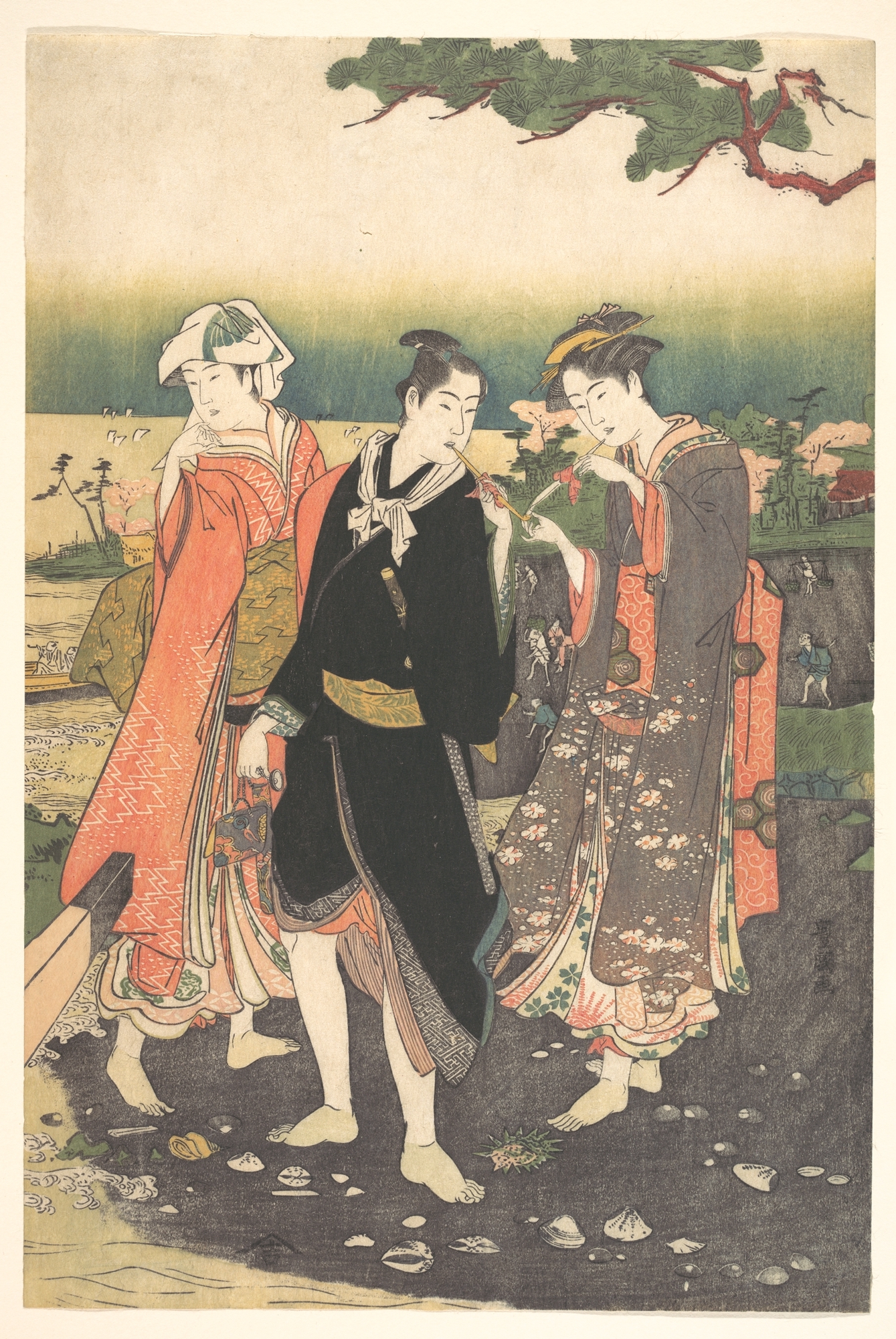
On Shinagawa Beach at Ebb-Tide
1769–1825
Woodblock print; ink and color on paper
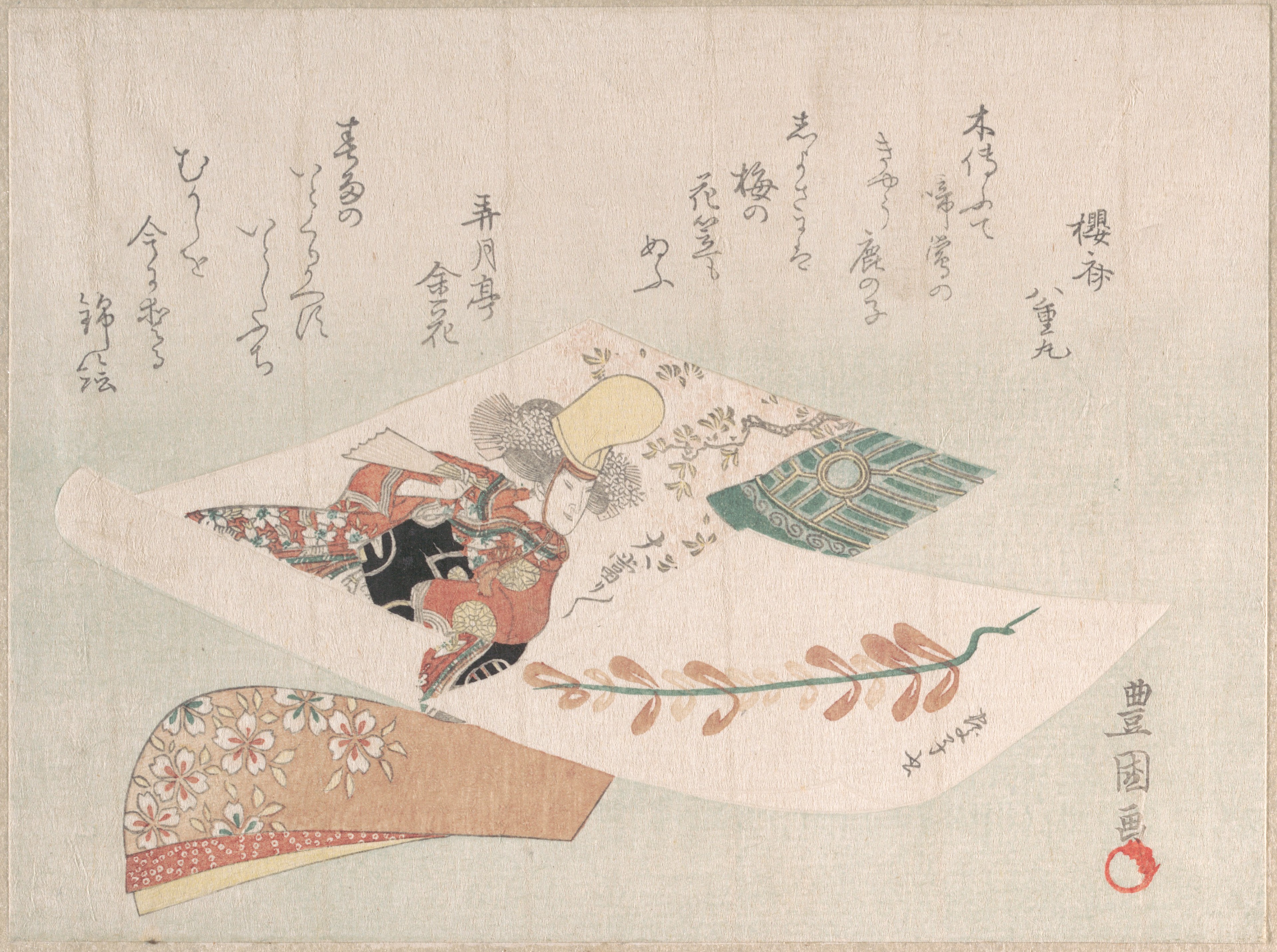
Representation of the Dance-Play "Dōjōji"
Woodblock print (surimono); ink and color on paper

The actors Sawamura Sojuro II as Satsuma Gengobei and Arashi Ryuzo II as Mawashi-otoko Yasuke in the play "Edo Sunago Kichirei Soga," performed at the Miyako Theater on the first month, 1795
c. 1795
Color woodblock print; oban
More Sumo Prints


Frequently Asked Questions
Nakamura Daikichi as Hige no Ikyu, Matsumoto Koshiro as Agemaki no Sukeroku, Seki Sanjuro as Shirozake uri Shinbei, Onoe Kikugoro as Agemaki 中村大吉の髭の意休、松本幸四郎のあげまきの助六、関三十郎の白酒売新兵衛、尾上菊五郎のあげまき was created by Utagawa Toyokuni I (歌川豊国).
Nakamura Daikichi as Hige no Ikyu, Matsumoto Koshiro as Agemaki no Sukeroku, Seki Sanjuro as Shirozake uri Shinbei, Onoe Kikugoro as Agemaki 中村大吉の髭の意休、松本幸四郎のあげまきの助六、関三十郎の白酒売新兵衛、尾上菊五郎のあげまき depicts sumo.