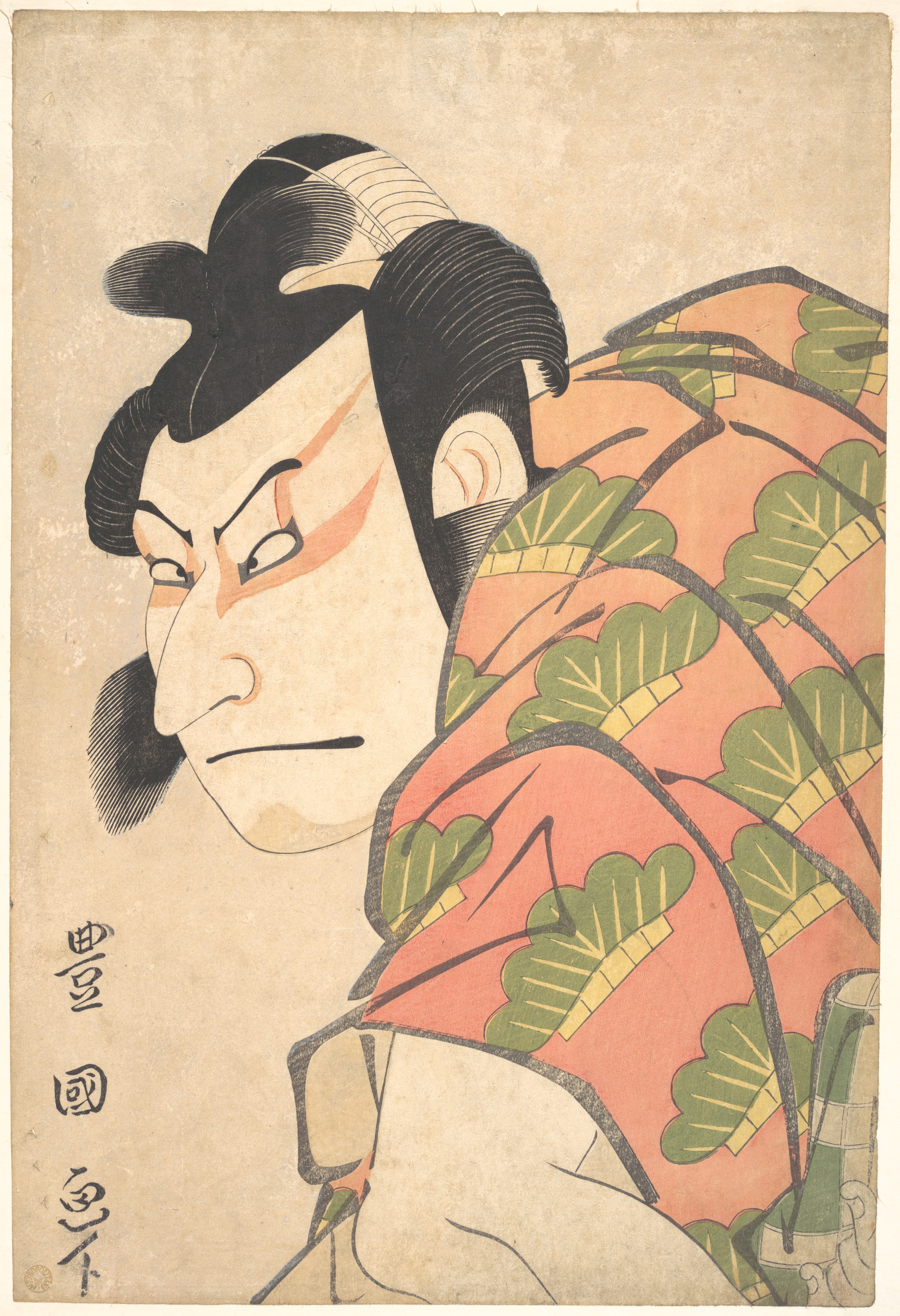
Nakamura Nakazo II as Matsuo-maru
- Date:
- 1796
- Medium:
- Woodblock print; ink and color on paper
- Source:
- Metropolitan Museum of Art
Description
Utagawa Toyokuni I (1769-1825) here depicts the kabuki actor Nakamura Nakazō II in the role of Matsuō-maru, one of the three brothers at the dramatic center of Sugawara denju tenarai kagami (Sugawara and the Secrets of Calligraphy), a perennial favorite in the kabuki repertoire first staged in 1746. The play centers on the historical figure Sugawara no Michizane and the loyalty oaths sworn by three brothers named for pine, plum, and cherry; Matsuō-maru, the pine, is tasked with a tragic sacrifice that became one of kabuki's most famous emotional set pieces. As yakusha-e, this Edo ukiyo-e print belongs to the genre Toyokuni dominated after his breakthrough series of the 1790s portraying actors on stage. Toyokuni differentiated his approach from the slightly earlier dramatic close-ups of Sharaku by emphasizing the full theatrical body—stance, gesture, and elaborate costume—rather than caricatured facial intensity. The Matsuō-maru role is identifiable through the distinctive checked or plaid kimono motif traditionally worn for the character, a costume convention every kabuki print collector would have recognized instantly. Nakamura Nakazō II was among the most prominent Edo stage stars of the early nineteenth century, and Toyokuni's prints of him circulated as both keepsake portraits and as advertising for current productions. The catalogued year of 1615 in some museum records is clearly transcriptional and refers to a date associated with the Tokugawa political settlement, not the print itself, which dates from Toyokuni's active career. This impression is held in the Metropolitan Museum of Art.
More Prints by Utagawa Toyokuni I

Segawa Kikunojō III as the Shop Boy Chōkichi
1796
Woodblock print (nishiki-e), ink and color on paper
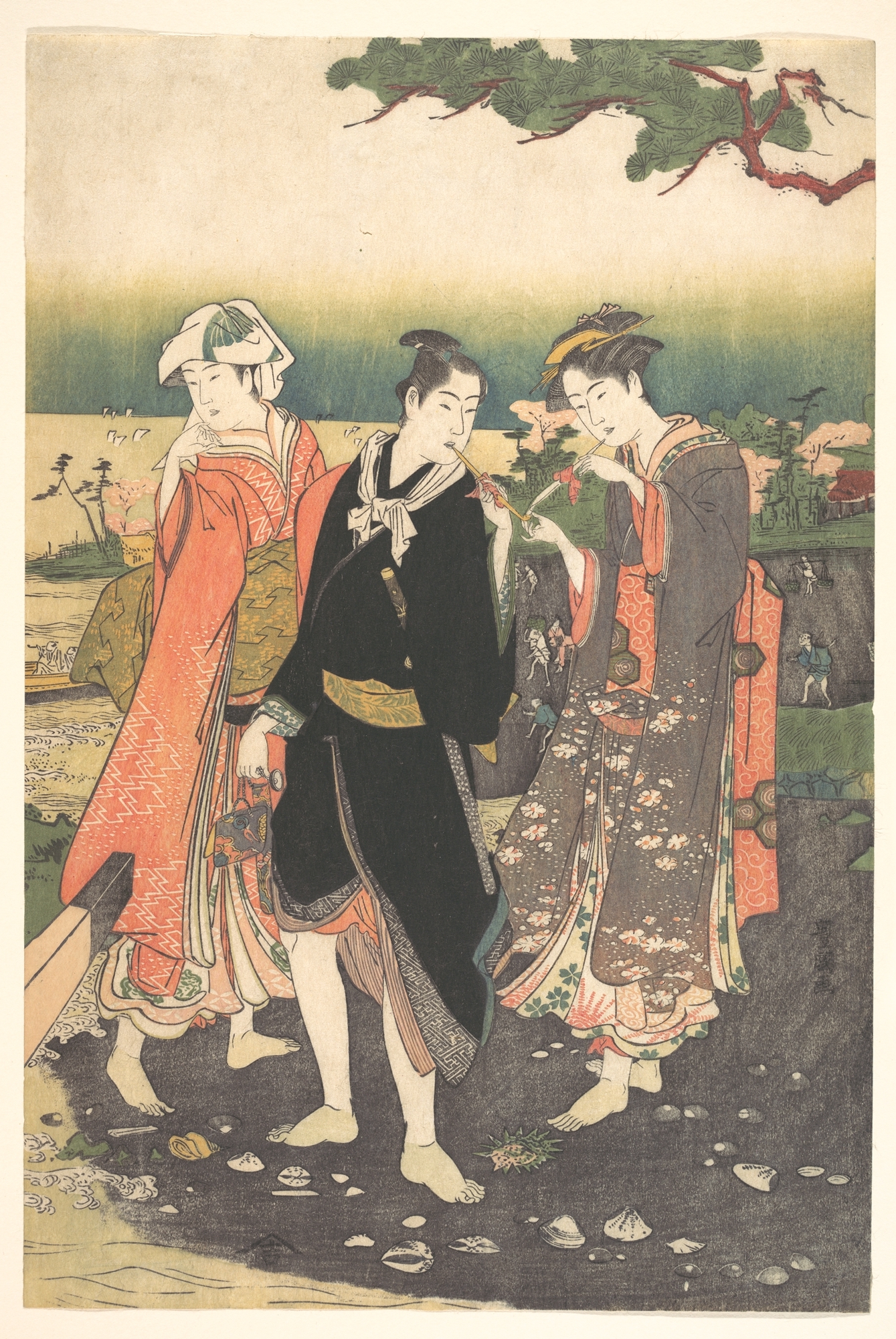
On Shinagawa Beach at Ebb-Tide
1769–1825
Woodblock print; ink and color on paper
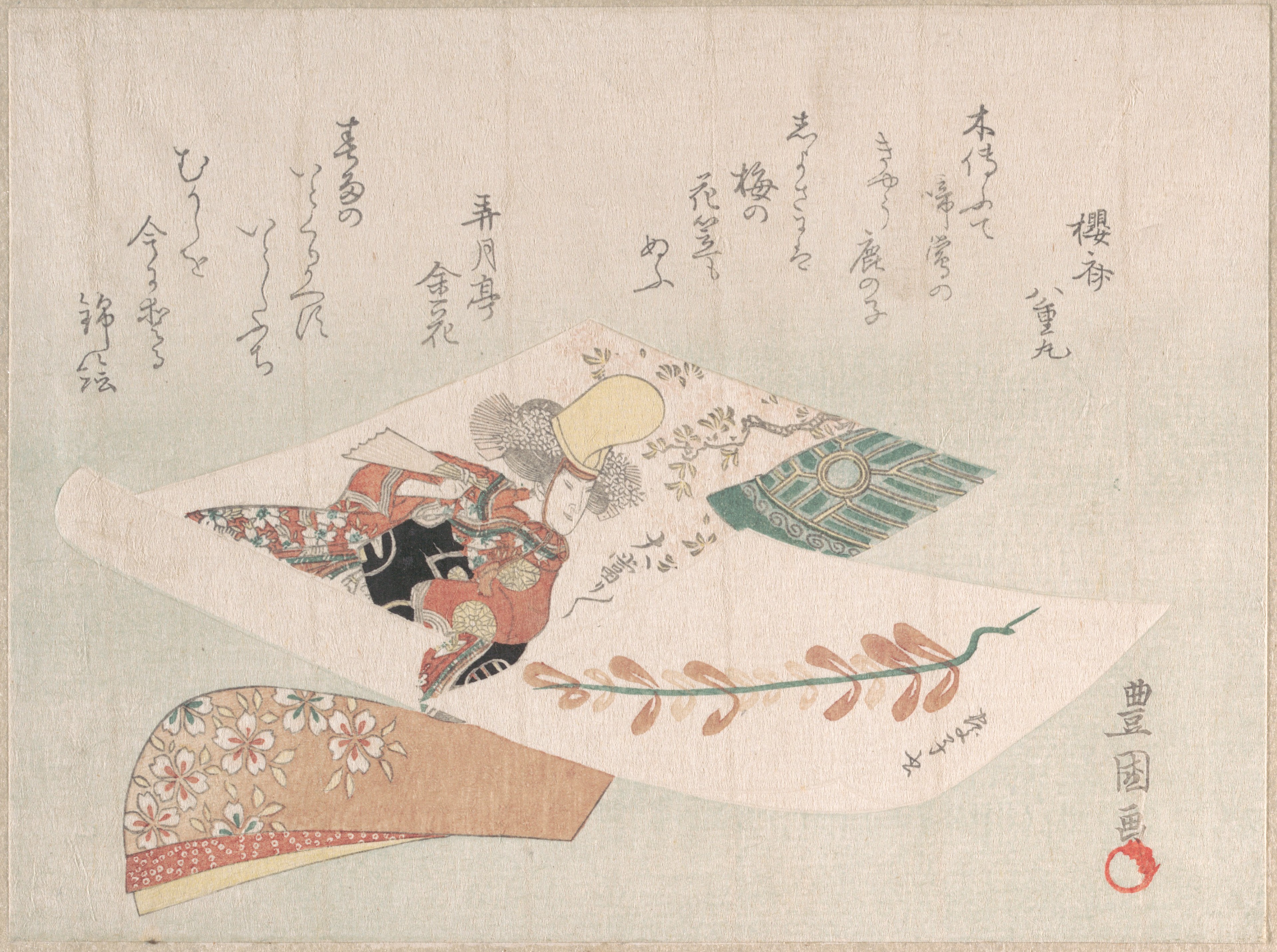
Representation of the Dance-Play "Dōjōji"
Woodblock print (surimono); ink and color on paper

The actors Sawamura Sojuro II as Satsuma Gengobei and Arashi Ryuzo II as Mawashi-otoko Yasuke in the play "Edo Sunago Kichirei Soga," performed at the Miyako Theater on the first month, 1795
c. 1795
Color woodblock print; oban
Frequently Asked Questions
Nakamura Nakazo II as Matsuo-maru was created by Utagawa Toyokuni I (歌川豊国) in 1796.