
Nakamura Shikan as Naniwa no Jirosaku, Iwai Tojaku as Kamuro Tayori, Seki Sanjuro as Azuma no Yoshiro
- Source:
- ukiyo-e.org
Description
Utagawa Toyokuni's three-figure design names its sitters precisely: Nakamura Shikan as Naniwa no Jirosaku, Iwai Tojaku as the young attendant Kamuro Tayori, and Seki Sanjuro as Azuma no Yoshiro. The grouping signals a typical Edo kabuki sewamono or townsman play in which two rival male principals, one rooted in the Osaka (Naniwa) urban world and one in the Edo (Azuma) one, are mediated through a courtesan establishment whose youngest member, the kamuro, looks on. The British Museum impression (AN00437641_001) is accessible at https://ukiyo-e.org/image/bm/AN00437641_001_l. Toyokuni gives Nakamura Shikan and Seki Sanjuro the stylistic markers of the otokodate role: long-sleeved striped kimono, neatly bound topknots, and a deliberate slouch of the shoulders that signals streetwise self-possession. Iwai Tojaku, in contrast, is dressed as a kamuro with bright, juvenile robes and large hairpins, drawing the eye downward to balance the towering male figures. The arrangement is a small study in how Edo ukiyo-e managed the social geometry of kabuki: rival heroes face each other in mirror poses, with the diminutive kamuro acting as a visual hinge between them. As yakusha-e, the print stands as a high-quality example of Toyokuni I's late work, when the Utagawa school had refined the actor-trio composition into a near-formula and Toyokuni's hand could be relied upon to give it freshness through facial nuance alone.
More Prints by Utagawa Toyokuni I

Segawa Kikunojō III as the Shop Boy Chōkichi
1796
Woodblock print (nishiki-e), ink and color on paper
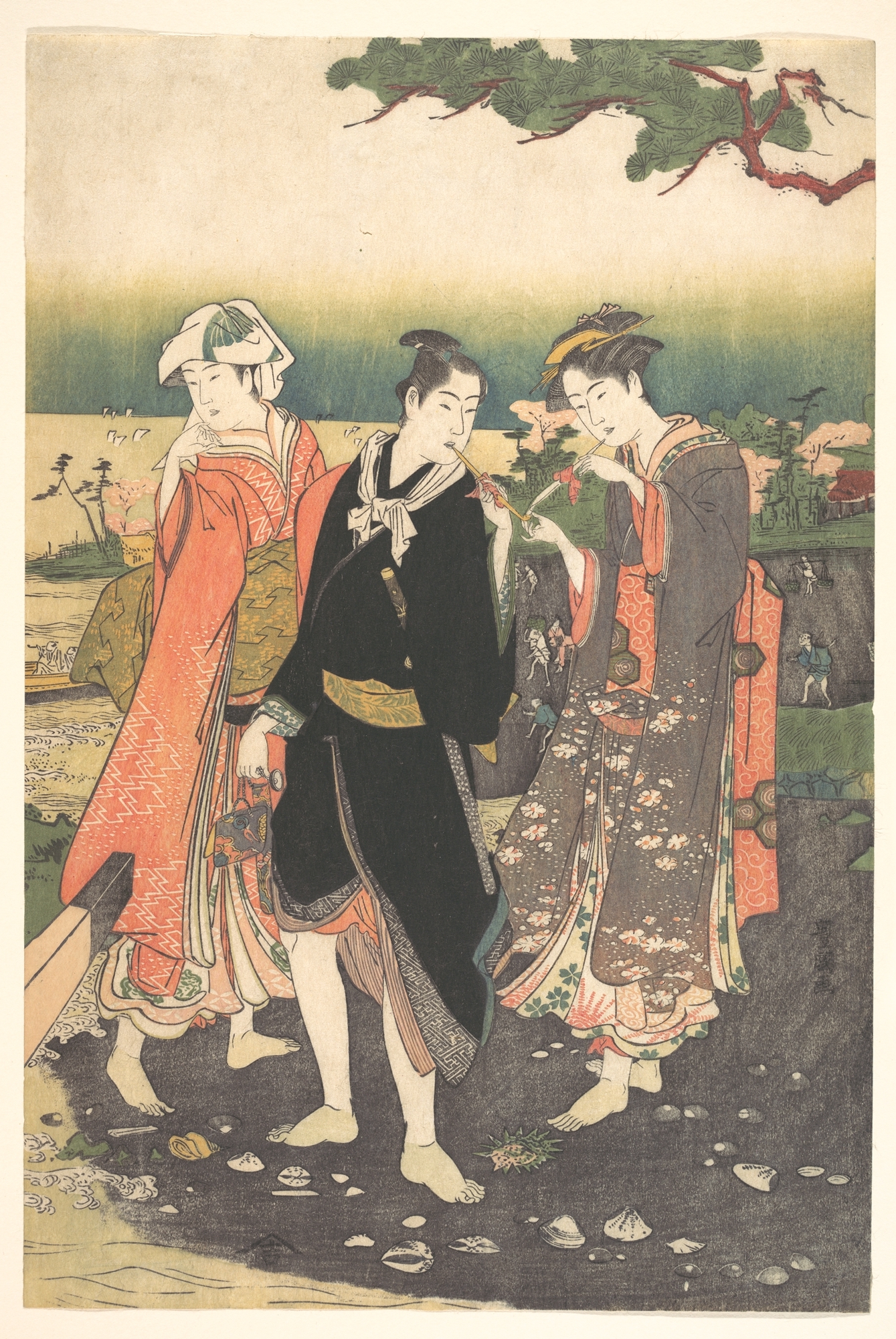
On Shinagawa Beach at Ebb-Tide
1769–1825
Woodblock print; ink and color on paper
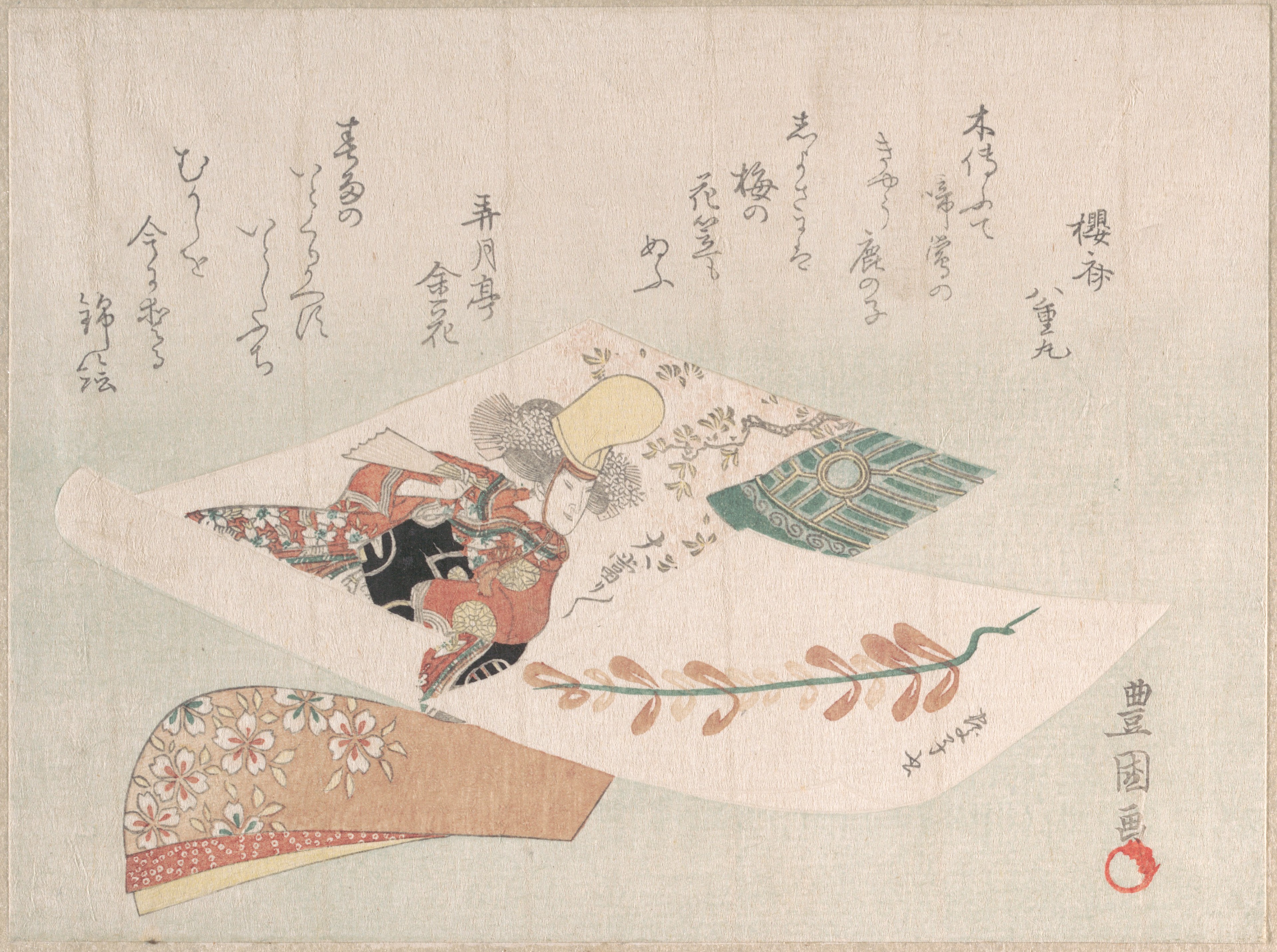
Representation of the Dance-Play "Dōjōji"
Woodblock print (surimono); ink and color on paper

The actors Sawamura Sojuro II as Satsuma Gengobei and Arashi Ryuzo II as Mawashi-otoko Yasuke in the play "Edo Sunago Kichirei Soga," performed at the Miyako Theater on the first month, 1795
c. 1795
Color woodblock print; oban
Frequently Asked Questions
Nakamura Shikan as Naniwa no Jirosaku, Iwai Tojaku as Kamuro Tayori, Seki Sanjuro as Azuma no Yoshiro was created by Utagawa Toyokuni I (歌川豊国).