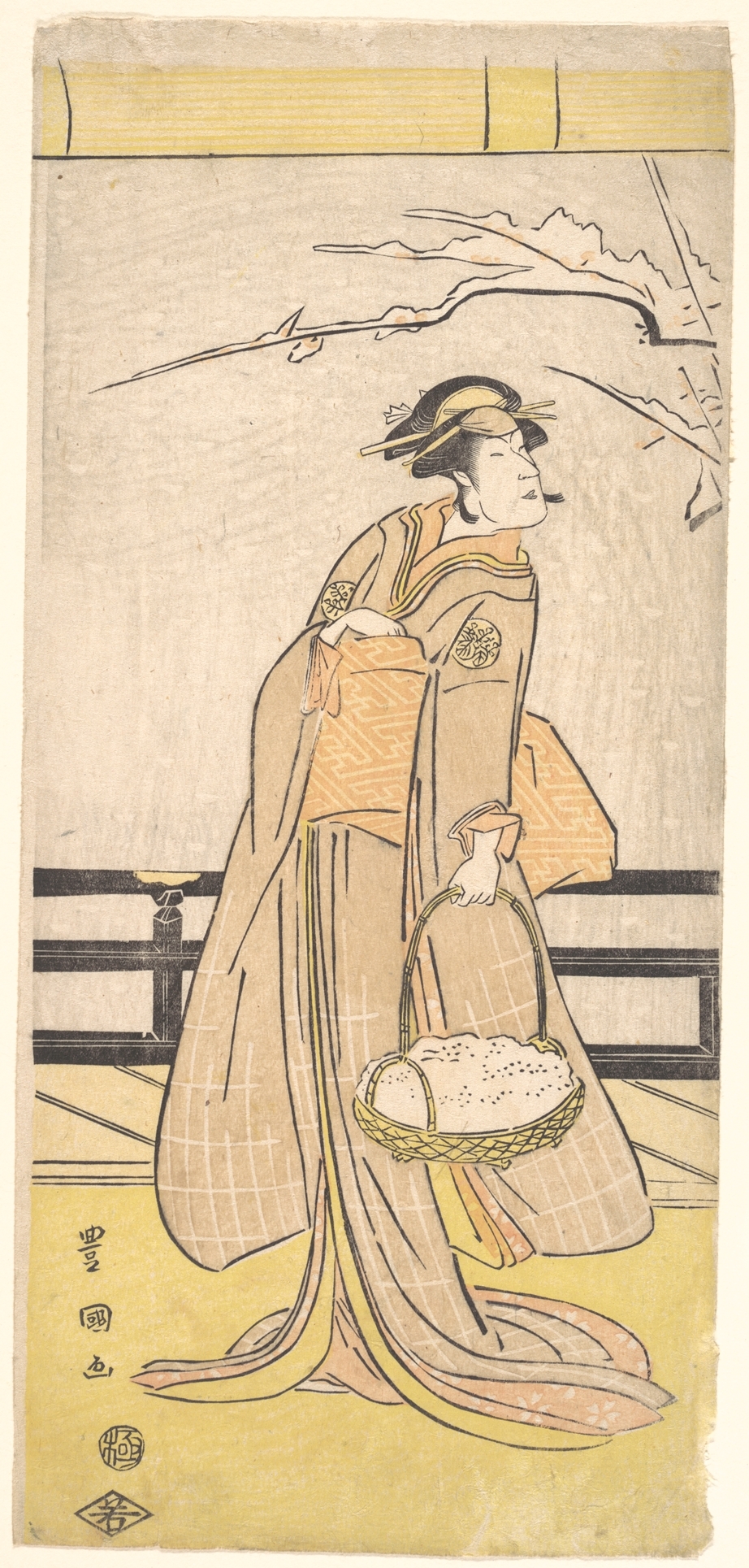
Nakayama Tomisaburo in a Female Role
- Date:
- 1769–1825
- Medium:
- Woodblock print; ink and color on paper
- Source:
- Metropolitan Museum of Art
Description
Nakayama Tomisaburō in a Female Role is a yakusha-e portrait by Utagawa Toyokuni in the Metropolitan Museum of Art. Toyokuni built his reputation in Edo ukiyo-e by capturing the leading onnagata, the male specialists in female roles whose stylized performances were a foundation of Kabuki. Nakayama Tomisaburō was among the actors Edo audiences followed closely, and Toyokuni's image presents him not in a candid moment but in the constructed, costumed presence of the stage. The print shows the actor adopting the bearing and gesture of a woman, the painted face and arranged hair functioning as a portrait of role and performer at once. This double identity, in which the viewer recognizes both the man behind the makeup and the character he embodies, was central to the appeal of yakusha-e and is something Toyokuni handled with particular sensitivity. The Met catalogues this impression with the year 1769; that date is preserved here from the museum record. Toyokuni's actor prints typically isolate the figure against a plain or lightly toned ground, allowing the patterned robe, family crest, and turn of the head to carry the full weight of the composition. The result is an iconic image suited to the contemporary fan market while standing today as a primary document for the visual culture of late-eighteenth and early-nineteenth-century Kabuki.
More Prints by Utagawa Toyokuni I

Segawa Kikunojō III as the Shop Boy Chōkichi
1796
Woodblock print (nishiki-e), ink and color on paper
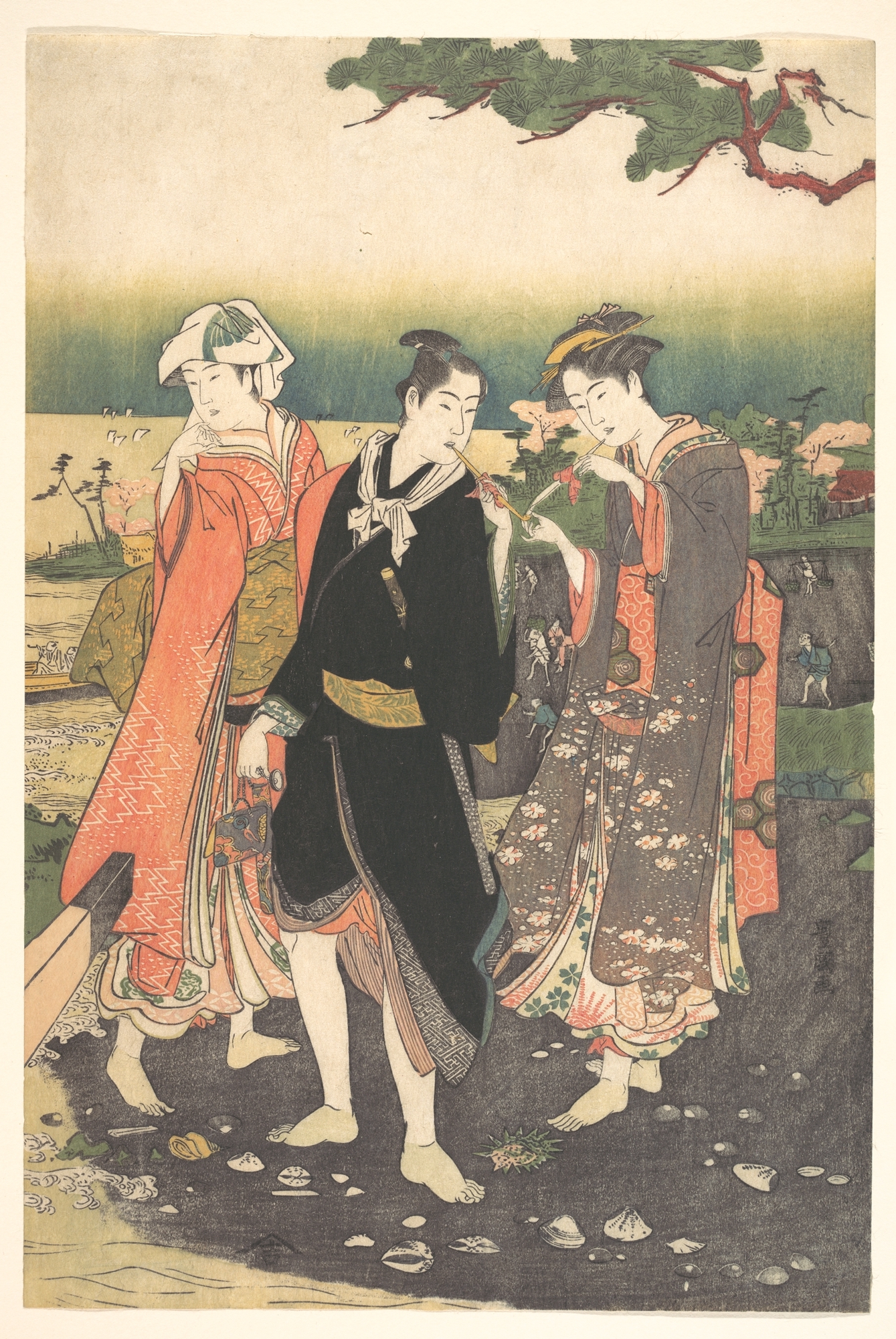
On Shinagawa Beach at Ebb-Tide
1769–1825
Woodblock print; ink and color on paper
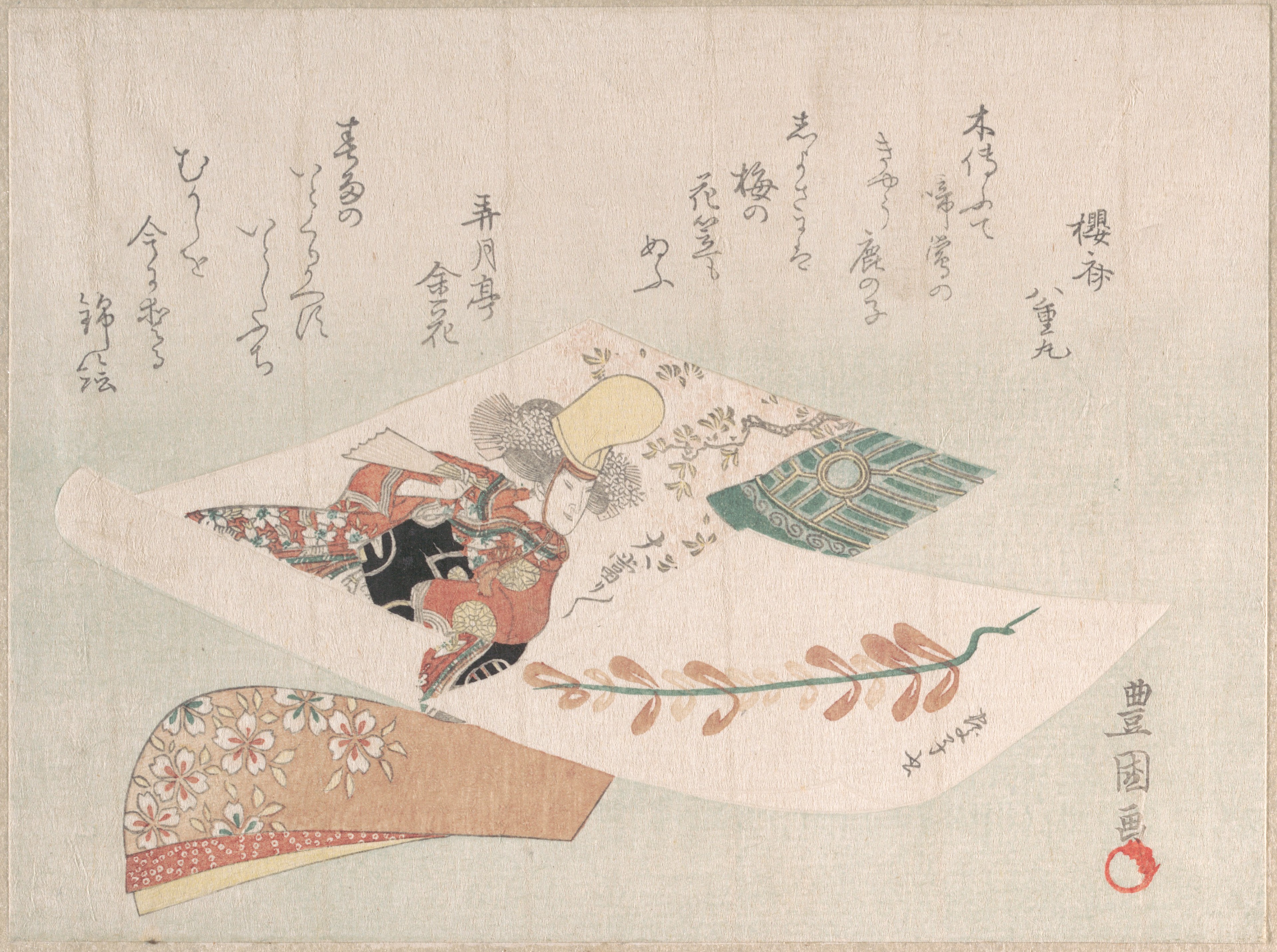
Representation of the Dance-Play "Dōjōji"
Woodblock print (surimono); ink and color on paper

The actors Sawamura Sojuro II as Satsuma Gengobei and Arashi Ryuzo II as Mawashi-otoko Yasuke in the play "Edo Sunago Kichirei Soga," performed at the Miyako Theater on the first month, 1795
c. 1795
Color woodblock print; oban
Frequently Asked Questions
Nakayama Tomisaburo in a Female Role was created by Utagawa Toyokuni I (歌川豊国) in 1769–1825.