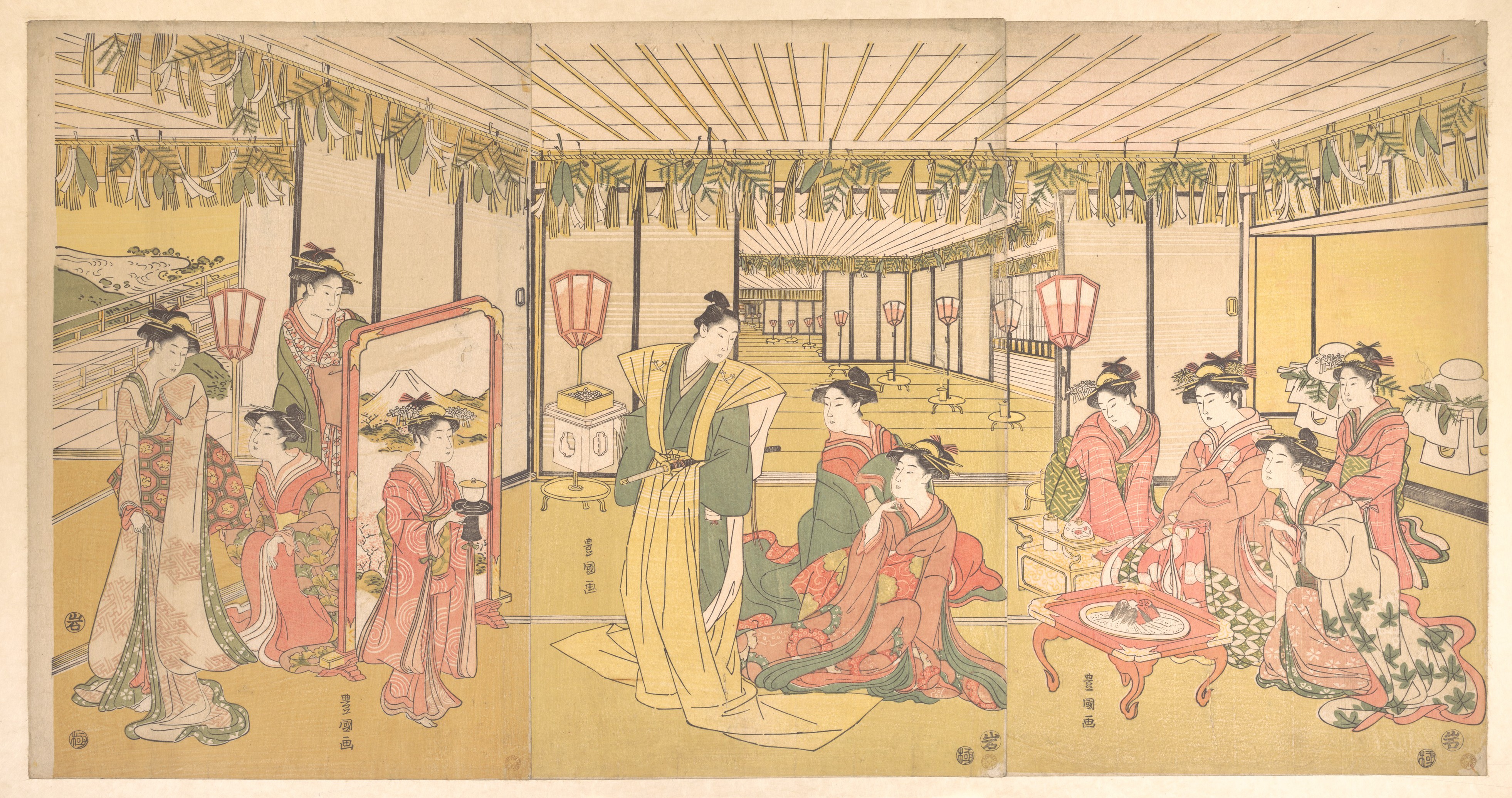
New Year's Celebration in a Large Mansion
- Date:
- ca. 1791
- Medium:
- Triptych of woodblock prints; ink and color on paper
- Source:
- Metropolitan Museum of Art
Description
New Year's Celebration in a Large Mansion is a multi-figure interior scene by Utagawa Toyokuni preserved in the Metropolitan Museum of Art. While Toyokuni is best known for his yakusha-e portraits of Kabuki actors, his Edo ukiyo-e practice ranged into genre subjects in which fashionable people are shown at home, observing the seasonal rituals that structured the Edo year. New Year's was the most elaborate of those observances, beginning with offerings, formal visits, and decorations of pine and bamboo, and continuing through a sequence of customs that touched every level of urban society. In a mansion setting, Toyokuni could deploy the full vocabulary of his draftsmanship: layered screens and tatami room divisions, women in lavish patterned kimono attending to guests, children at play, and small still-life elements of food and offering. The composition reflects the period taste for narrative density, in which a single sheet rewards careful reading of individual vignettes scattered across the interior. The Met assigns this work the date 1781, which is the source used here. Together with Toyokuni's actor prints, genre images like this one were part of how Edo ukiyo-e publishers offered a complete vision of contemporary life, with theater and household, public stage and private interior, all presented in the same crisp woodblock idiom and to the same enthusiastic audience of urban consumers.
More Prints by Utagawa Toyokuni I

Segawa Kikunojō III as the Shop Boy Chōkichi
1796
Woodblock print (nishiki-e), ink and color on paper
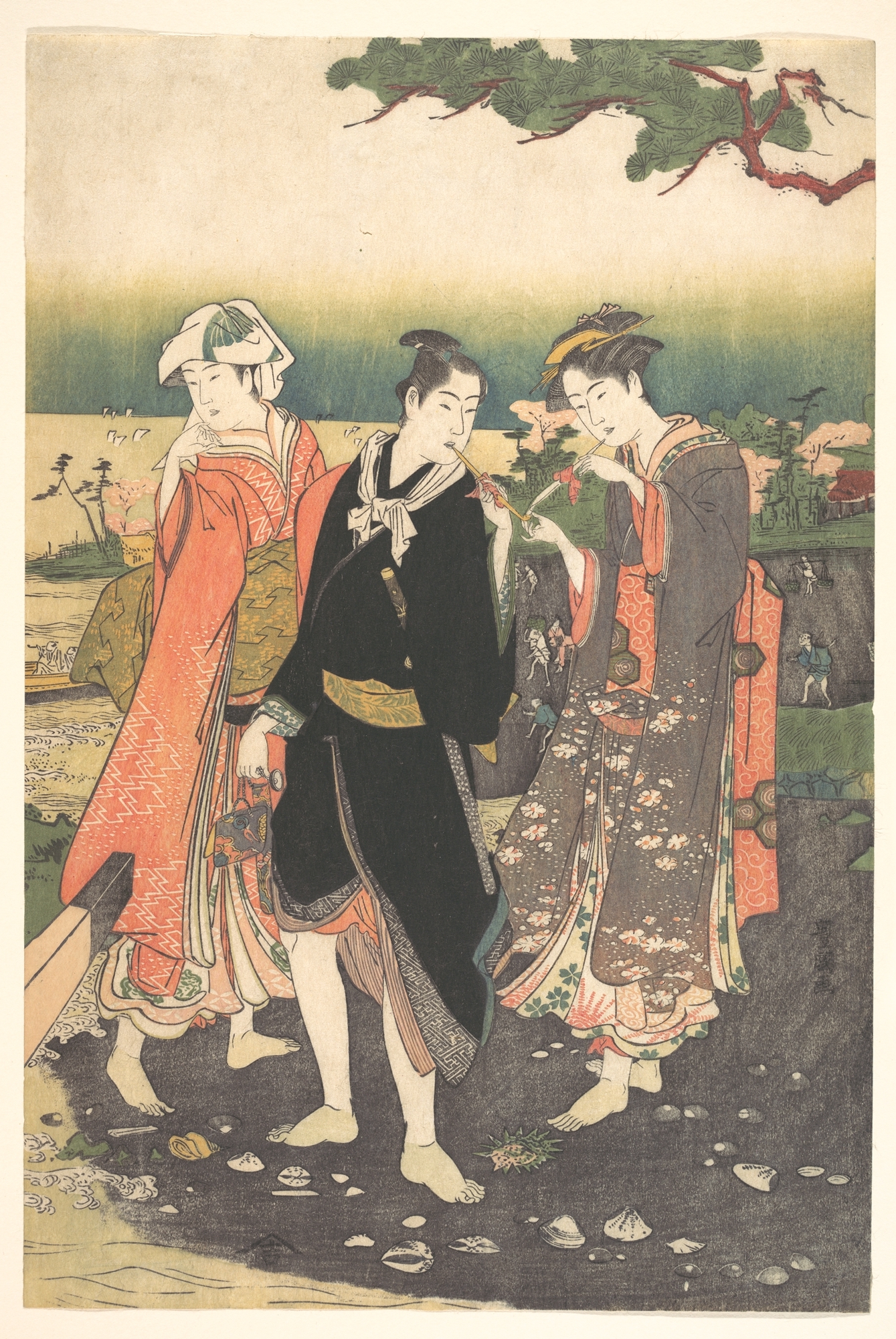
On Shinagawa Beach at Ebb-Tide
1769–1825
Woodblock print; ink and color on paper
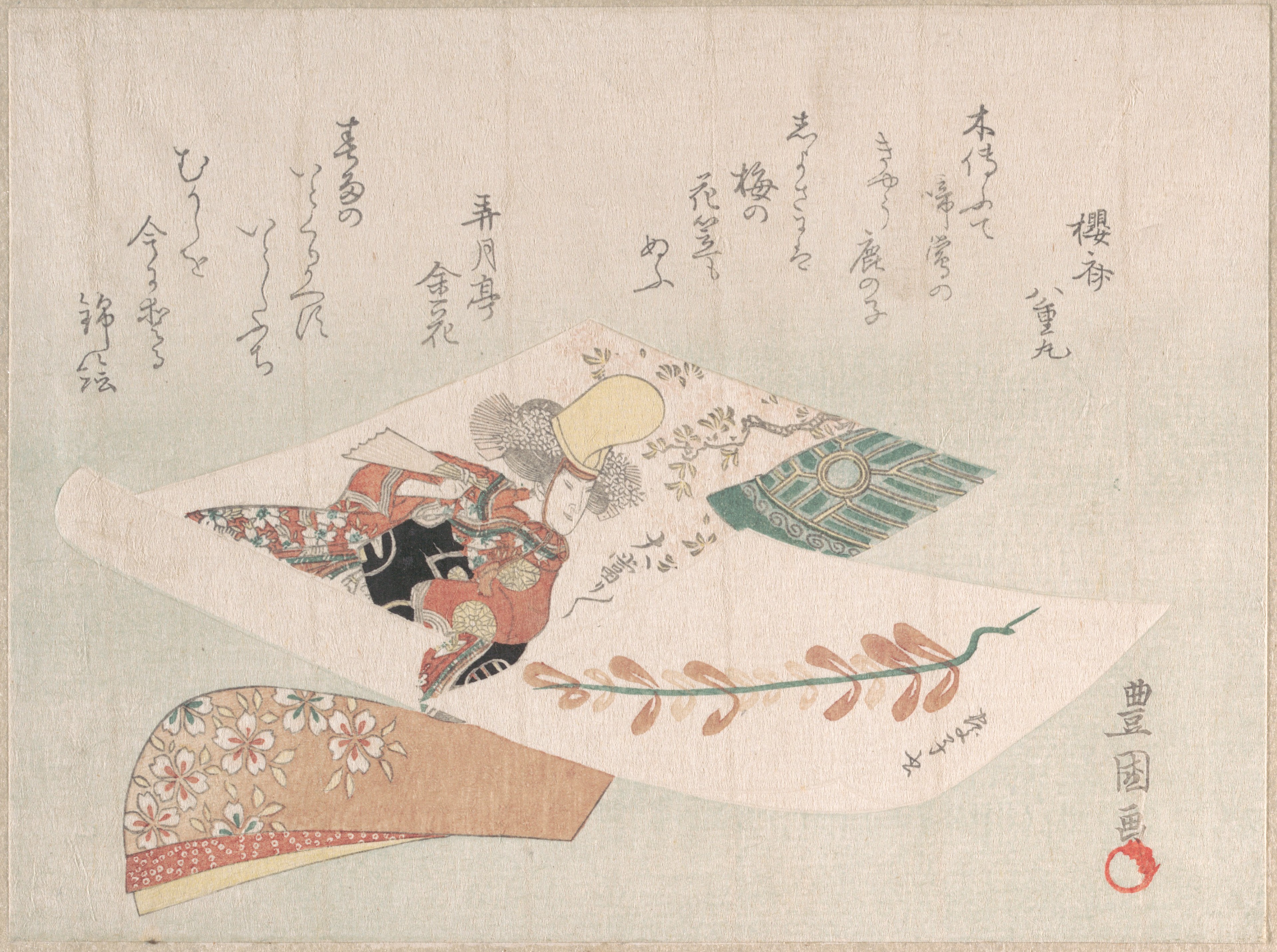
Representation of the Dance-Play "Dōjōji"
Woodblock print (surimono); ink and color on paper

The actors Sawamura Sojuro II as Satsuma Gengobei and Arashi Ryuzo II as Mawashi-otoko Yasuke in the play "Edo Sunago Kichirei Soga," performed at the Miyako Theater on the first month, 1795
c. 1795
Color woodblock print; oban
Frequently Asked Questions
New Year's Celebration in a Large Mansion was created by Utagawa Toyokuni I (歌川豊国) in ca. 1791.