
New Year's Pilgrimage to Myohoji Temple in Horinouchi (Horinouchi Myohoji eho mairi no zu)
- Date:
- c. 1804/10
- Medium:
- Color woodblock print; three left sheets of oban pentaptych (center right sheet: 1925.3190)
- Source:
- Art Institute of Chicago
Description
Utagawa Toyokuni I designed New Year's Pilgrimage to Myohoji Temple in Horinouchi (Horinouchi Myohoji eho mairi no zu) as a richly populated genre composition that lifts Edo ukiyo-e away from the kabuki stage and into the lived rituals of the new year. Myohoji Temple in Horinouchi, on the western edge of Edo, drew worshippers each year for eho mairi, the ritual of visiting a temple in the auspicious direction set by the calendar. Toyokuni assembles fashionable men and women in their layered new-year robes amid the temple grounds, producing a scene that doubles as fashion plate, devotional record, and urban guidebook. Although his fame rests primarily on yakusha-e or kabuki actor prints, prints like this one demonstrate Toyokuni's confident handling of multi-figure crowd compositions, his eye for textile pattern, and his sensitivity to the architecture of religious sites. The Art Institute of Chicago preserves this impression, whose carefully aligned color blocks and disciplined keylines reflect the high standards of Edo woodblock production at the turn of the nineteenth century. The composition also illustrates the broader cultural reach of Utagawa Toyokuni I beyond the theater district, situating him within a tradition of meisho-e (famous-place pictures) and seasonal life prints that connected Edo's urban population to its surrounding sacred geography. As such, the sheet is a key reference work for understanding the full range of Toyokuni's contribution to Edo ukiyo-e.
More Prints by Utagawa Toyokuni I

Segawa Kikunojō III as the Shop Boy Chōkichi
1796
Woodblock print (nishiki-e), ink and color on paper
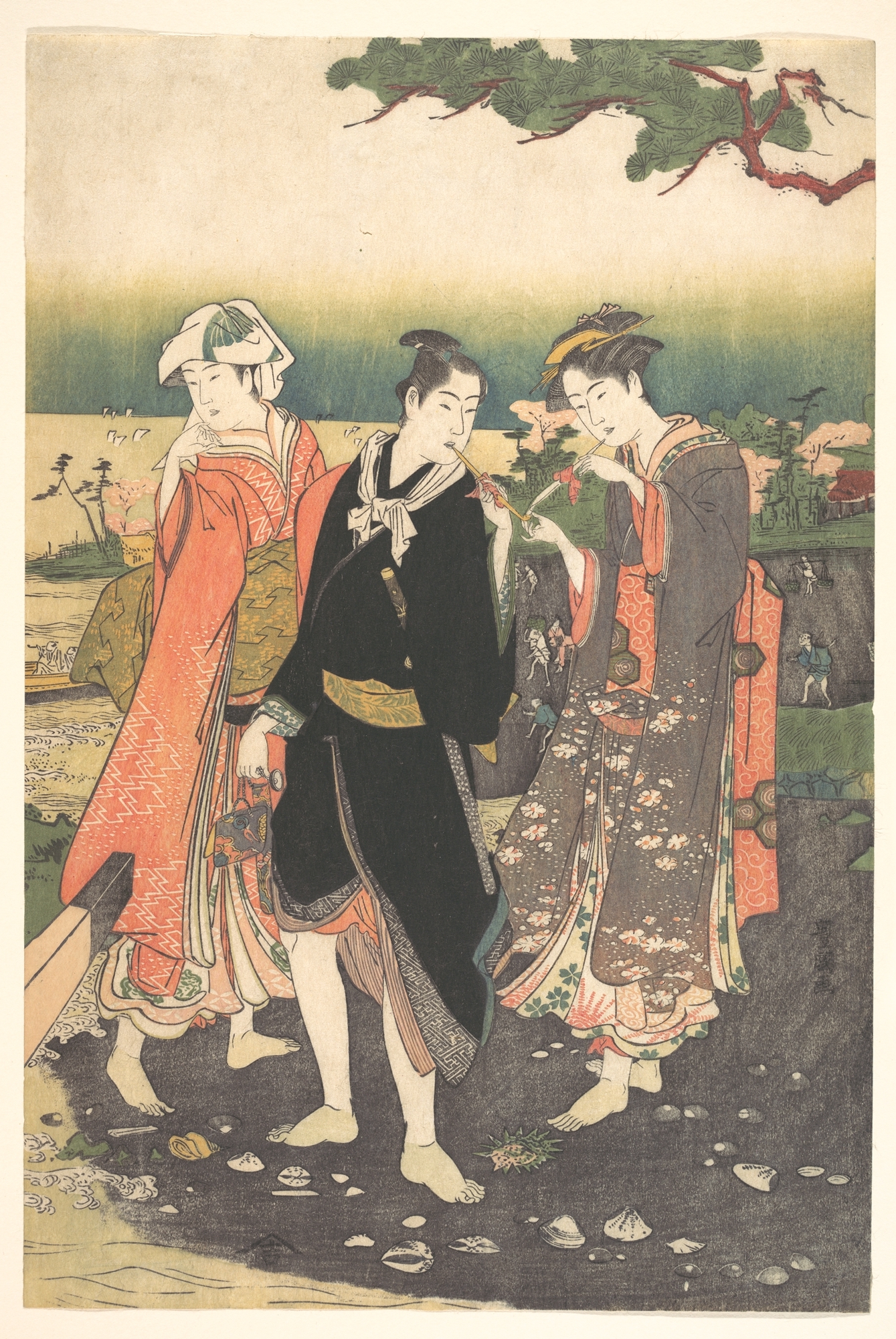
On Shinagawa Beach at Ebb-Tide
1769–1825
Woodblock print; ink and color on paper
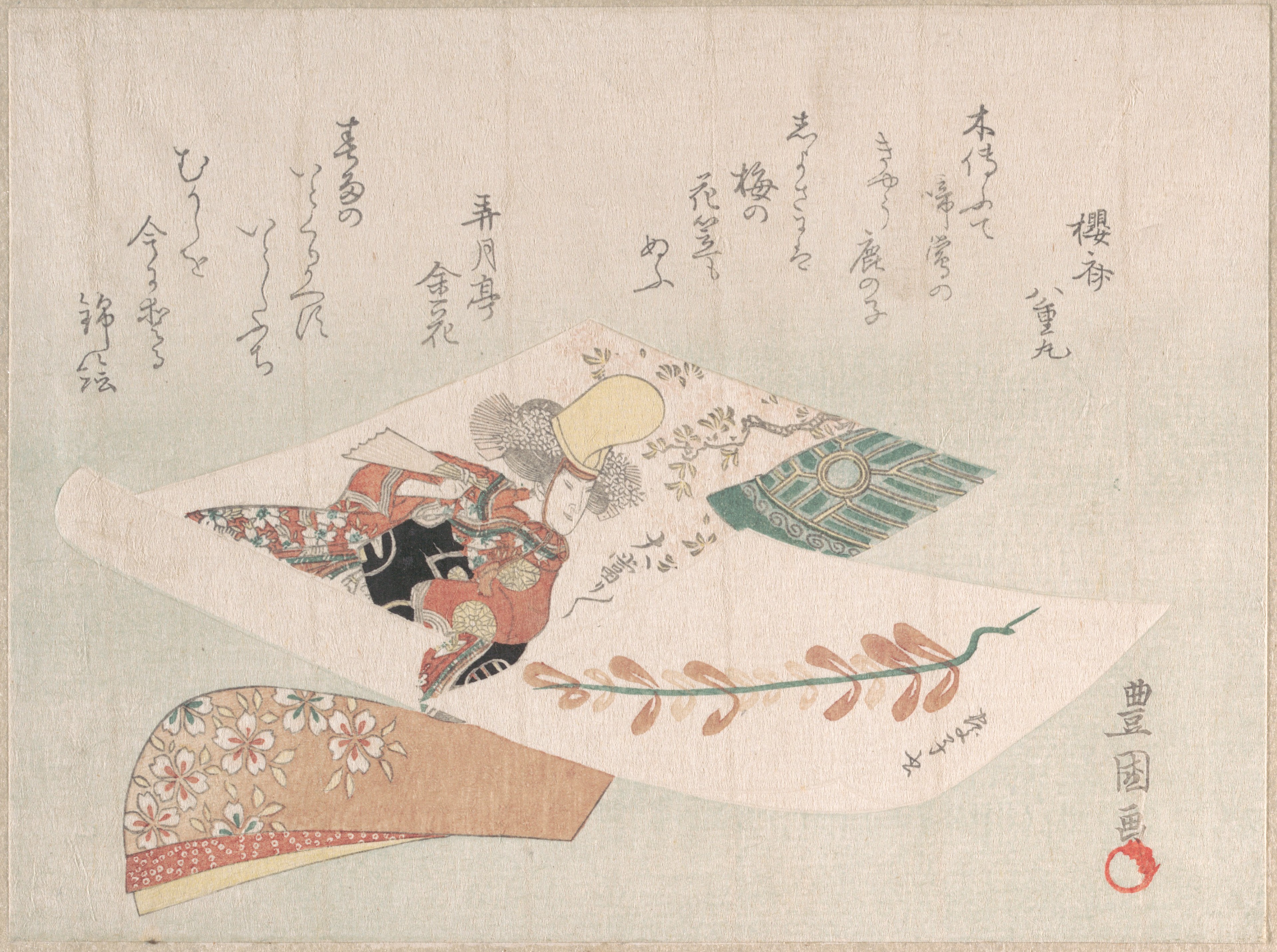
Representation of the Dance-Play "Dōjōji"
Woodblock print (surimono); ink and color on paper

The actors Sawamura Sojuro II as Satsuma Gengobei and Arashi Ryuzo II as Mawashi-otoko Yasuke in the play "Edo Sunago Kichirei Soga," performed at the Miyako Theater on the first month, 1795
c. 1795
Color woodblock print; oban
Frequently Asked Questions
New Year's Pilgrimage to Myohoji Temple in Horinouchi (Horinouchi Myohoji eho mairi no zu) was created by Utagawa Toyokuni I (歌川豊国) in c. 1804/10.