
Onoe Matsusuke as the Ghost of the Murdered Wife Oiwa, in "A Tale of Horror from the Yotsuya Station on the Tokaido Road"
- Date:
- 1812
- Medium:
- Woodblock print; ink and color on paper
- Source:
- Metropolitan Museum of Art
Description
Held by the Metropolitan Museum of Art, this Utagawa Toyokuni print depicts the actor Onoe Matsusuke in the role of Oiwa, the murdered wife whose vengeful ghost drives "Tokaido Yotsuya Kaidan" ("A Tale of Horror from the Yotsuya Station on the Tokaido Road"), one of the most popular ghost stories of the late Edo theater. The yakusha-e composition belongs to the broader Edo ukiyo-e fascination with kaidan (ghost stories), a strand of Edo popular culture that exploded into print imagery from the early nineteenth century onward. Oiwa is among kabuki's most iconic ghosts, and Onoe Matsusuke established many of the visual conventions, the dishevelled hair, the disfigured face, the ghostly pallor, that subsequent performers would inherit. Toyokuni captures these conventions while preserving the actor's individualized features, ensuring that the print works simultaneously as kaidan illustration and as Utagawa school yakusha-e celebrity portrait. The Onoe acting family had a particularly close association with ghost roles, and the print thus also documents the codification of theatrical specialization within Edo's kabuki troupes. The composition relies on stark contrast between the apparition's ethereal whiteness and the deeper saturated grounds typical of late-Edo woodblock printing, a graphic strategy that gives the figure both visual immediacy and atmospheric strangeness. For researchers studying Utagawa Toyokuni's place in the evolution of ghost imagery, the workshop's response to kaidan storytelling, and the broader history of yakusha-e, the print is an important and well-preserved document.
More Prints by Utagawa Toyokuni I

Segawa Kikunojō III as the Shop Boy Chōkichi
1796
Woodblock print (nishiki-e), ink and color on paper
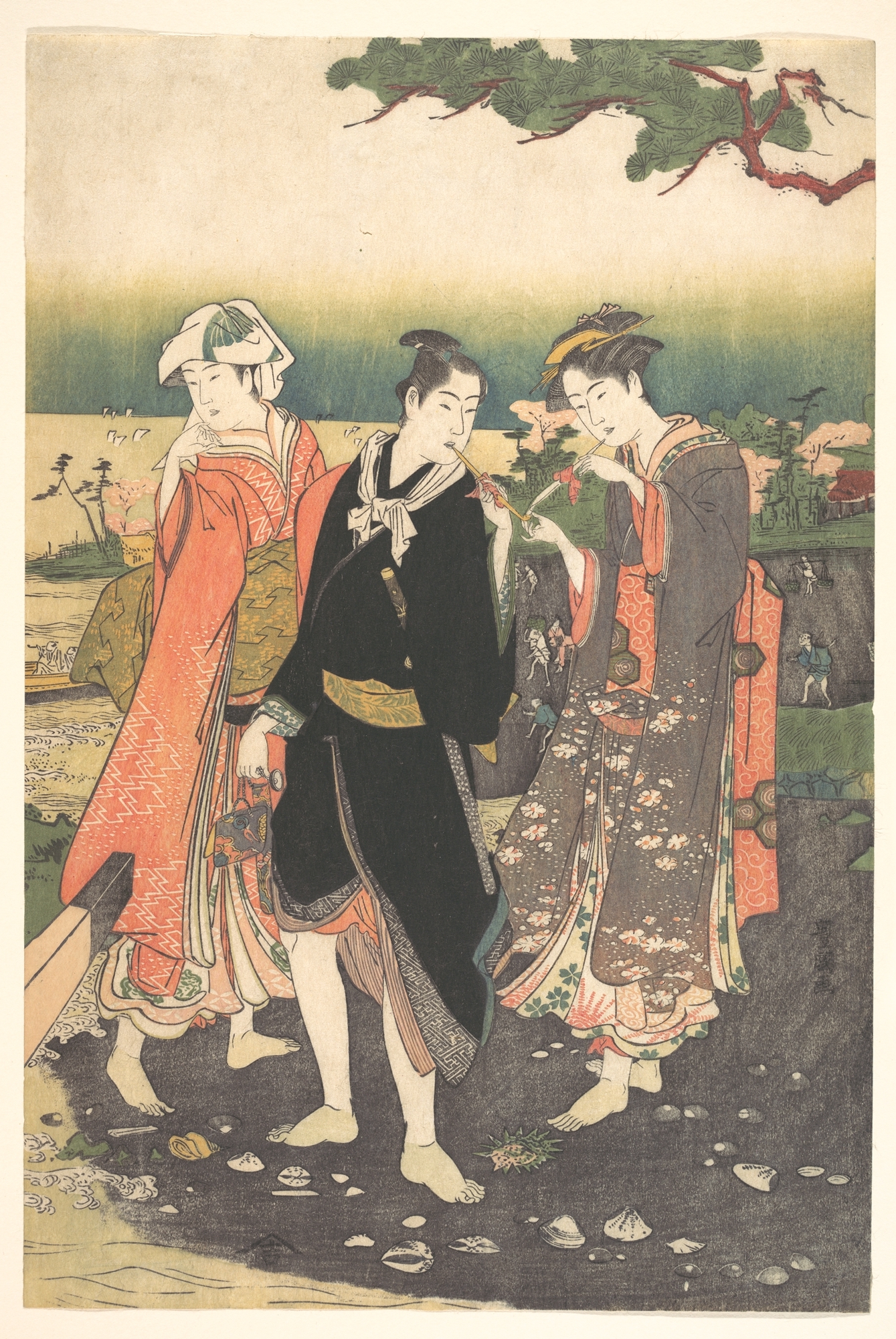
On Shinagawa Beach at Ebb-Tide
1769–1825
Woodblock print; ink and color on paper
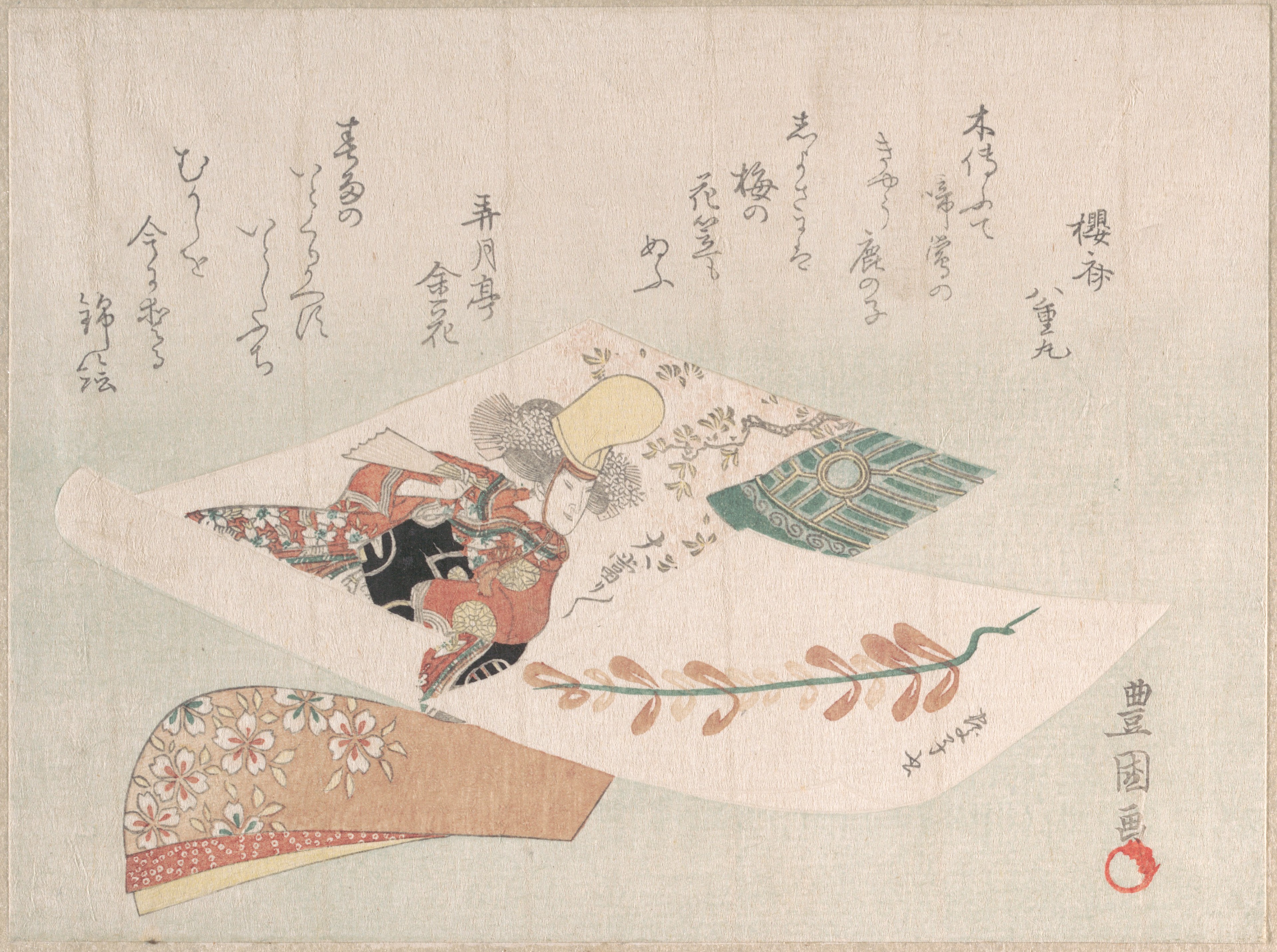
Representation of the Dance-Play "Dōjōji"
Woodblock print (surimono); ink and color on paper

The actors Sawamura Sojuro II as Satsuma Gengobei and Arashi Ryuzo II as Mawashi-otoko Yasuke in the play "Edo Sunago Kichirei Soga," performed at the Miyako Theater on the first month, 1795
c. 1795
Color woodblock print; oban
Frequently Asked Questions
Onoe Matsusuke as the Ghost of the Murdered Wife Oiwa, in "A Tale of Horror from the Yotsuya Station on the Tokaido Road" was created by Utagawa Toyokuni I (歌川豊国) in 1812.