
polyptych print
- Source:
- ukiyo-e.org
Description
This polyptych composition by Utagawa Toyokuni, digitized through ukiyo-e.org from the British Museum (image AN00432638), exemplifies the master's command of the multi-sheet ukiyo-e format. Polyptychs joined two, three, five, or more sheets into a continuous panoramic scene, and were among the most expensive and visually ambitious products of the Edo print market. Toyokuni used the format throughout his career to depict crowds at famous places, multi-figure kabuki scenes, processions, and group portraits of beauties — subjects that benefited from the extended horizontal sweep that a single ōban-size sheet could not accommodate. Within the polyptych, individual sheets had to function both as self-contained designs (in case a buyer purchased only one) and as components of a unified composition when joined. Toyokuni's planning of figure placement, ground tone, and architectural detail across the joins demonstrates the workshop's coordinated production methods. As founder of the Utagawa school's dominance, his polyptychs set the standard that his pupils Kunisada and Kuniyoshi would expand into ever more elaborate triptychs and pentaptychs in the nineteenth century. The British Museum impression preserves the registration discipline required for a successful multi-sheet ukiyo-e print, in which colours and outlines had to align precisely across separately printed sheets to produce a coherent image worthy of display in an Edo merchant's home.
More Prints by Utagawa Toyokuni I

Segawa Kikunojō III as the Shop Boy Chōkichi
1796
Woodblock print (nishiki-e), ink and color on paper
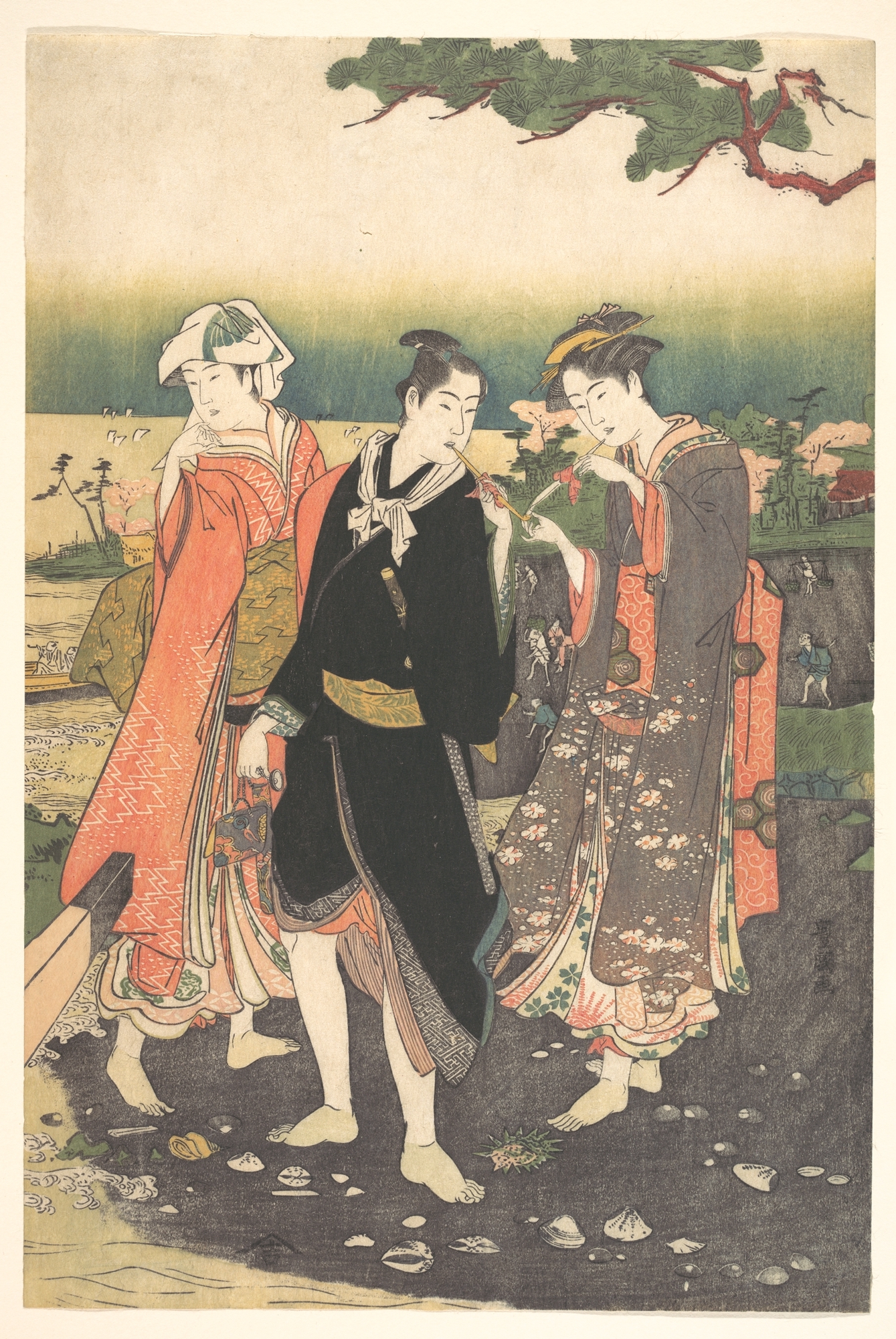
On Shinagawa Beach at Ebb-Tide
1769–1825
Woodblock print; ink and color on paper
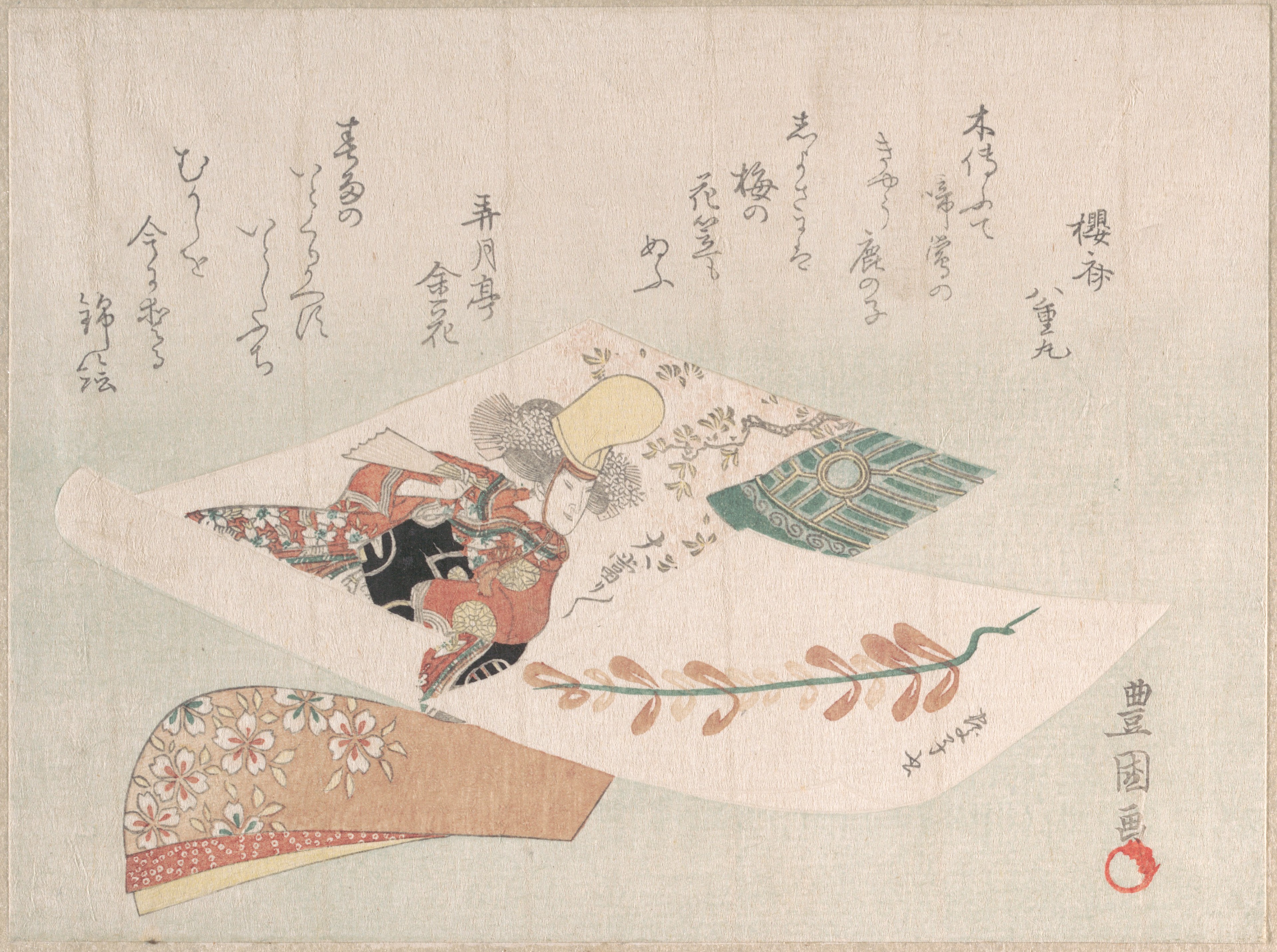
Representation of the Dance-Play "Dōjōji"
Woodblock print (surimono); ink and color on paper

The actors Sawamura Sojuro II as Satsuma Gengobei and Arashi Ryuzo II as Mawashi-otoko Yasuke in the play "Edo Sunago Kichirei Soga," performed at the Miyako Theater on the first month, 1795
c. 1795
Color woodblock print; oban
Frequently Asked Questions
polyptych print was created by Utagawa Toyokuni I (歌川豊国).