
Reading and Playing Shamisen in Winter
- Date:
- late 18th to early 19th century
- Medium:
- Color woodblock print; surimono
- Source:
- Art Institute of Chicago
Description
Reading and Playing Shamisen in Winter, dated 1769 in Art Institute of Chicago records, is an intimate genre composition in which Utagawa Toyokuni shows two women occupied with quiet indoor pursuits during the cold months. One bends over a book, while the other holds a shamisen, the three-stringed instrument that was central to Edo musical life. The contrast between literary reading and musical performance gives the design a gentle internal rhythm, and Toyokuni uses postures, the angle of the head, and the placement of hands to suggest concentration on one side and active gesture on the other. The wintry setting is conveyed less by explicit landscape than by costume: layered kimono and warmer-looking textiles signal the season, while the interior space provides the muted backdrop characteristic of bijin-ga. Edo ukiyo-e routinely paired women with seasonal activities, treating the months as a structure for picturing female fashion and accomplishment; reading and the shamisen both belonged to the repertoire of polite skills associated with both courtesans and women of well-to-do households. Although Utagawa Toyokuni is most celebrated for his yakusha-e, this print belongs to the parallel strand of bijin-ga in which he refined his sense of compositional balance and pattern. The Art Institute of Chicago preserves the design as part of its Toyokuni holdings, where it documents the artist's quieter side and his contribution to the genre of seasonal women's portraits.
More Prints by Utagawa Toyokuni I

Segawa Kikunojō III as the Shop Boy Chōkichi
1796
Woodblock print (nishiki-e), ink and color on paper
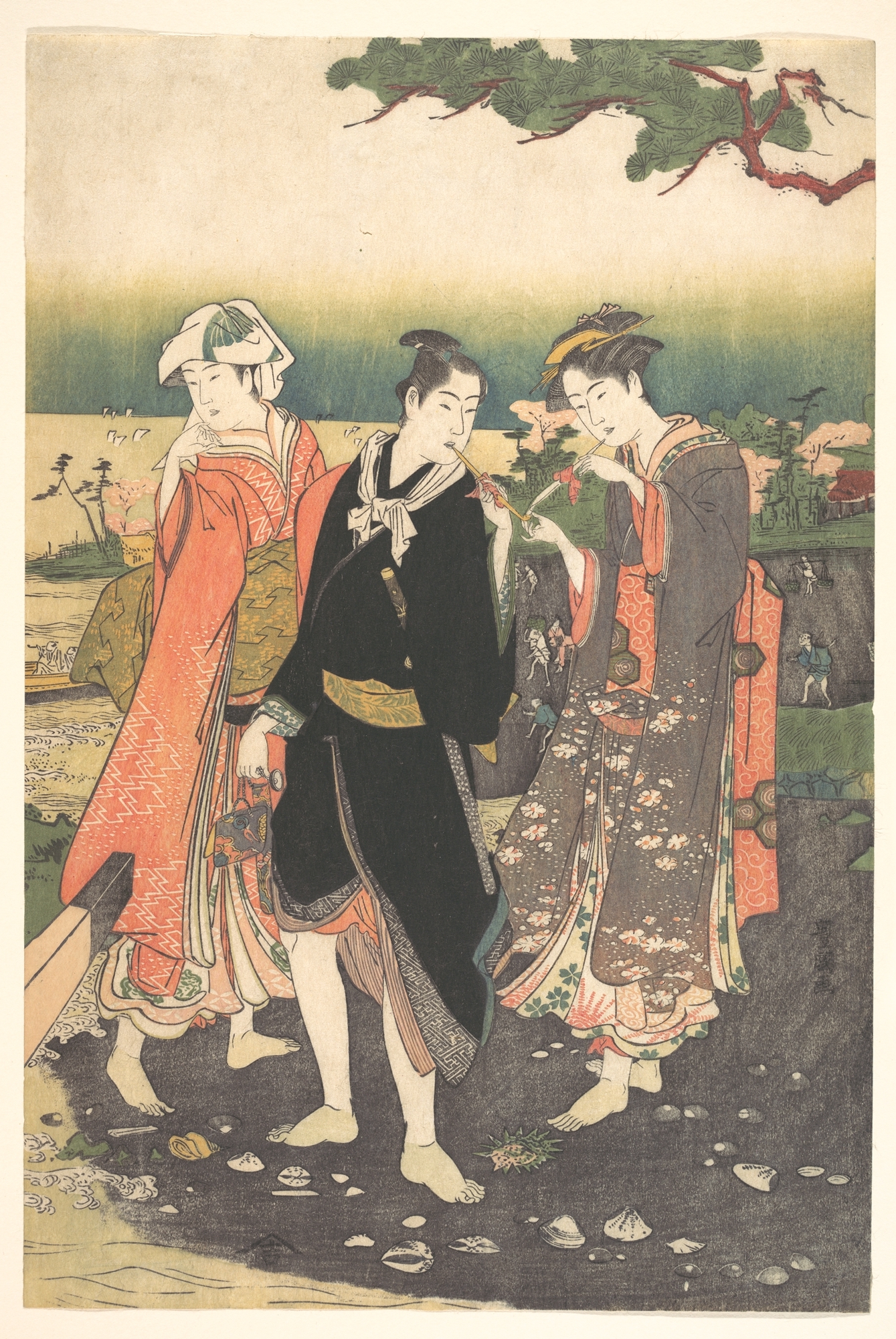
On Shinagawa Beach at Ebb-Tide
1769–1825
Woodblock print; ink and color on paper
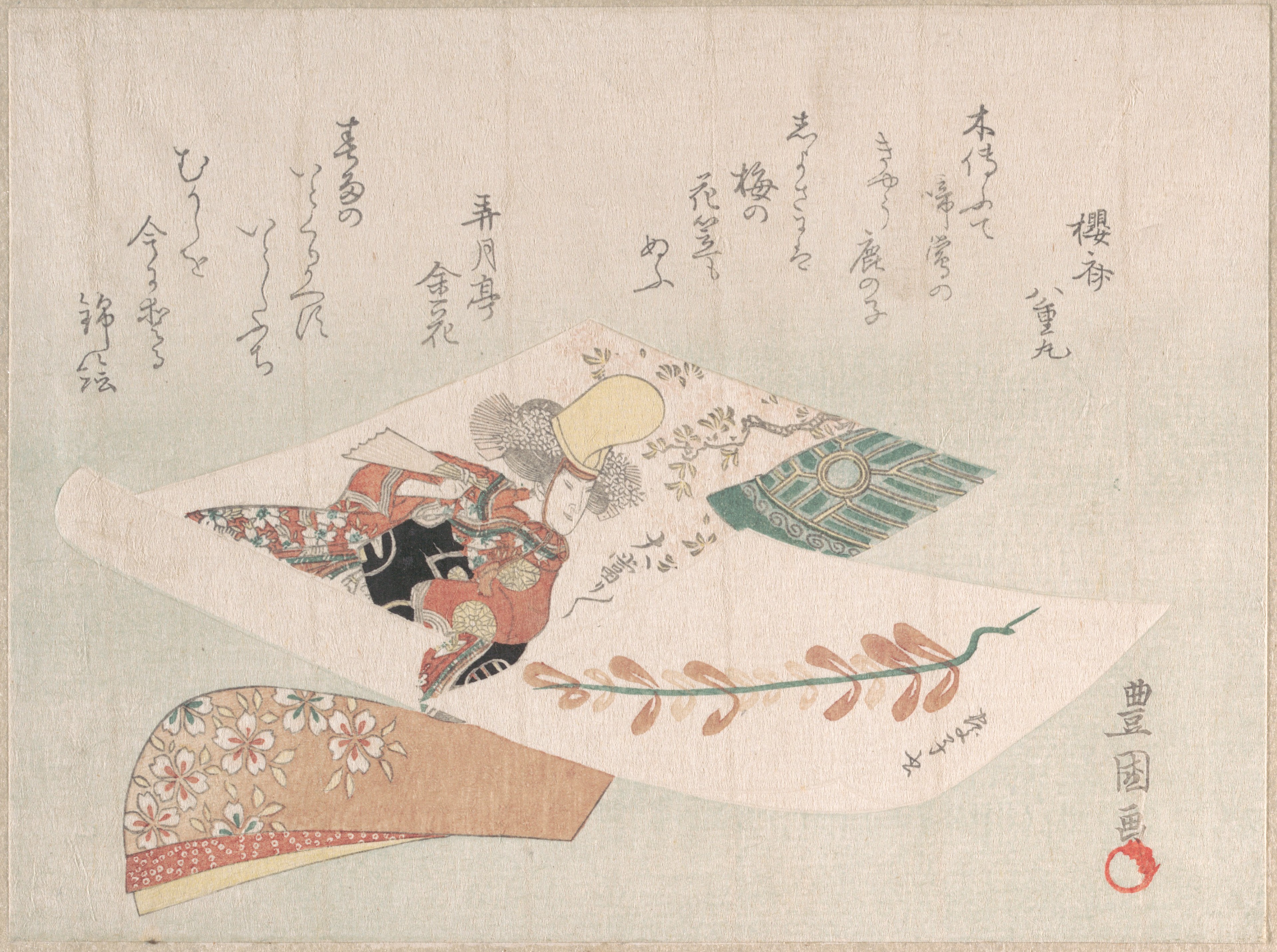
Representation of the Dance-Play "Dōjōji"
Woodblock print (surimono); ink and color on paper

The actors Sawamura Sojuro II as Satsuma Gengobei and Arashi Ryuzo II as Mawashi-otoko Yasuke in the play "Edo Sunago Kichirei Soga," performed at the Miyako Theater on the first month, 1795
c. 1795
Color woodblock print; oban
Frequently Asked Questions
Reading and Playing Shamisen in Winter was created by Utagawa Toyokuni I (歌川豊国) in late 18th to early 19th century.