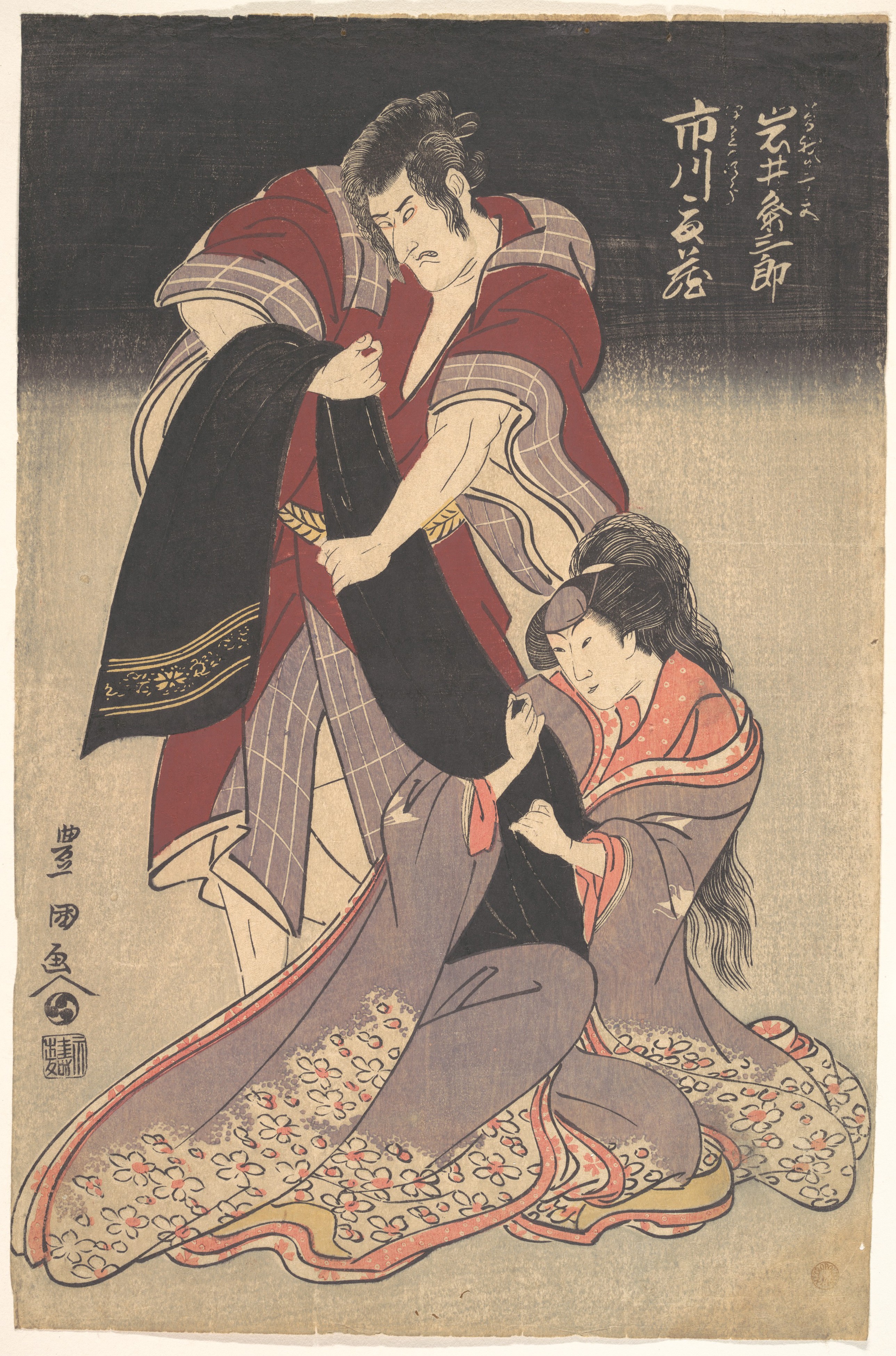
Scene from a Drama
- Date:
- ca. 1804
- Medium:
- Woodblock print; ink and color on paper
- Source:
- Metropolitan Museum of Art
Description
Scene from a Drama is a Kabuki tableau by Utagawa Toyokuni held in the Metropolitan Museum of Art. By the mid 1790s Toyokuni had emerged as the preeminent Edo ukiyo-e designer of yakusha-e, and his work shaped how the public saw the stage. In this print the focus is not on a single isolated actor but on a multi-figure dramatic moment, a format that allowed Toyokuni to deploy the full vocabulary of Kabuki performance: posed confrontations, the sweep of patterned robes, painted faces with the bold lines of kumadori makeup, and the staged tension that signaled a play's pivotal turn. Edo viewers who had attended the original production would have recognized the scene immediately, while later collectors and modern museum-goers can read the image as a self-contained drama whose meaning lies in posture, gesture, and the relationship of the figures to one another. Toyokuni handles the grouping with the clear sense of stage architecture that distinguished his actor prints throughout his career. The Met catalogues this impression with the date 1794, used here from the museum record, placing it in the same crucial mid-1790s window that produced his celebrated Yakusha Butai no Sugata-e series. As such the sheet represents a vital moment in Edo ukiyo-e, when yakusha-e moved decisively beyond simple bust-format portraits into more ambitious narrative compositions of the kind that defined Toyokuni's authority on the subject.
More Prints by Utagawa Toyokuni I

Kabuki Actor Iwai Kumesaburo with abacus

Segawa Kikunojō III as the Shop Boy Chōkichi
1796
Woodblock print (nishiki-e), ink and color on paper
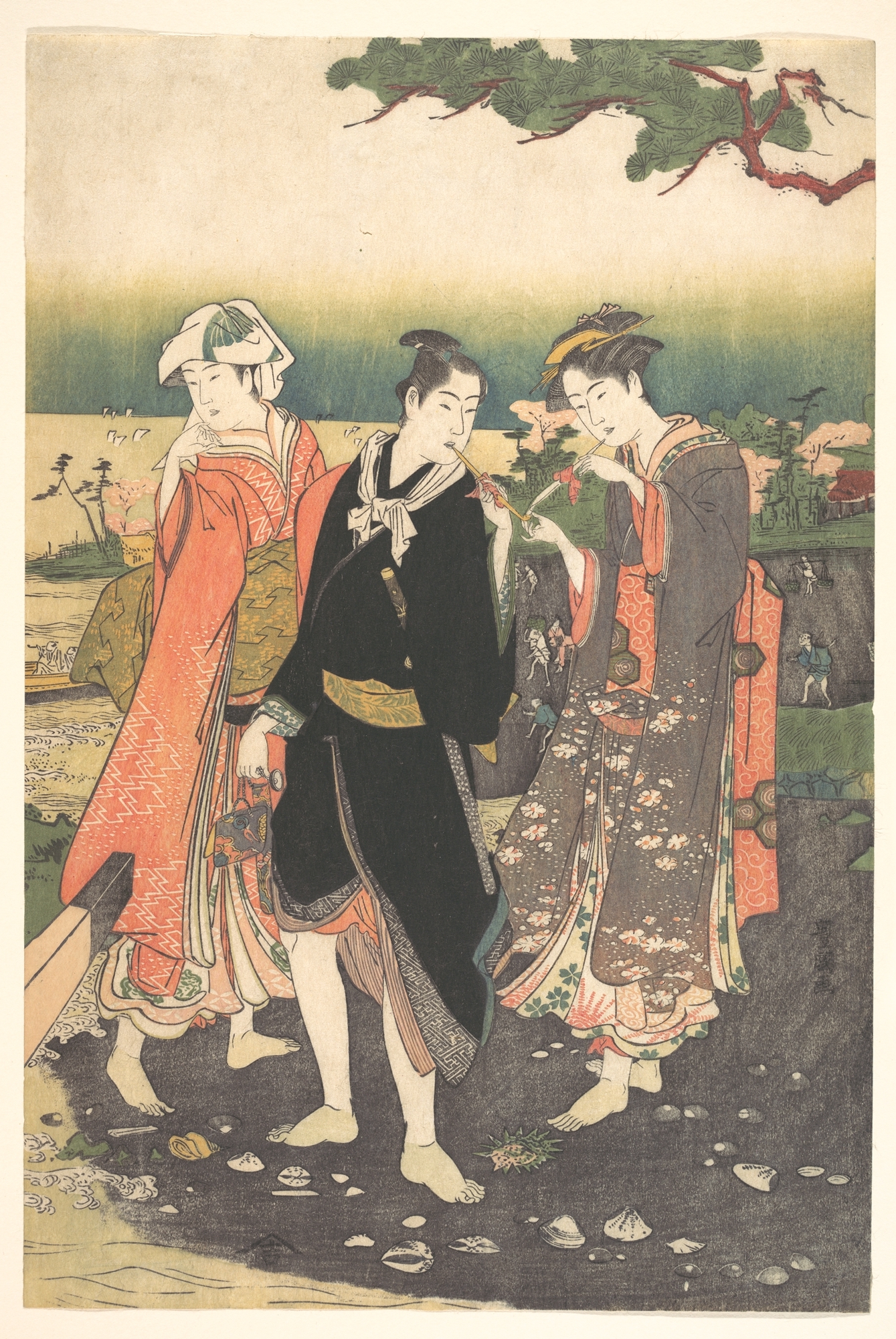
On Shinagawa Beach at Ebb-Tide
1769–1825
Woodblock print; ink and color on paper
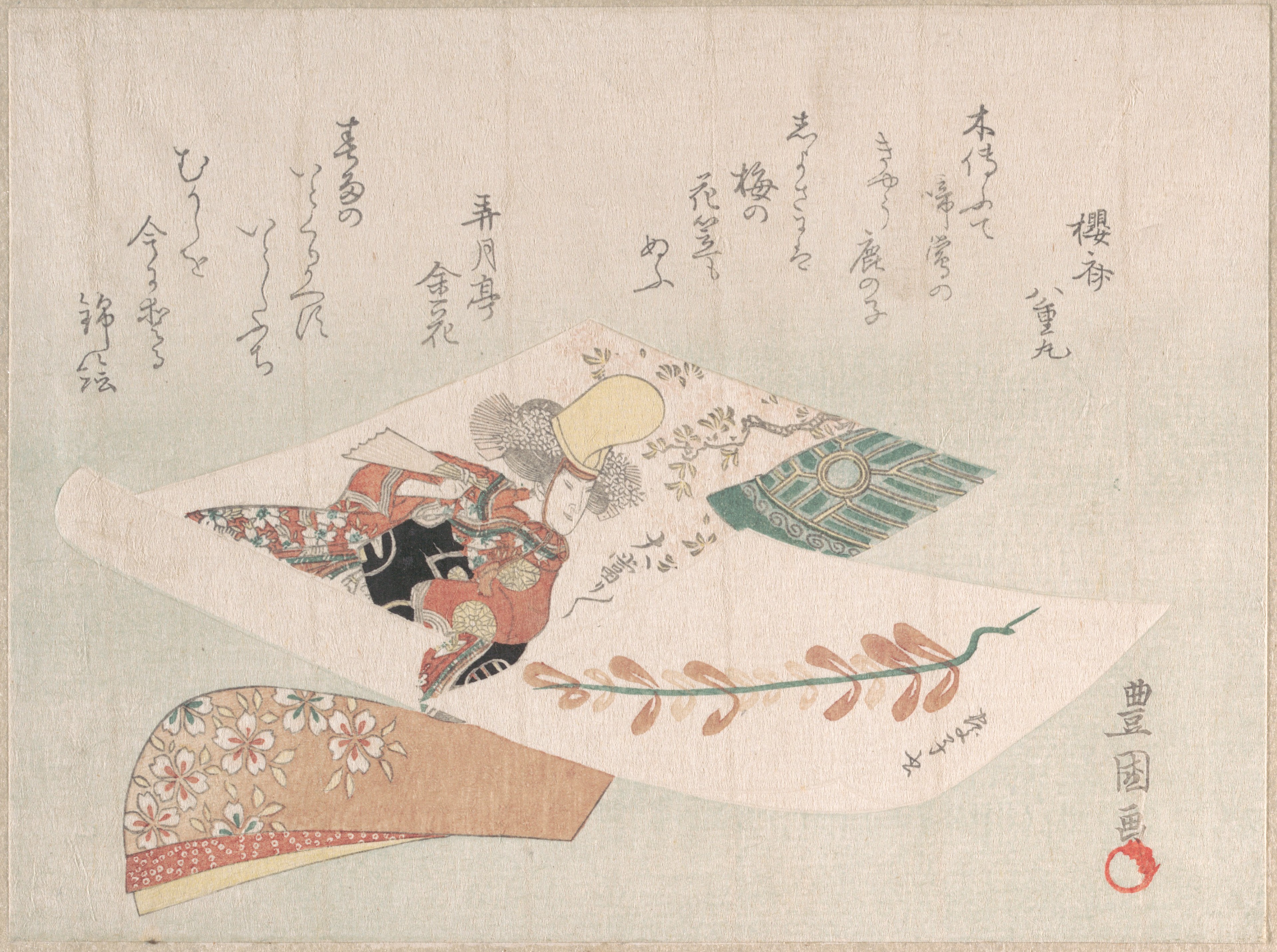
Representation of the Dance-Play "Dōjōji"
Woodblock print (surimono); ink and color on paper
Frequently Asked Questions
Scene from a Drama was created by Utagawa Toyokuni I (歌川豊国) in ca. 1804.