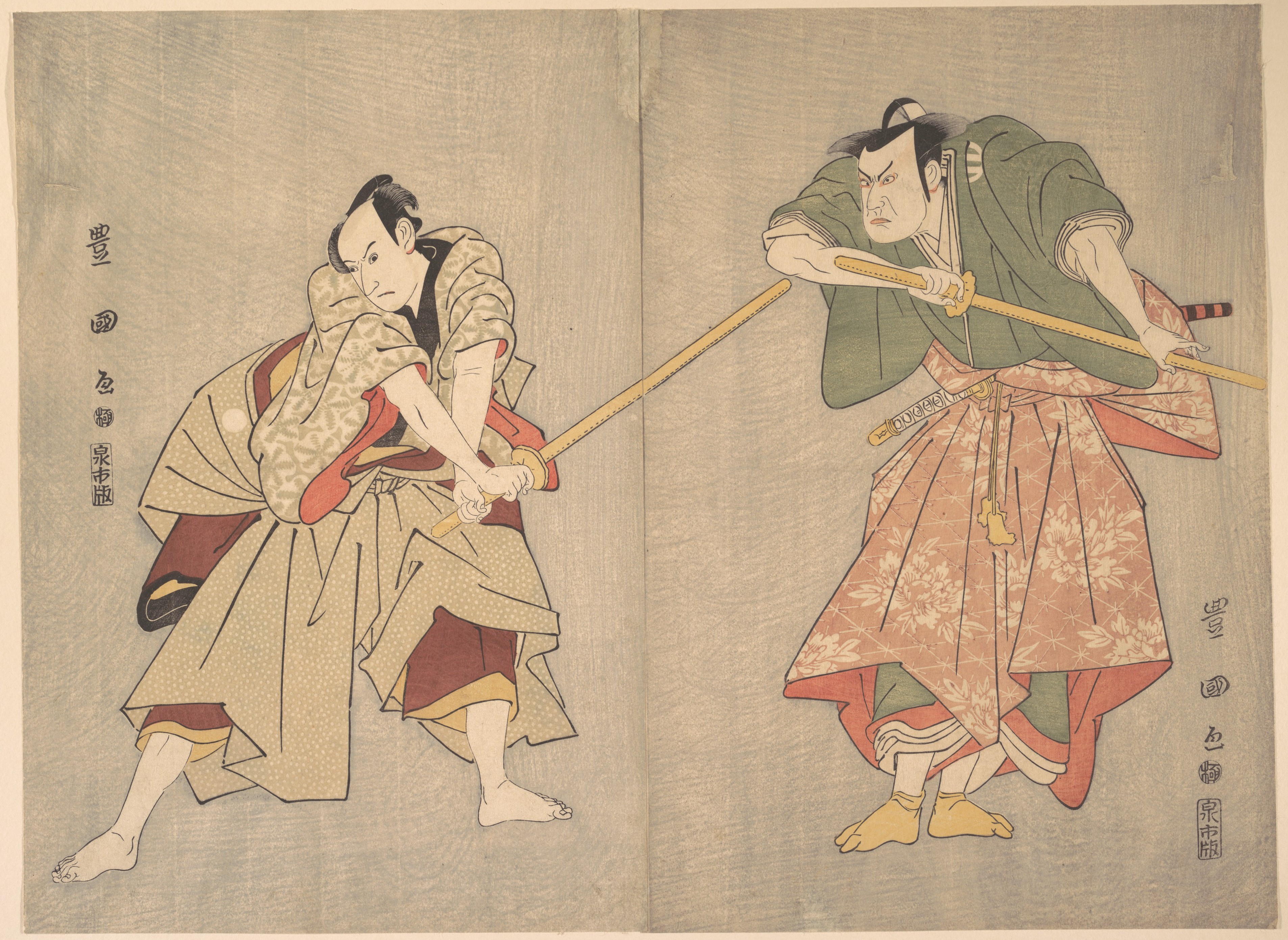
Scene from an Unidentified Drama
- Date:
- ca. 1800
- Medium:
- Diptych of woodblock prints; ink and color on paper
- Source:
- Metropolitan Museum of Art
Description
This Edo ukiyo-e composition by Utagawa Toyokuni I (1769-1825) belongs to the yakusha-e tradition of kabuki theater prints but resists firm identification: the play, the actors, and the scene have eluded definitive cataloguing in the Metropolitan Museum of Art's record. Such uncertainty is not unusual for Toyokuni's vast output, since kabuki productions changed seasonally, programs often combined disparate dramatic material, and many prints circulated without printed titles, relying on viewers' contemporary familiarity with the season's repertoire to decode them. The scene presents figures in costumes whose patterns and crests would once have allowed instant recognition of the production; later viewers, lacking the lost playbills and theatrical newssheets that supported the original audience, must approach these prints as evocative tableaux rather than as identifiable documents. Toyokuni's handling shows the confident draughtsmanship and disciplined block-cutting that defined the Utagawa school's house style. He had inherited the studio's standards from his teacher Utagawa Toyoharu, and he in turn passed them to a generation of pupils—Kunisada and Kuniyoshi most prominently—who would dominate kabuki print production after his death in 1825. The 1790 date in the museum's record places this work in Toyokuni's pre-eminence period, when he was consolidating the stylistic vocabulary that the breakthrough Yakusha butai no sugata-e series would soon make famous. The impression is preserved in the Metropolitan Museum of Art and remains valuable both as an example of Toyokuni's craft and as an artifact of the elusive theatrical culture his prints once documented.
More Prints by Utagawa Toyokuni I

Kabuki Actor Iwai Kumesaburo with abacus

Segawa Kikunojō III as the Shop Boy Chōkichi
1796
Woodblock print (nishiki-e), ink and color on paper
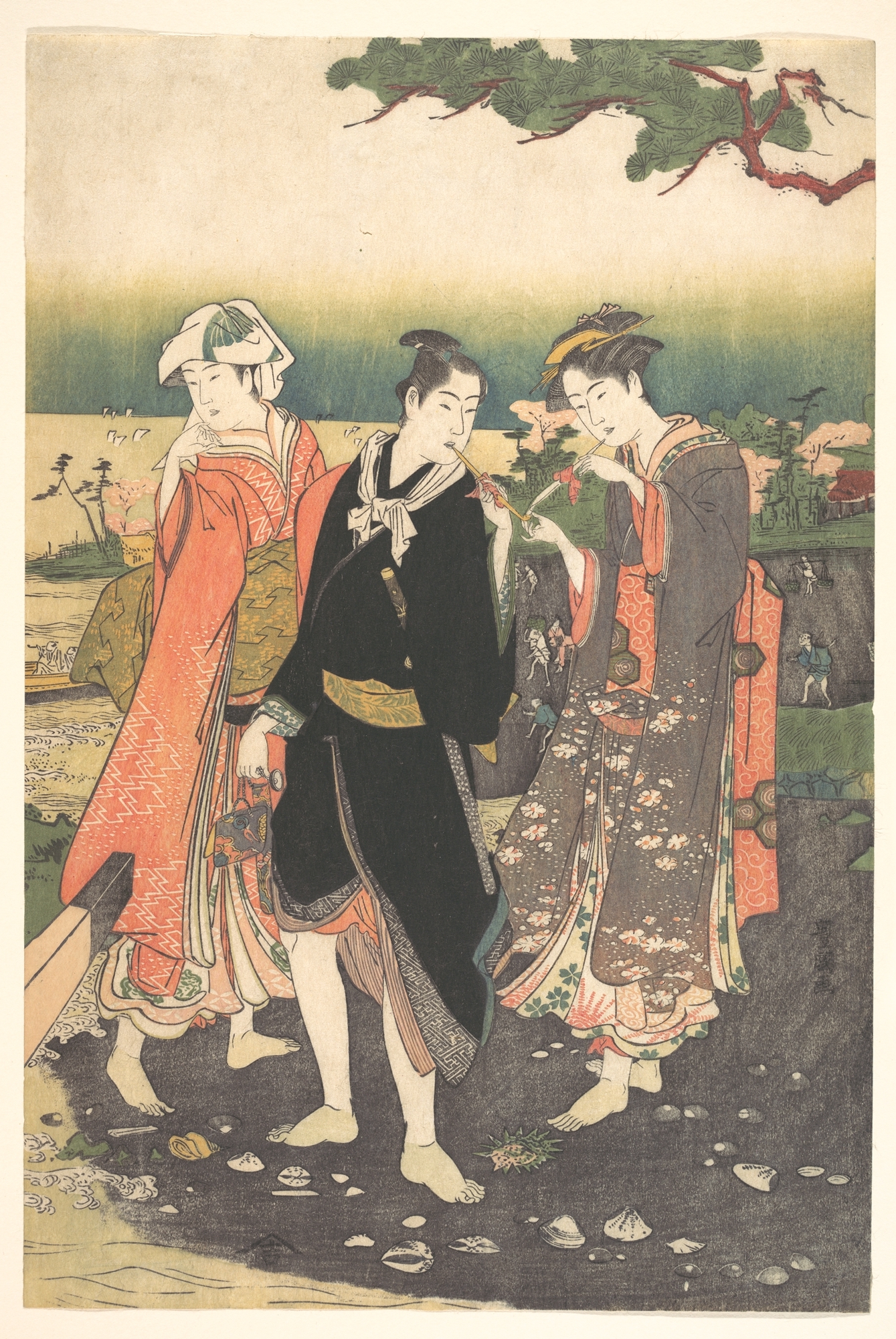
On Shinagawa Beach at Ebb-Tide
1769–1825
Woodblock print; ink and color on paper
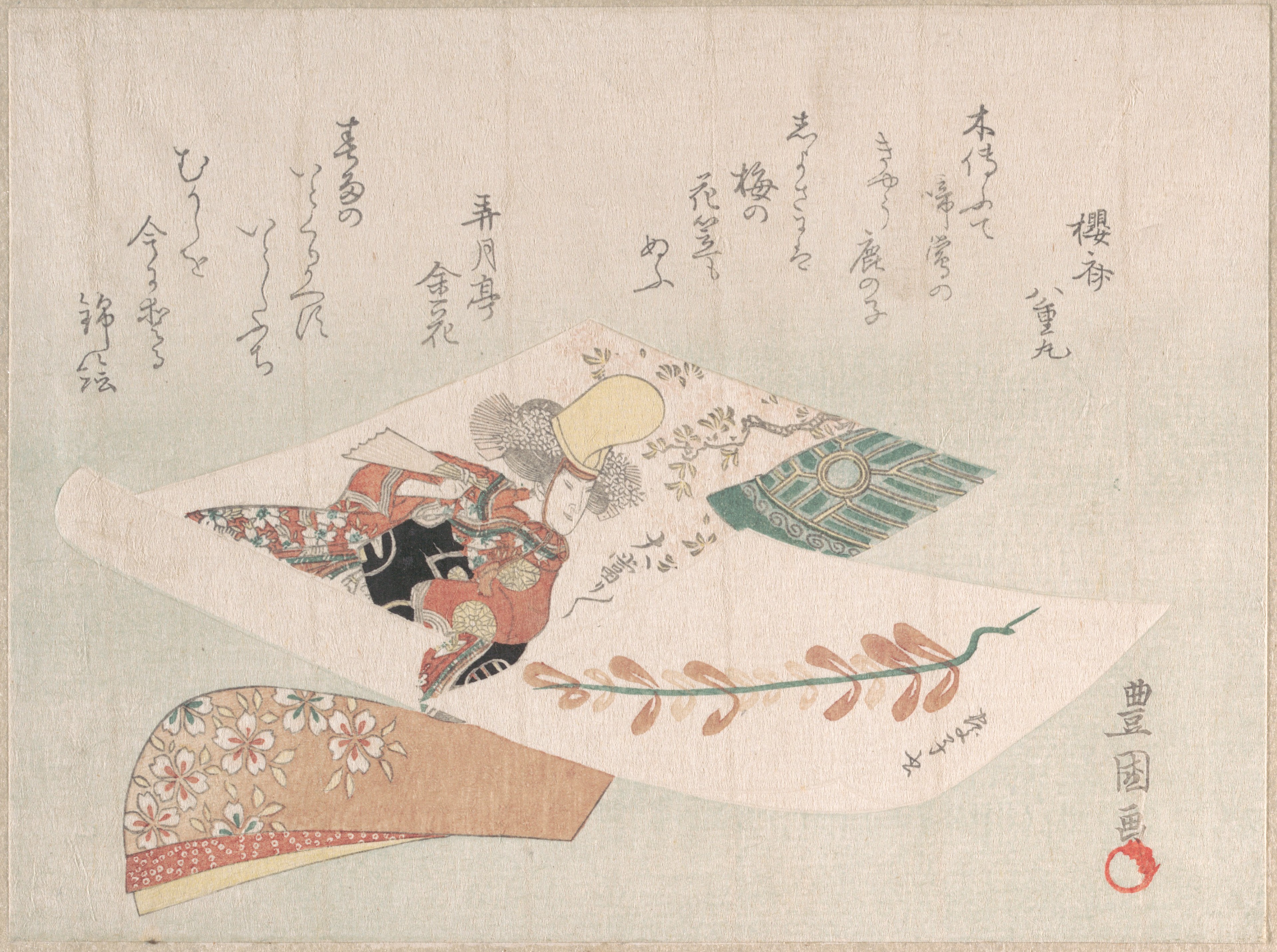
Representation of the Dance-Play "Dōjōji"
Woodblock print (surimono); ink and color on paper
Frequently Asked Questions
Scene from an Unidentified Drama was created by Utagawa Toyokuni I (歌川豊国) in ca. 1800.