
Shirahige Shrine at Dawn
- Date:
- early 19th century
- Medium:
- Color woodblock print; surimono
- Source:
- Art Institute of Chicago
Description
Utagawa Toyokuni I's Shirahige Shrine at Dawn turns the Edo ukiyo-e designer's attention from the kabuki stage to the sacred geography of the city. Shirahige Shrine, located on the Sumida River, was a familiar Edo religious site, and dawn was traditionally a charged moment for ritual visits and seasonal observance. Toyokuni I, though best known for yakusha-e or kabuki actor prints, here demonstrates his command of figural composition within a landscape-tinged setting, weaving worshippers and shrine architecture into a unified scene. The composition lets the cool, early-morning palette set a contemplative tone, in contrast to the saturated theatrical colors usually associated with his actor prints. As such, the sheet shows how the founder of the Utagawa school engaged with meisho-e, the famous-place picture tradition, which would soon become a dominant Edo ukiyo-e genre under Hokusai and Hiroshige. The Art Institute of Chicago preserves this impression, whose disciplined keylines and carefully balanced color blocks reflect the high production standards demanded of Edo woodblock publishers in the years around 1801. The presence of figures in the foreground, attentively rendered with Toyokuni's typical concern for individualized faces and costume detail, anchors the scene in the social world of Edo even as the shrine architecture lifts it toward the sacred. For collectors and scholars, Shirahige Shrine at Dawn offers an important reminder of Utagawa Toyokuni's range and ambition.
More Prints by Utagawa Toyokuni I

Segawa Kikunojō III as the Shop Boy Chōkichi
1796
Woodblock print (nishiki-e), ink and color on paper
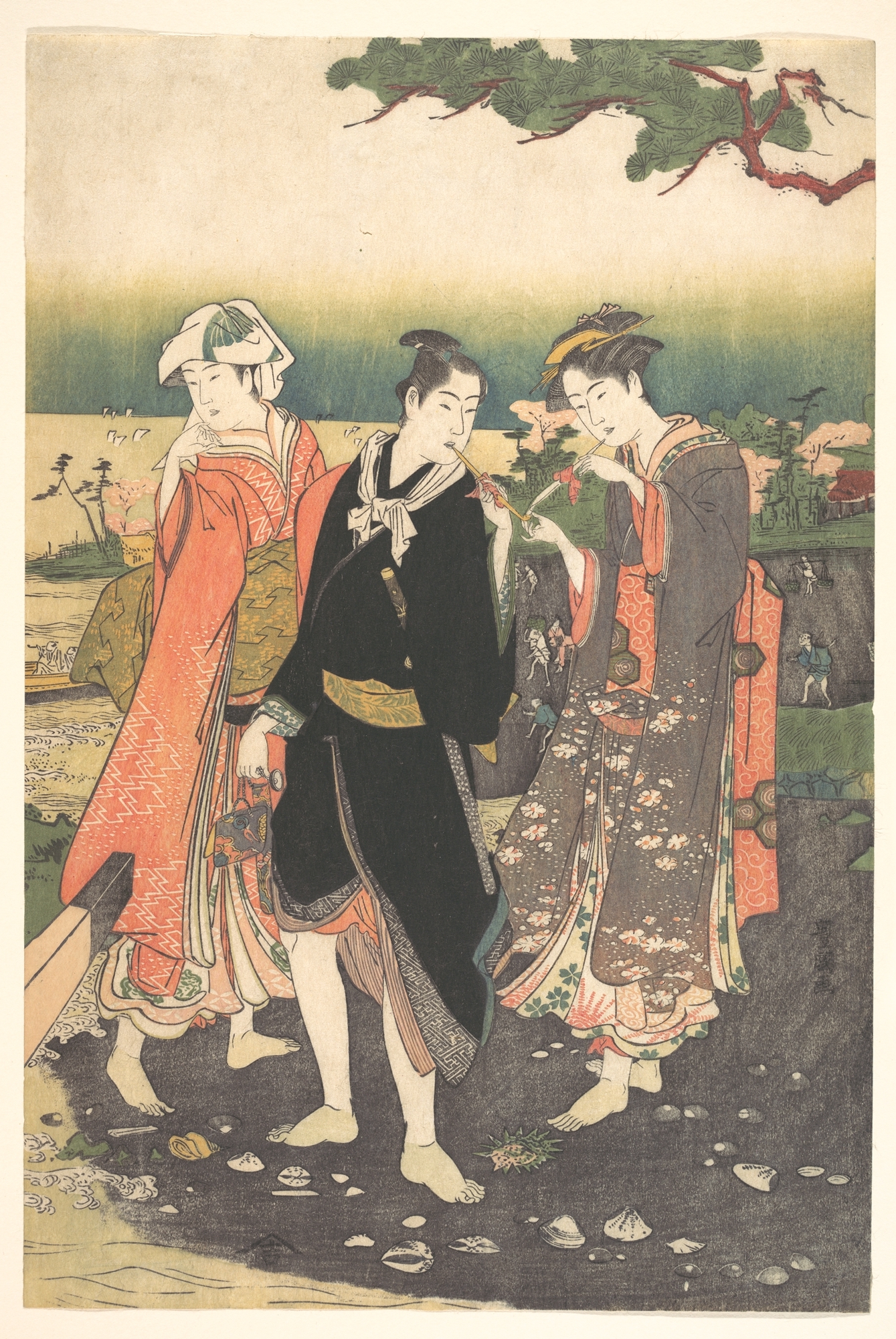
On Shinagawa Beach at Ebb-Tide
1769–1825
Woodblock print; ink and color on paper
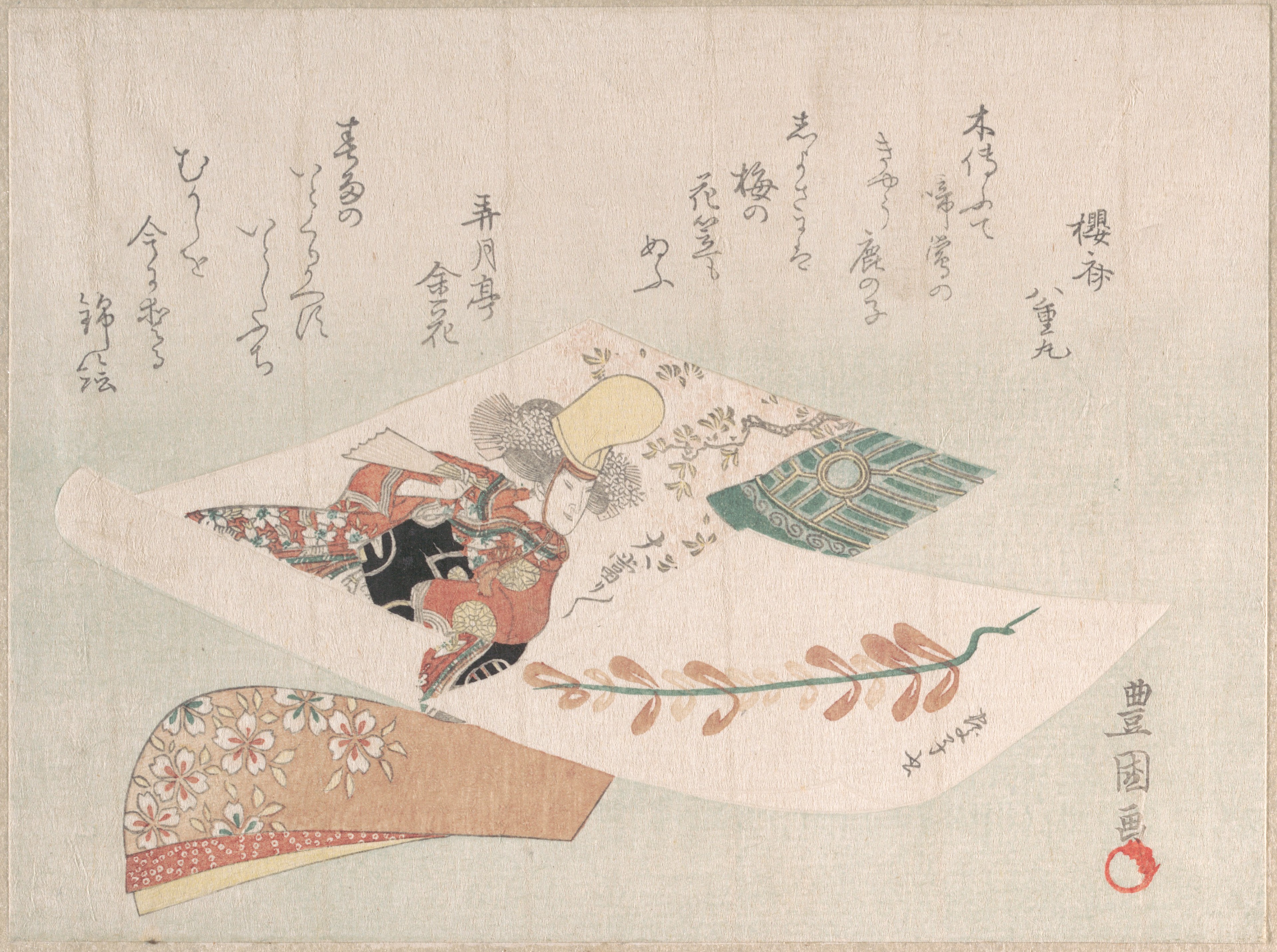
Representation of the Dance-Play "Dōjōji"
Woodblock print (surimono); ink and color on paper

The actors Sawamura Sojuro II as Satsuma Gengobei and Arashi Ryuzo II as Mawashi-otoko Yasuke in the play "Edo Sunago Kichirei Soga," performed at the Miyako Theater on the first month, 1795
c. 1795
Color woodblock print; oban
Frequently Asked Questions
Shirahige Shrine at Dawn was created by Utagawa Toyokuni I (歌川豊国) in early 19th century.