
Takashima Ohisa, from the series "A Fashionable Set of Three (Furyu sanpuku tsui)"
- Date:
- c. 1794
- Medium:
- Color woodblock print; oban
- Source:
- Art Institute of Chicago
Description
Utagawa Toyokuni I's "Takashima Ohisa, from the series A Fashionable Set of Three (Fūryū Sanpuku Tsui)" portrays one of the most celebrated bijin of late-eighteenth-century Edo: Ohisa, the teenage daughter of a senbei vendor whose beauty made her a marketing phenomenon. The Art Institute of Chicago holds the print as part of its Toyokuni collection. Takashima Ohisa appeared in countless prints of the 1790s — most famously by Utamaro — and Utagawa Toyokuni's contribution to the iconography stands apart for its directness. Although Utagawa Toyokuni I founded the Utagawa school's later dominance in kabuki actor prints — the yakusha-e that defined his Edo ukiyo-e career — his bijinga of named urban celebrities show the same figural authority. The Fūryū Sanpuku Tsui (Fashionable Set of Three) format implies a triptych or paired set of three beauties, in which Ohisa would have been one corner of a fashionable trio that buyers could assemble. Such sets responded directly to the late-Edo appetite for celebrity-named bijinga, and the Utagawa school's later flood of yakusha-e and bijinga can be read in part as an extension of this market. The Art Institute of Chicago's catalogue documents the print without speculating beyond its inscriptions, leaving the sheet's distinct contribution legible. For collectors of Edo ukiyo-e and of Ohisa iconography in particular, Toyokuni's Sanpuku Tsui design is essential.
More Prints by Utagawa Toyokuni I

Kabuki Actor Iwai Kumesaburo with abacus

Segawa Kikunojō III as the Shop Boy Chōkichi
1796
Woodblock print (nishiki-e), ink and color on paper
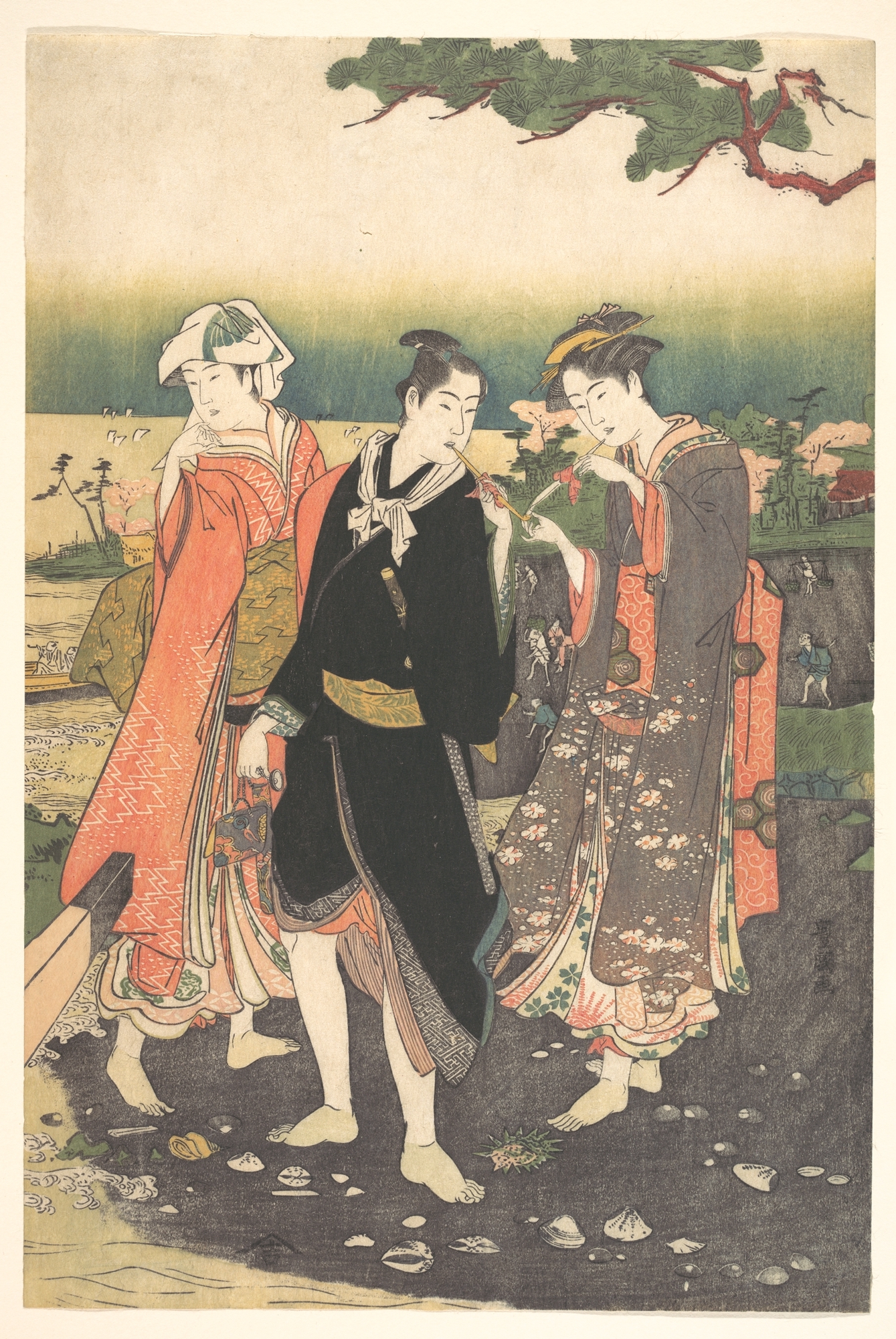
On Shinagawa Beach at Ebb-Tide
1769–1825
Woodblock print; ink and color on paper
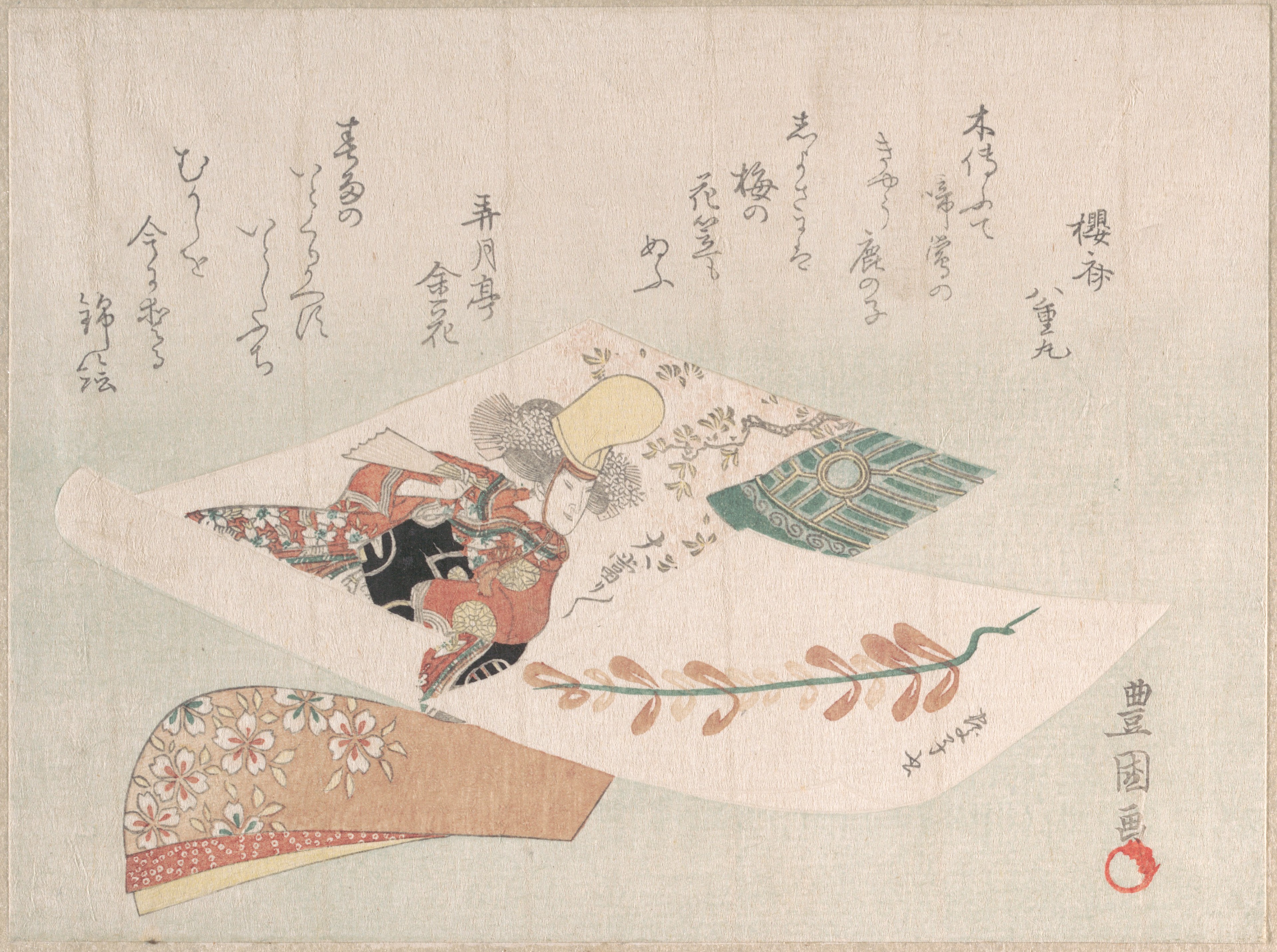
Representation of the Dance-Play "Dōjōji"
Woodblock print (surimono); ink and color on paper
Frequently Asked Questions
Takashima Ohisa, from the series "A Fashionable Set of Three (Furyu sanpuku tsui)" was created by Utagawa Toyokuni I (歌川豊国) in c. 1794.