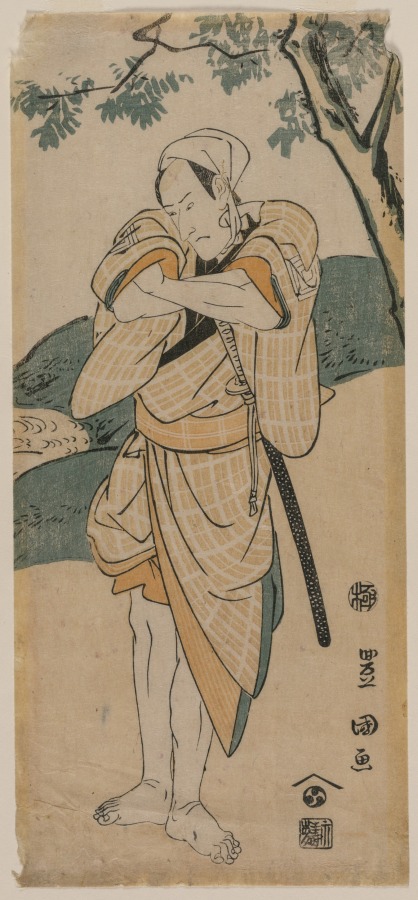
The Actor Ichikawa Danjuro as a Samurai
- Date:
- 1769–1825
- Medium:
- color woodblock print
- Source:
- Cleveland Museum of Art
Description
The Actor Ichikawa Danjurō as a Samurai, dated 1769 and preserved in the Cleveland Museum of Art (accession 1985.241), depicts a member of the Ichikawa Danjurō line, the most prestigious dynasty of Edo kabuki, in a samurai role. Utagawa Toyokuni was born in 1769, the year carried in the museum's record; the dating likely reflects the role's stage chronology rather than the print's production, and the sheet is best understood as part of Toyokuni's long engagement with Danjurō imagery during his mature career in the 1790s and beyond. As founder of the Utagawa school's leadership and the dominant designer of yakusha-e in Edo, Toyokuni made the Ichikawa house his most frequent subject, producing portraits in role across kabuki's signature jidai-mono (history play) and sewa-mono (domestic play) repertoires. Samurai roles allowed him to deploy the iconic costuming of the warrior elite — formal kamishimo or armour, distinctive sword fittings — while still rendering the face with the recognizable likeness that fans demanded. The Cleveland sheet exemplifies the way Toyokuni combined theatrical specificity with the polished line of Edo ukiyo-e, producing images that satisfied both the casual buyer and the connoisseur. His Danjurō portraits remain primary documents of the Ichikawa house's stage repertoire across the late Edo period.
More Prints by Utagawa Toyokuni I

Segawa Kikunojō III as the Shop Boy Chōkichi
1796
Woodblock print (nishiki-e), ink and color on paper
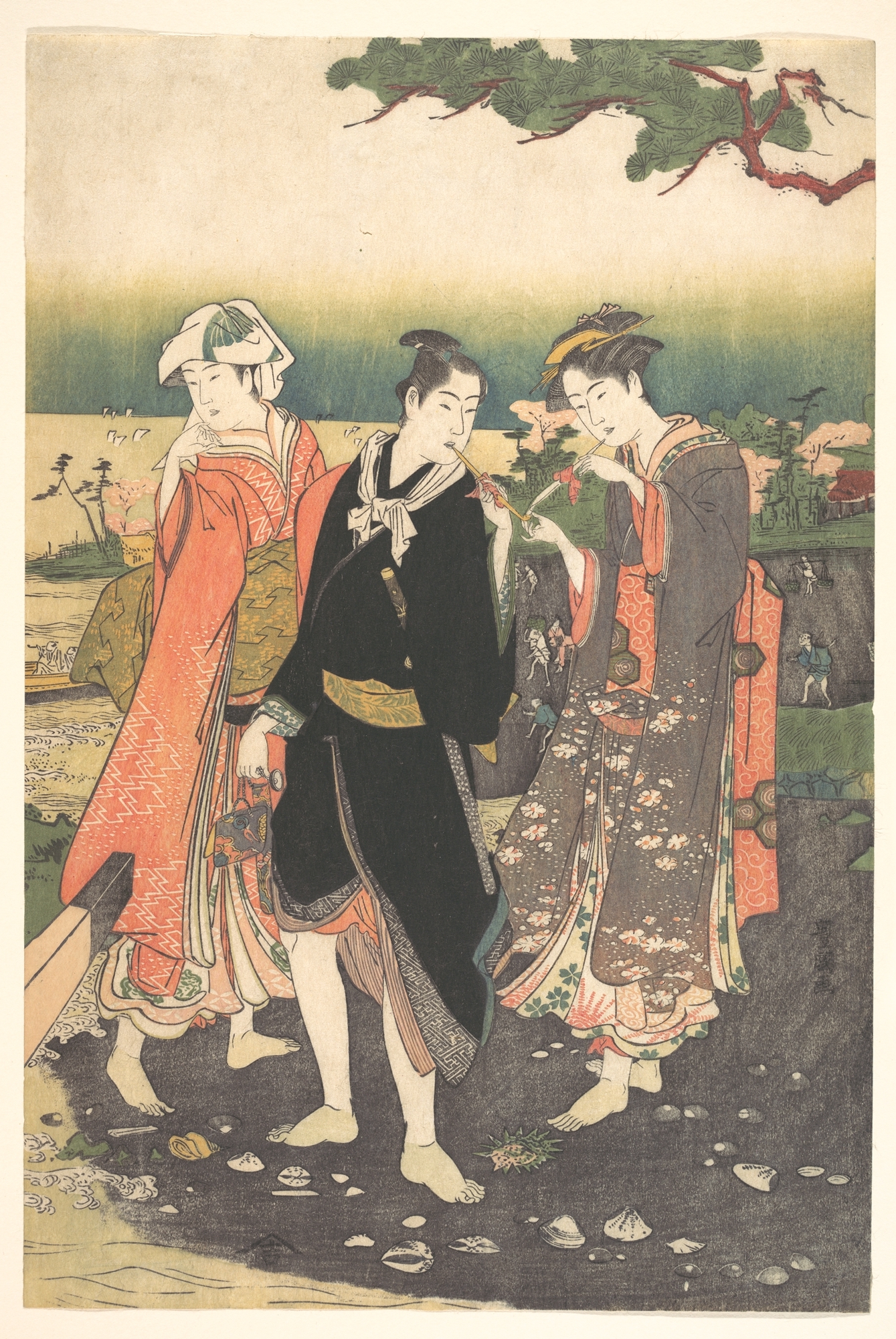
On Shinagawa Beach at Ebb-Tide
1769–1825
Woodblock print; ink and color on paper
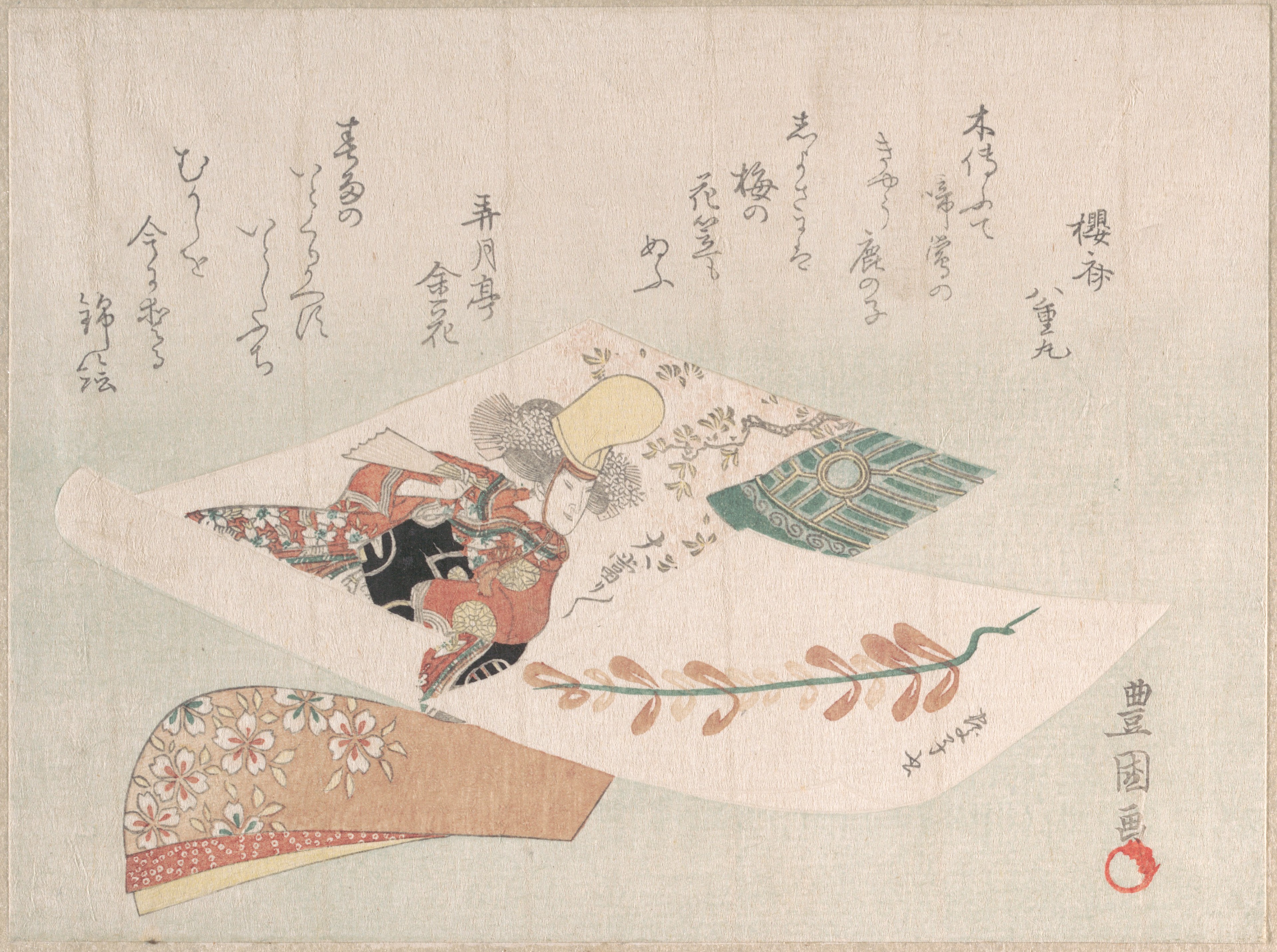
Representation of the Dance-Play "Dōjōji"
Woodblock print (surimono); ink and color on paper

The actors Sawamura Sojuro II as Satsuma Gengobei and Arashi Ryuzo II as Mawashi-otoko Yasuke in the play "Edo Sunago Kichirei Soga," performed at the Miyako Theater on the first month, 1795
c. 1795
Color woodblock print; oban
Frequently Asked Questions
The Actor Ichikawa Danjuro as a Samurai was created by Utagawa Toyokuni I (歌川豊国) in 1769–1825.