
The actor Ichimura Uzaemon XII as Churo Onoe
- Date:
- 1847
- Medium:
- Color woodblock print; center sheet of oban triptych (right: 1939.1034b)
- Source:
- Art Institute of Chicago
Description
Issued in 1847, this Edo ukiyo-e woodblock print from the Utagawa Toyokuni studio depicts the kabuki actor Ichimura Uzaemon XII in the role of Churo Onoe, an onnagata role drawn from a play in the Edo repertoire. The Art Institute of Chicago holds the impression and catalogs it under actor and role; this description follows that record without speculating about the originating production. As a yakusha-e portrait the sheet is built to a familiar Utagawa formula: the actor occupies most of the picture field, the costume is treated as the principal carrier of color and pattern, and the face is given the workshop's restrained likeness style, with a pale ground for the skin, thin black contour lines for the features, and small accents that register expression without breaking the flat planarity of the design. Because the role is that of a female character played by a male actor, the costume is rendered with the layered kimono and elaborate hair ornaments that Edo audiences read as onnagata signs, and the posture quotes the controlled stage stillness that the Ichimura line cultivated. The Utagawa workshop's printers handle the design with crisp dark blacks for the outline and hair blocks, saturated colors in the outer robes, and lighter patterns laid over them in successive impressions. By the late 1840s, the Toyokuni studio had refined this kind of single-actor sheet into a near-standard product, and the 1847 Ichimura Uzaemon XII print is best understood as one disciplined example of that mature workshop output.
More Prints by Utagawa Toyokuni I

Segawa Kikunojō III as the Shop Boy Chōkichi
1796
Woodblock print (nishiki-e), ink and color on paper
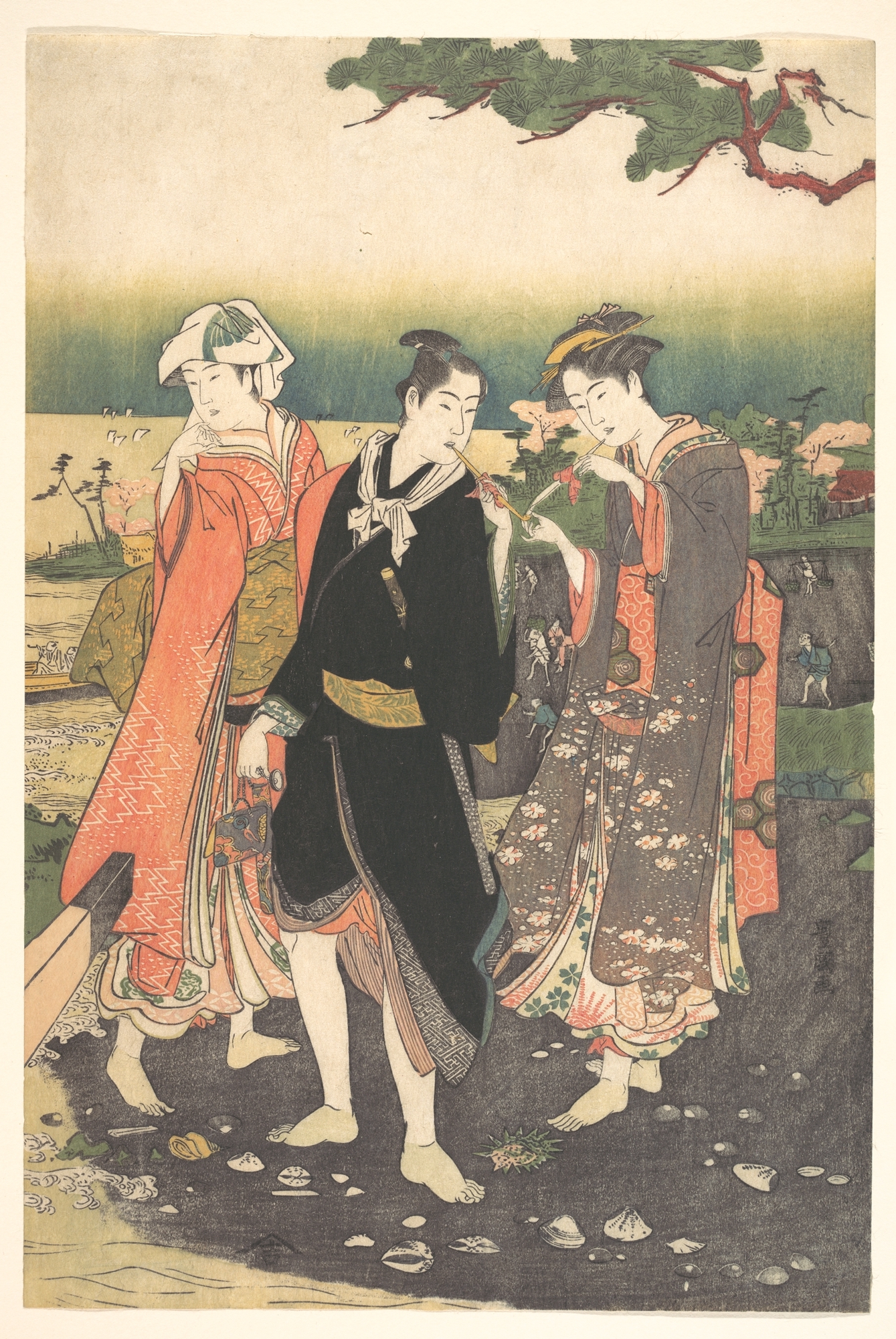
On Shinagawa Beach at Ebb-Tide
1769–1825
Woodblock print; ink and color on paper
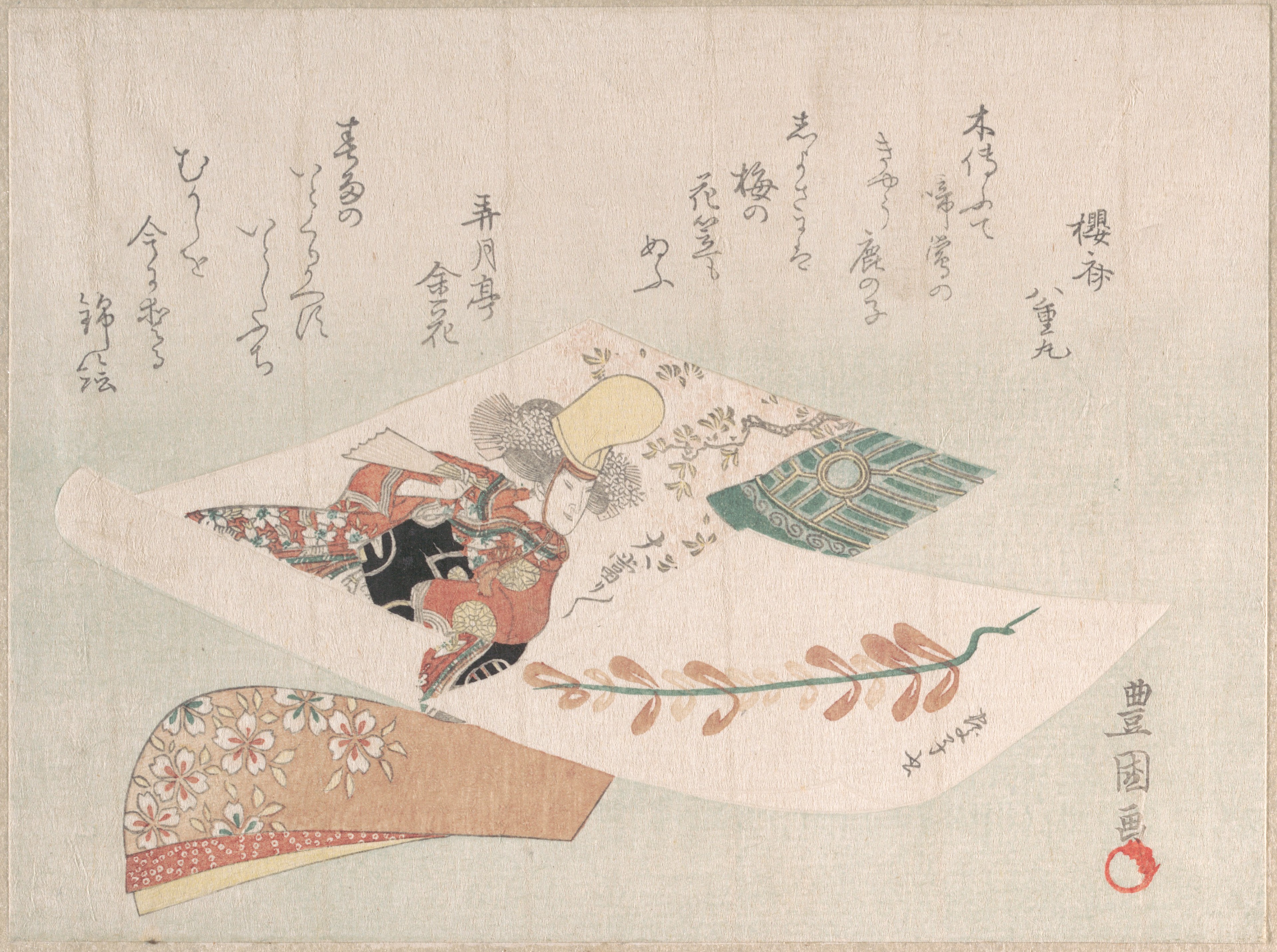
Representation of the Dance-Play "Dōjōji"
Woodblock print (surimono); ink and color on paper

The actors Sawamura Sojuro II as Satsuma Gengobei and Arashi Ryuzo II as Mawashi-otoko Yasuke in the play "Edo Sunago Kichirei Soga," performed at the Miyako Theater on the first month, 1795
c. 1795
Color woodblock print; oban
Frequently Asked Questions
The actor Ichimura Uzaemon XII as Churo Onoe was created by Utagawa Toyokuni I (歌川豊国) in 1847.