
The actor Sawamura Sojuro III as the packhorse-man Muchizo in the play "Miyamairi Musubi no Kamigaki," performed at the Kiri Theater in the eleventh month, 1797
- Date:
- c. 1797
- Medium:
- Color woodblock print; oban
- Source:
- Art Institute of Chicago
Description
This Utagawa Toyokuni I print captures the celebrated Edo ukiyo-e performer Sawamura Sojuro III in the role of the packhorse-man Muchizo, a part he played in the production of Miyamairi Musubi no Kamigaki staged at the Kiri Theater during the eleventh month of 1797. As a defining example of yakusha-e, or actor prints, the design distills the energy of the kabuki stage into a single arresting figure portrait. Toyokuni I, the foremost actor-portraitist of his generation, depicts the kabuki star with the firm contours and individualized facial features that helped him eclipse rival ukiyo-e designers in the late 1790s. The packhorse-man role belongs to a tradition of working-class character types beloved by Edo audiences, and Toyokuni dignifies the figure through careful attention to costume patterns, the set of the shoulders, and the dramatic tilt of the head. Held in the collection of the Art Institute of Chicago, the impression preserves the strong woodblock outlines and saturated color fields that made Toyokuni's actor sheets such successful commercial publications. Collectors of Edo ukiyo-e prize works of this kind for the way they collapse celebrity, theater history, and printmaking craft into one sheet, and the print serves as primary documentation of a specific Kiri-za production now otherwise lost to time. Toyokuni's signature, applied in confident brushwork to the lower margin, ties the sheet to the Utagawa lineage that he would shape for decades to come, making him the founder of the most commercially powerful school of nineteenth-century Japanese woodblock print design.
More Prints by Utagawa Toyokuni I

Kabuki Actor Iwai Kumesaburo with abacus

Segawa Kikunojō III as the Shop Boy Chōkichi
1796
Woodblock print (nishiki-e), ink and color on paper
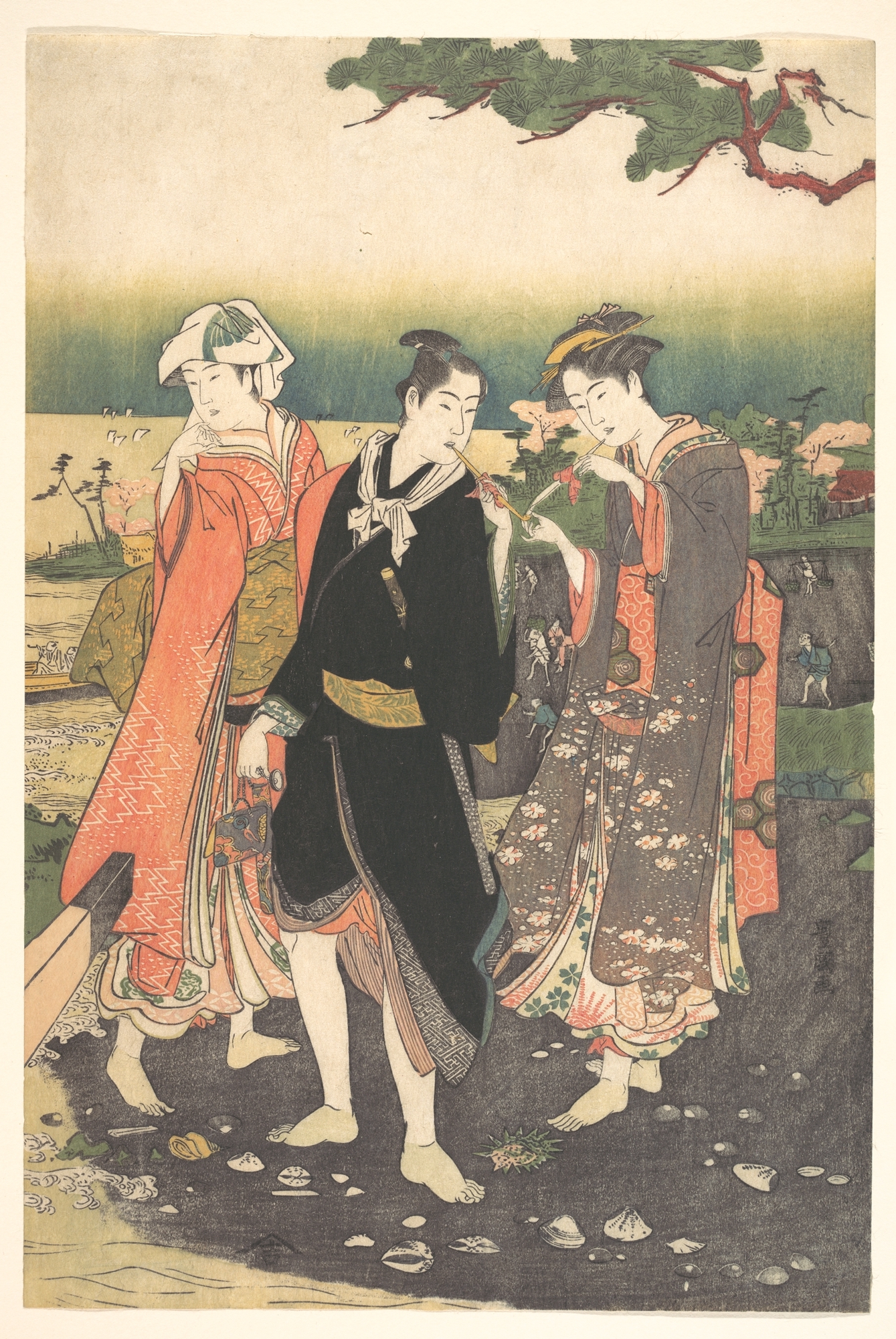
On Shinagawa Beach at Ebb-Tide
1769–1825
Woodblock print; ink and color on paper
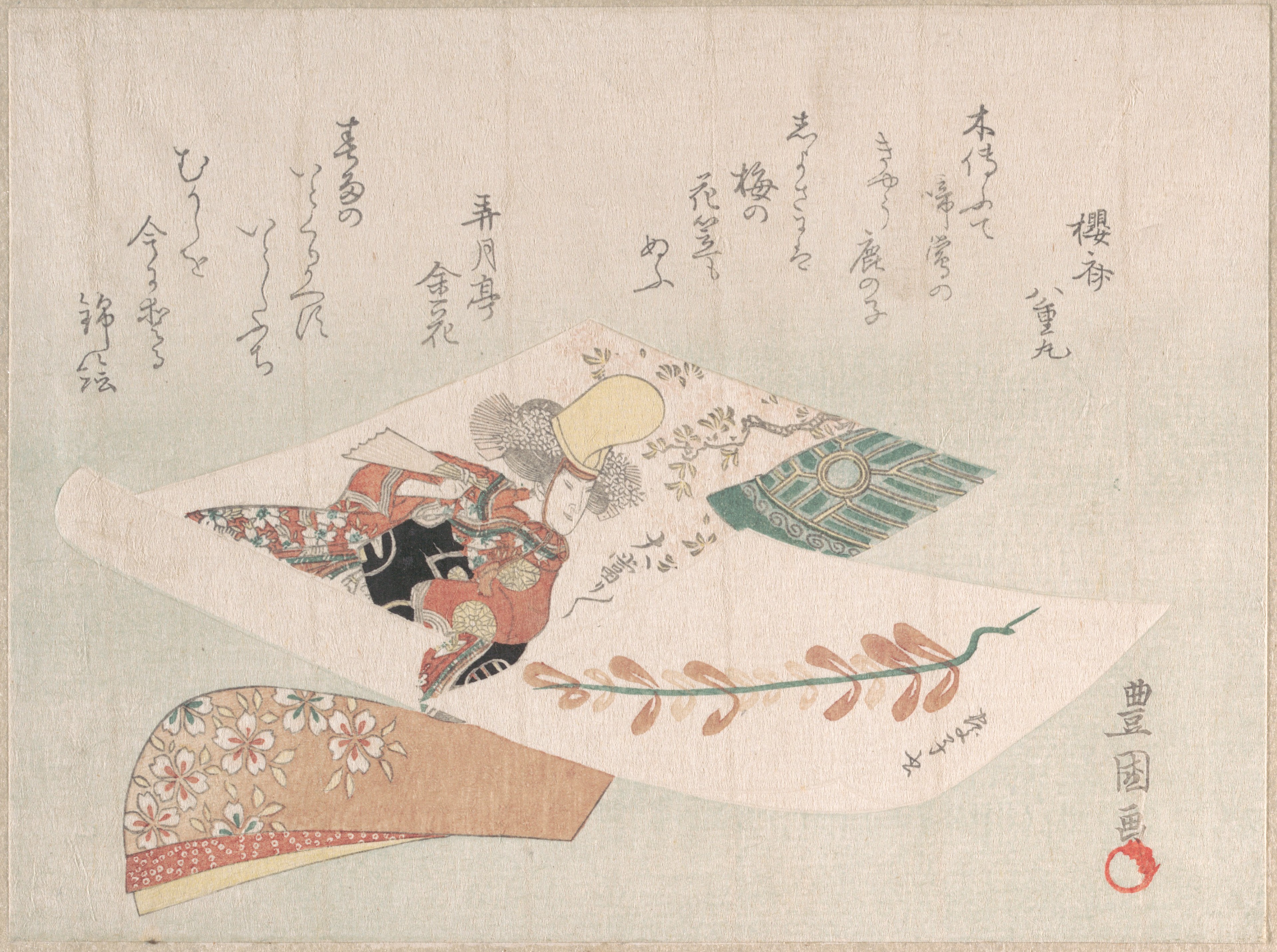
Representation of the Dance-Play "Dōjōji"
Woodblock print (surimono); ink and color on paper
Frequently Asked Questions
The actor Sawamura Sojuro III as the packhorse-man Muchizo in the play "Miyamairi Musubi no Kamigaki," performed at the Kiri Theater in the eleventh month, 1797 was created by Utagawa Toyokuni I (歌川豊国) in c. 1797.