
The actors Ichikawa Enzo as Chobei's Son Nagamatsu (R), Ichikawa Ebizo V as Banzui Chobei (C), and Ichikawa Komazo VI as Hanaregoma Shirobei (L)
- Date:
- c. 1847/52
- Medium:
- Color woodblock print; right sheet of oban triptych
- Source:
- Art Institute of Chicago
Description
This 1842 Utagawa Toyokuni Edo ukiyo-e print, held by the Art Institute of Chicago, is a three-sheet composition recording a kabuki performance featuring Ichikawa Enzo as Chobei's son Nagamatsu (right), Ichikawa Ebizo V as the legendary Edo otokodate Banzui Chobei (center), and Ichikawa Komazo VI as the rival Hanaregoma Shirobei (left). The Art Institute supplies that role-by-role identification, and this description follows it without expanding the play's title beyond what the museum's record asserts. The Banzui Chobei legend - the chivalric commoner who confronts a haughty samurai household and is killed for it - was a touchstone of Edo theatrical and popular literature, and yakusha-e triptychs devoted to such material were a major Utagawa workshop product. The triptych format allowed Toyokuni to fix all three principal antagonists on a single coordinated design: Ebizo V at center provides the gravitational point of the composition, drawn with the heavy outer robes and resolute bearing the Banzui Chobei role demanded; Ichikawa Komazo VI on the left and Ichikawa Enzo on the right anchor the wings with contrasting postures and costumes. The Utagawa printers carry the design with the firm contour drawing and saturated polychrome of late Edo workshop practice. As a record of a specific 1842 staging - performed amid the Tenpo Reform period that frequently complicated actor publishing - the triptych shows how the Utagawa Toyokuni studio continued to deliver substantial multi-sheet yakusha-e even under tightened publication conditions.
More Prints by Utagawa Toyokuni I

Segawa Kikunojō III as the Shop Boy Chōkichi
1796
Woodblock print (nishiki-e), ink and color on paper
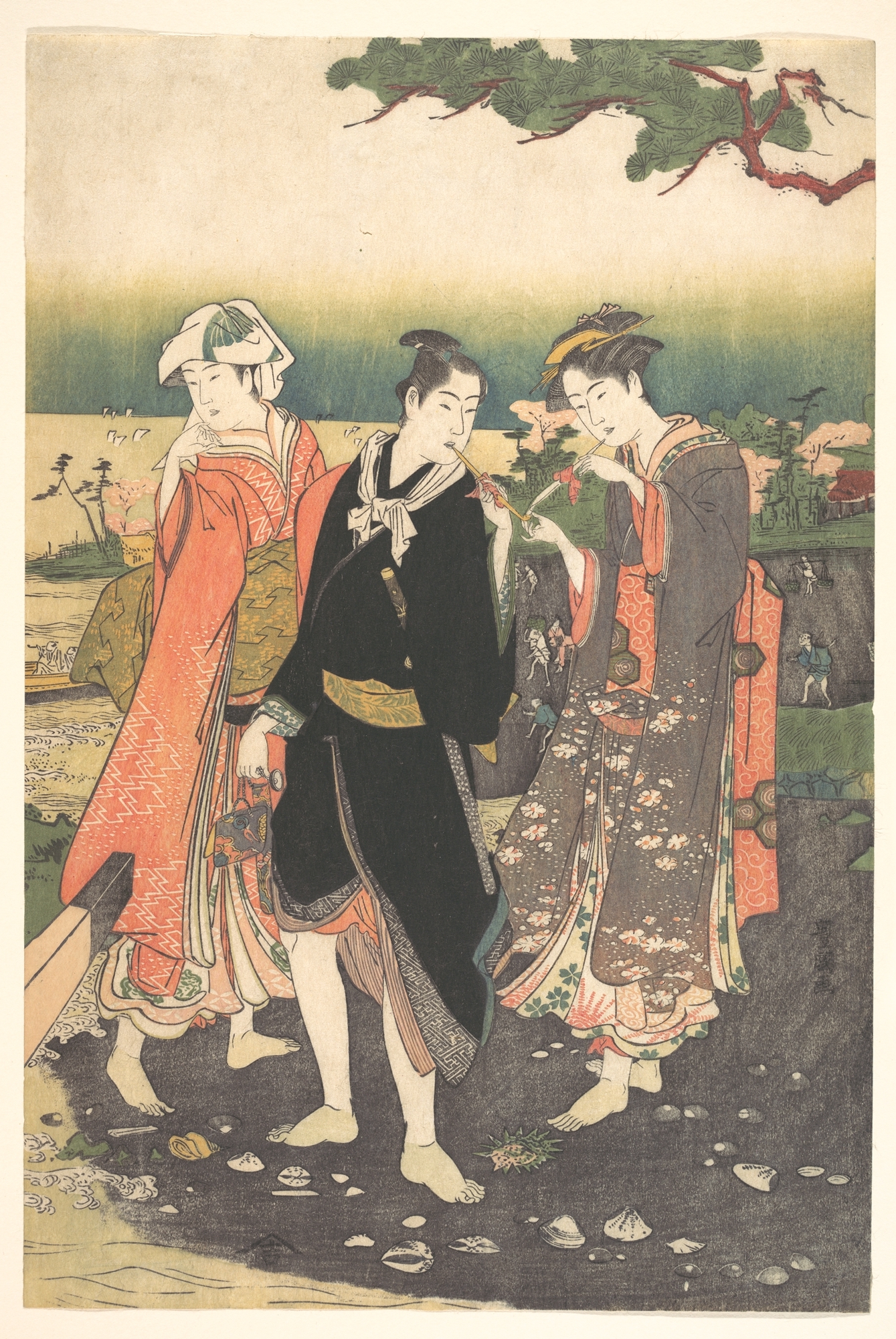
On Shinagawa Beach at Ebb-Tide
1769–1825
Woodblock print; ink and color on paper
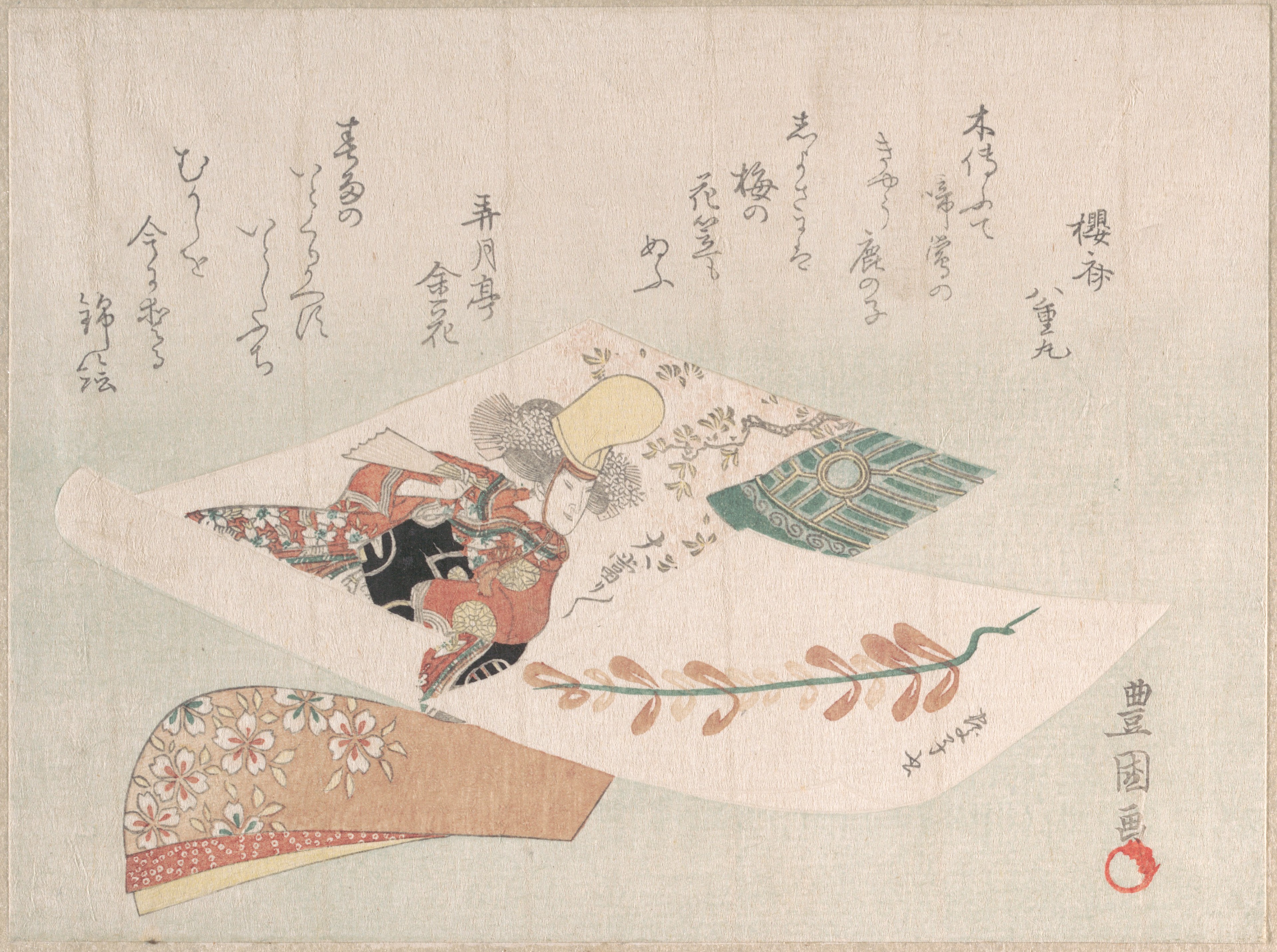
Representation of the Dance-Play "Dōjōji"
Woodblock print (surimono); ink and color on paper

The actors Sawamura Sojuro II as Satsuma Gengobei and Arashi Ryuzo II as Mawashi-otoko Yasuke in the play "Edo Sunago Kichirei Soga," performed at the Miyako Theater on the first month, 1795
c. 1795
Color woodblock print; oban
Frequently Asked Questions
The actors Ichikawa Enzo as Chobei's Son Nagamatsu (R), Ichikawa Ebizo V as Banzui Chobei (C), and Ichikawa Komazo VI as Hanaregoma Shirobei (L) was created by Utagawa Toyokuni I (歌川豊国) in c. 1847/52.