
The actors Ichikawa Komazo III as Akuhachiro Tokikage and Nakayama Tomisaburo I as Yushide, the sister of Rokurozaemon, in the play "Hana to Mimasu Yoshino no Miyuki," performed at the Nakamura Theater in the eleventh month, 1798
- Date:
- 1798
- Medium:
- Color woodblock print; oban
- Source:
- Art Institute of Chicago
Description
This Utagawa Toyokuni I yakusha-e print preserves a tense double-figure moment from the play Hana to Mimasu Yoshino no Miyuki, performed at the Nakamura Theater in the eleventh month of 1798. Ichikawa Komazo III performs the warrior figure Akuhachiro Tokikage opposite Nakayama Tomisaburo I as Yushide, the sister of Rokurozaemon. As founder of the Utagawa school and the leading Edo ukiyo-e designer of his generation, Toyokuni I responded to such kabuki performances with carefully composed multi-figure portraits that distributed the visual weight between actors and roles in expressive balance. The eleventh-month kaomise season was a peak moment of theatrical attention in Edo, when each playhouse unveiled its annual troupe configuration. Toyokuni's print would have served audiences as souvenir, advertisement, and lasting record of a specific Nakamura-za production. The Art Institute of Chicago preserves this impression, whose firm keylines, individualized facial features, and saturated color blocks reflect the high production standards of Edo woodblock printing at the close of the eighteenth century. Particularly notable is the way Toyokuni distinguishes between Komazo III's male-role bearing and Tomisaburo I's onnagata grace, producing two distinct portrait modes within a unified scene. As a fully dated example of Utagawa Toyokuni I's mature actor-portrait style, the sheet stands as both a refined work of Edo ukiyo-e art and a precise historical document of the 1798 kabuki season.
More Prints by Utagawa Toyokuni I

Segawa Kikunojō III as the Shop Boy Chōkichi
1796
Woodblock print (nishiki-e), ink and color on paper
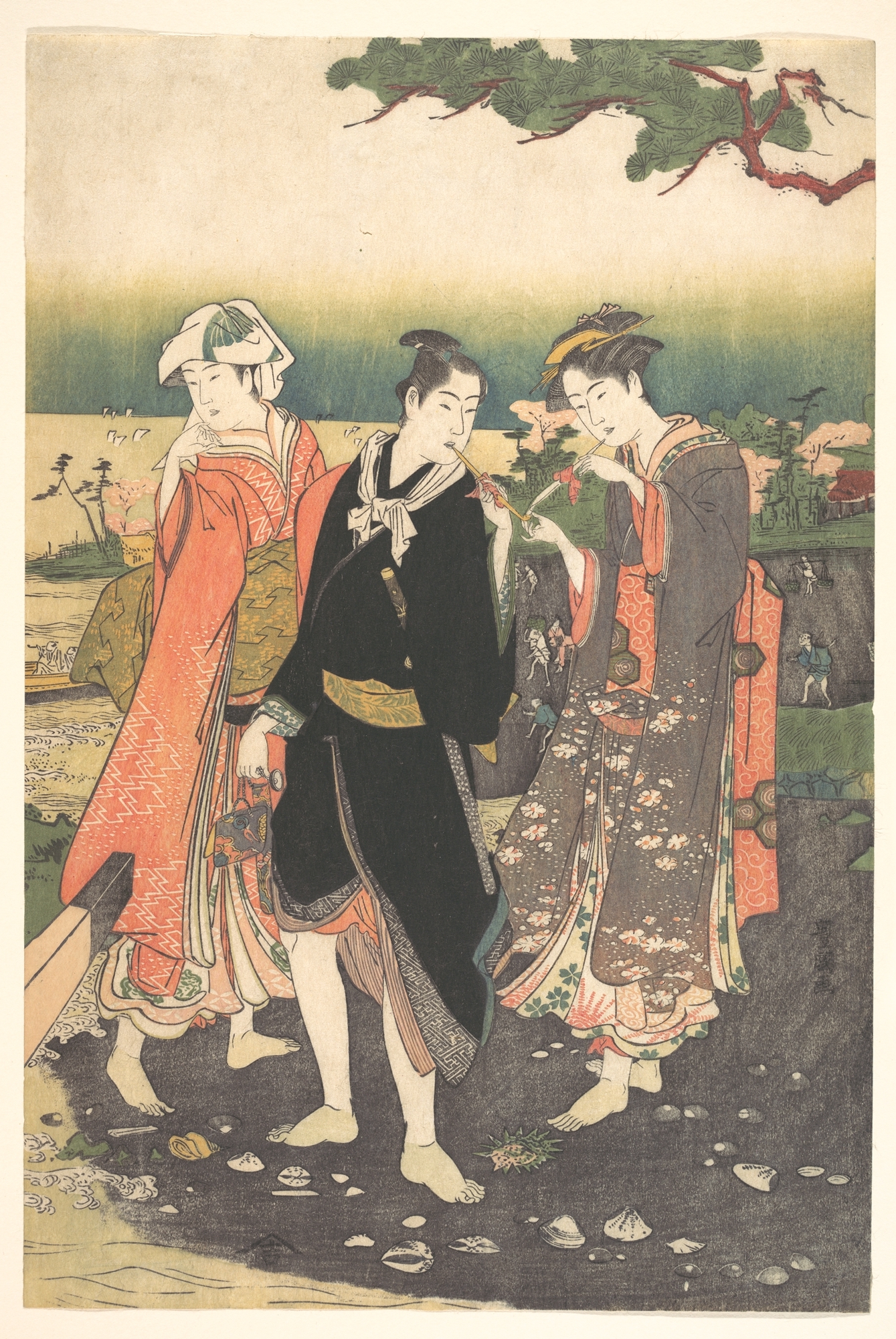
On Shinagawa Beach at Ebb-Tide
1769–1825
Woodblock print; ink and color on paper
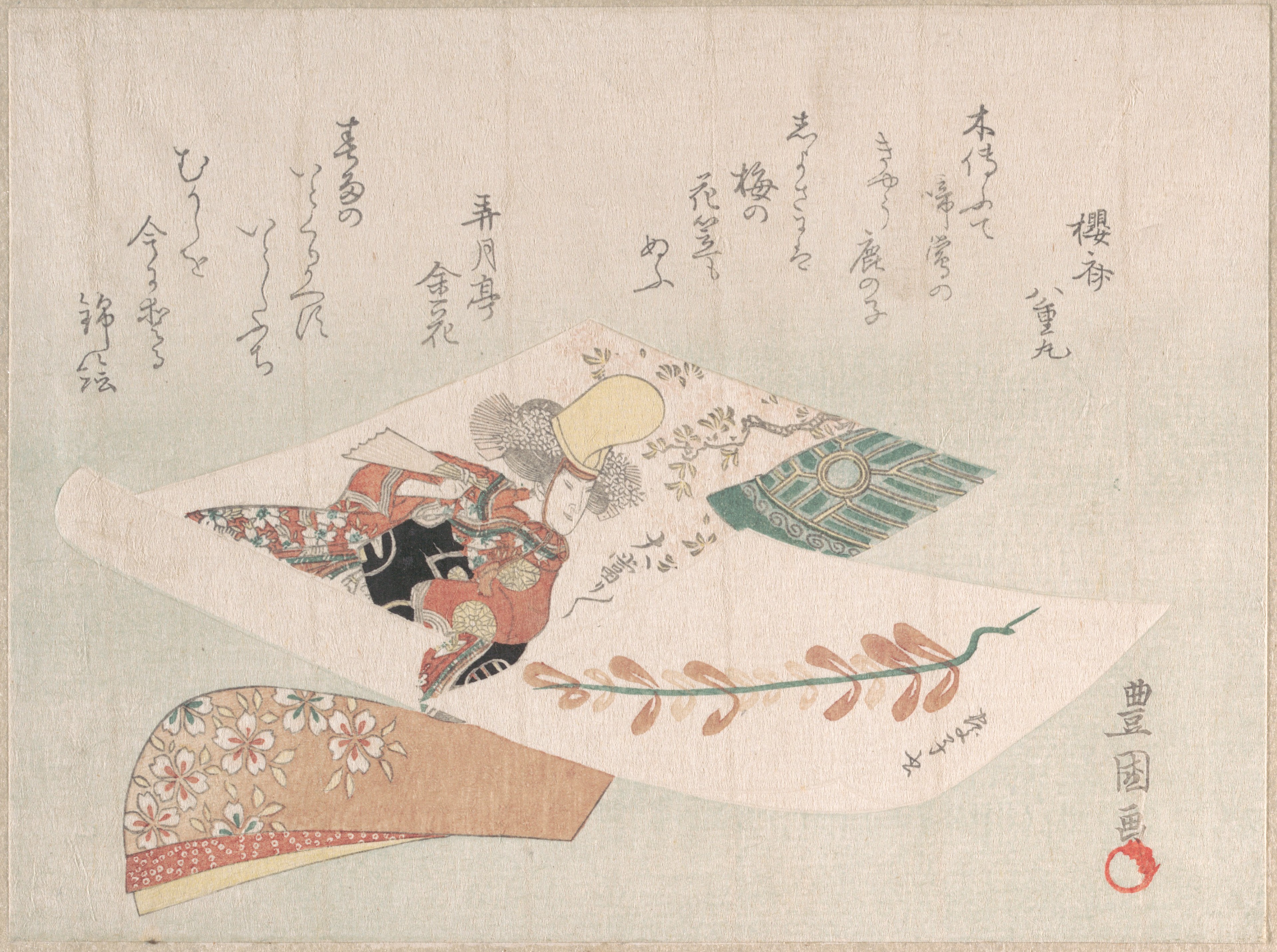
Representation of the Dance-Play "Dōjōji"
Woodblock print (surimono); ink and color on paper

The actors Sawamura Sojuro II as Satsuma Gengobei and Arashi Ryuzo II as Mawashi-otoko Yasuke in the play "Edo Sunago Kichirei Soga," performed at the Miyako Theater on the first month, 1795
c. 1795
Color woodblock print; oban
Frequently Asked Questions
The actors Ichikawa Komazo III as Akuhachiro Tokikage and Nakayama Tomisaburo I as Yushide, the sister of Rokurozaemon, in the play "Hana to Mimasu Yoshino no Miyuki," performed at the Nakamura Theater in the eleventh month, 1798 was created by Utagawa Toyokuni I (歌川豊国) in 1798.