
The actors Seki Sanjuro II, One Kikugoro III, and Ichikawa Danjuro VII on a Kabuki stage
- Date:
- 1822
- Medium:
- Color woodblock print; shikishiban, surimono
- Source:
- Art Institute of Chicago
Description
This 1822 woodblock print by Utagawa Toyokuni captures three prominent kabuki performers, Seki Sanjuro II, Onoe Kikugoro III, and Ichikawa Danjuro VII, mid-scene on a Kabuki stage. As one of the leading masters of Edo ukiyo-e yakusha-e, Toyokuni built his reputation on this kind of group composition, where multiple stars share the picture plane and each is rendered with the distinctive mie pose and facial mask their fans expected. The print is held in the collection of the Art Institute of Chicago, which preserves it as an example of Toyokuni's mature theatrical work from the late Bunsei era. By 1822, Toyokuni had been head of the Utagawa school for more than two decades, and prints like this one show how he balanced collective composition with individual likeness. The three actors are arrayed so that costume patterns, sword hilts, and outstretched limbs interlock without obscuring identifying crests and hairlines. Toyokuni uses a relatively restrained palette, letting the actors' robes carry the visual weight while the stage setting remains spare. This kind of multi-figure yakusha-e served as both a commercial souvenir of a specific kabuki production and a portable index of the Edo star system. Because the print bears the names of three identifiable performers in roles drawn from a specific staging, it would have functioned for contemporary viewers as a record of an event they had attended or hoped to attend. For modern audiences, it preserves the visual atmosphere of Edo ukiyo-e theater culture at a moment when Toyokuni's stylistic vocabulary set the standard for the next generation of Utagawa school designers.
More Prints by Utagawa Toyokuni I

Segawa Kikunojō III as the Shop Boy Chōkichi
1796
Woodblock print (nishiki-e), ink and color on paper
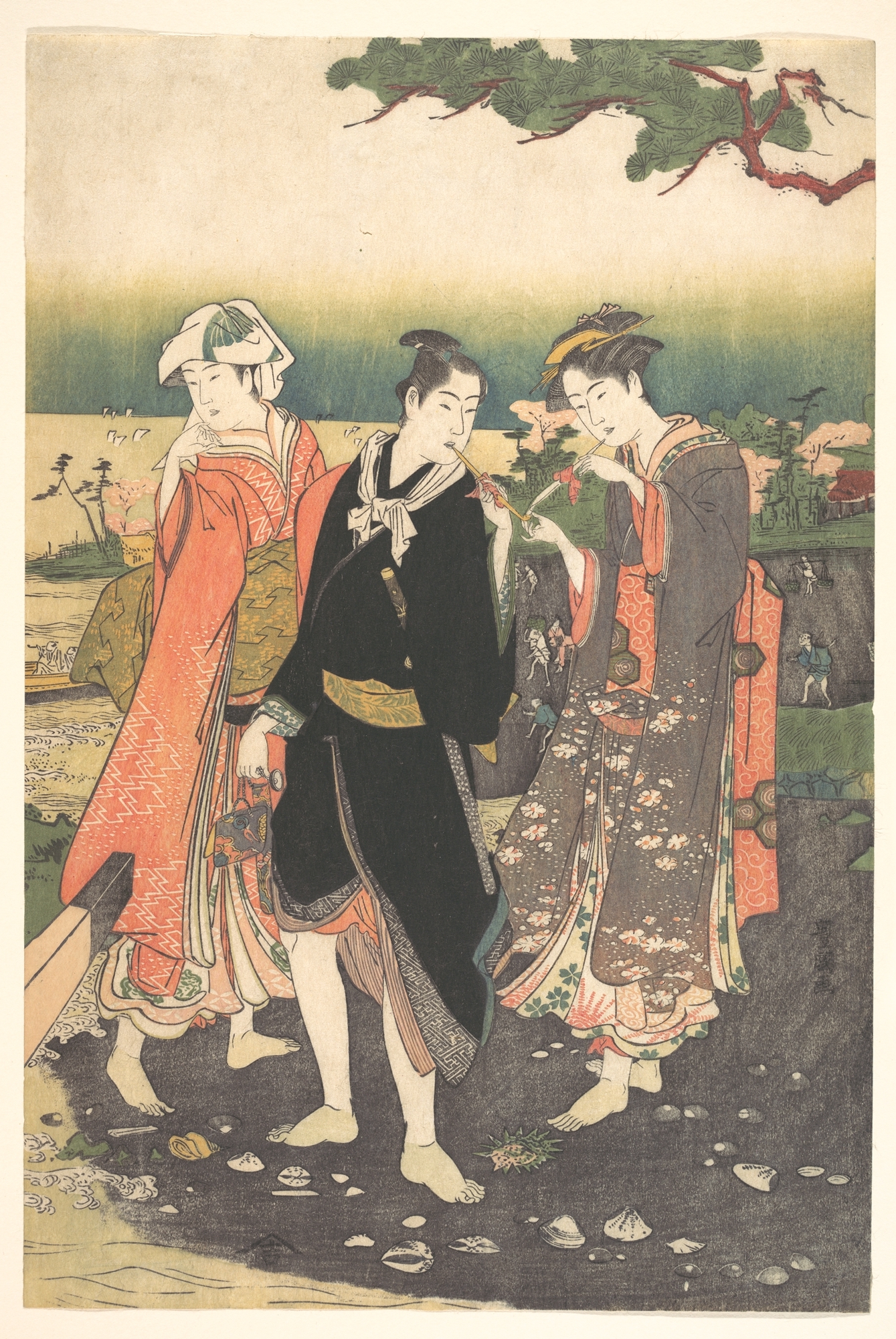
On Shinagawa Beach at Ebb-Tide
1769–1825
Woodblock print; ink and color on paper
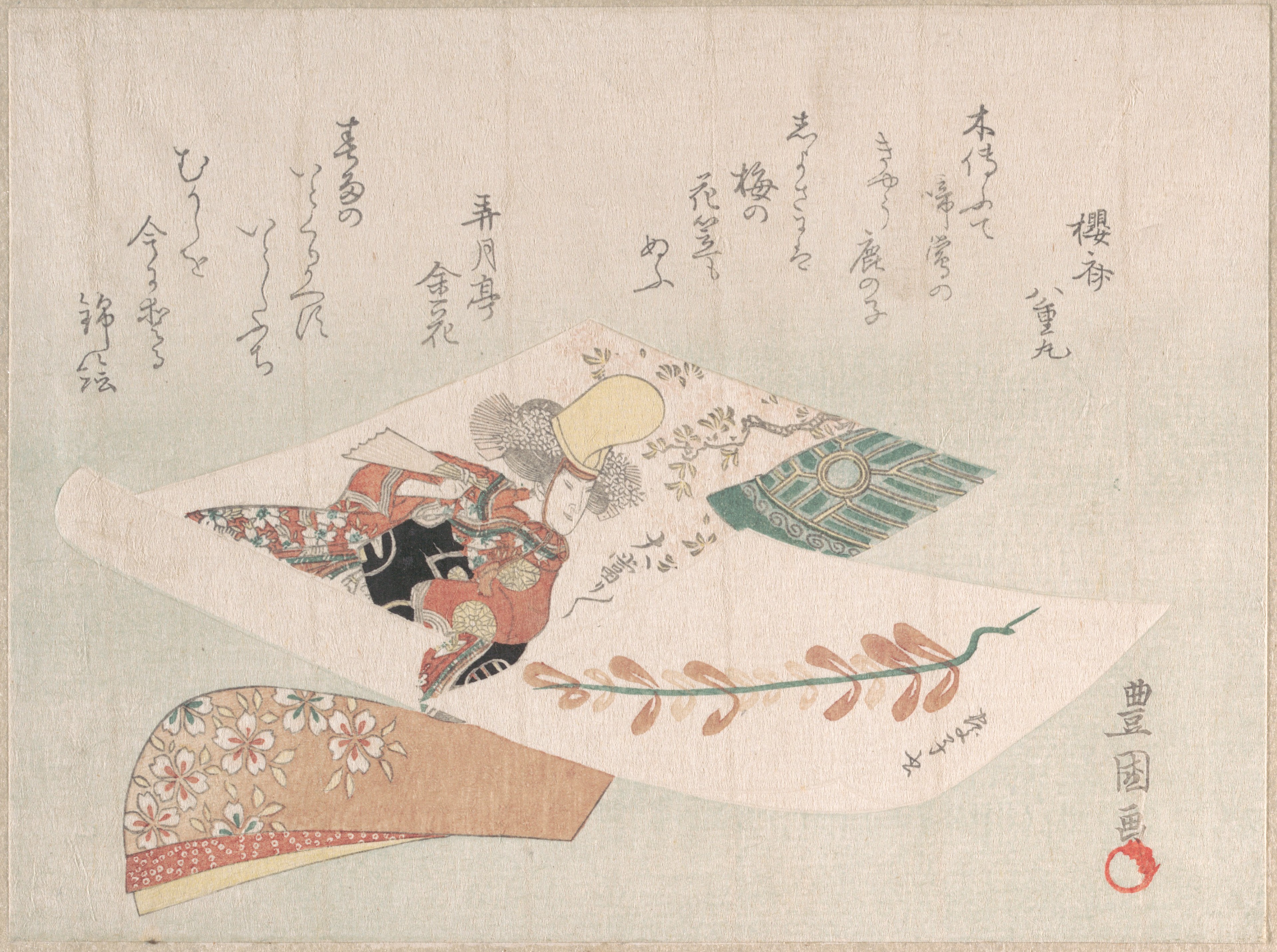
Representation of the Dance-Play "Dōjōji"
Woodblock print (surimono); ink and color on paper

The actors Sawamura Sojuro II as Satsuma Gengobei and Arashi Ryuzo II as Mawashi-otoko Yasuke in the play "Edo Sunago Kichirei Soga," performed at the Miyako Theater on the first month, 1795
c. 1795
Color woodblock print; oban
Frequently Asked Questions
The actors Seki Sanjuro II, One Kikugoro III, and Ichikawa Danjuro VII on a Kabuki stage was created by Utagawa Toyokuni I (歌川豊国) in 1822.