
The Card Game
- Date:
- c. 1790
- Medium:
- Color woodblock print; ōban triptych
- Source:
- Art Institute of Chicago
Description
The Card Game, recorded by the Art Institute of Chicago with a date of 1785, shows a group of figures gathered around a set of playing cards in a domestic interior. Utagawa Toyokuni uses the game as a pretext for a tightly choreographed group composition, in which leaning bodies, outstretched hands, and the small rectangles of the cards organize the picture plane. Card games such as karuta and uta-garuta were popular pastimes in Edo, especially around the New Year, and they offered ukiyo-e artists a chance to depict close interactions among friends, family members, or courtesans and their guests. The print plays on these associations while concentrating on the more abstract pleasures of pattern and grouping. Toyokuni's handling of textiles is particularly important here: kimono surfaces are read as continuous fields of decoration, and the differing motifs help distinguish individual figures without disrupting the overall balance of the composition. As Edo ukiyo-e, the work sits comfortably within the broader category of genre prints that captured the rituals of urban leisure, and it represents an important strand of Utagawa Toyokuni's output alongside his more famous yakusha-e. The Art Institute of Chicago catalogues the design as a Toyokuni I print, situating it among the artist's mid-1780s compositions, when he was sharpening both his line and his sense of group dynamics in interior settings.
More Prints by Utagawa Toyokuni I

Segawa Kikunojō III as the Shop Boy Chōkichi
1796
Woodblock print (nishiki-e), ink and color on paper
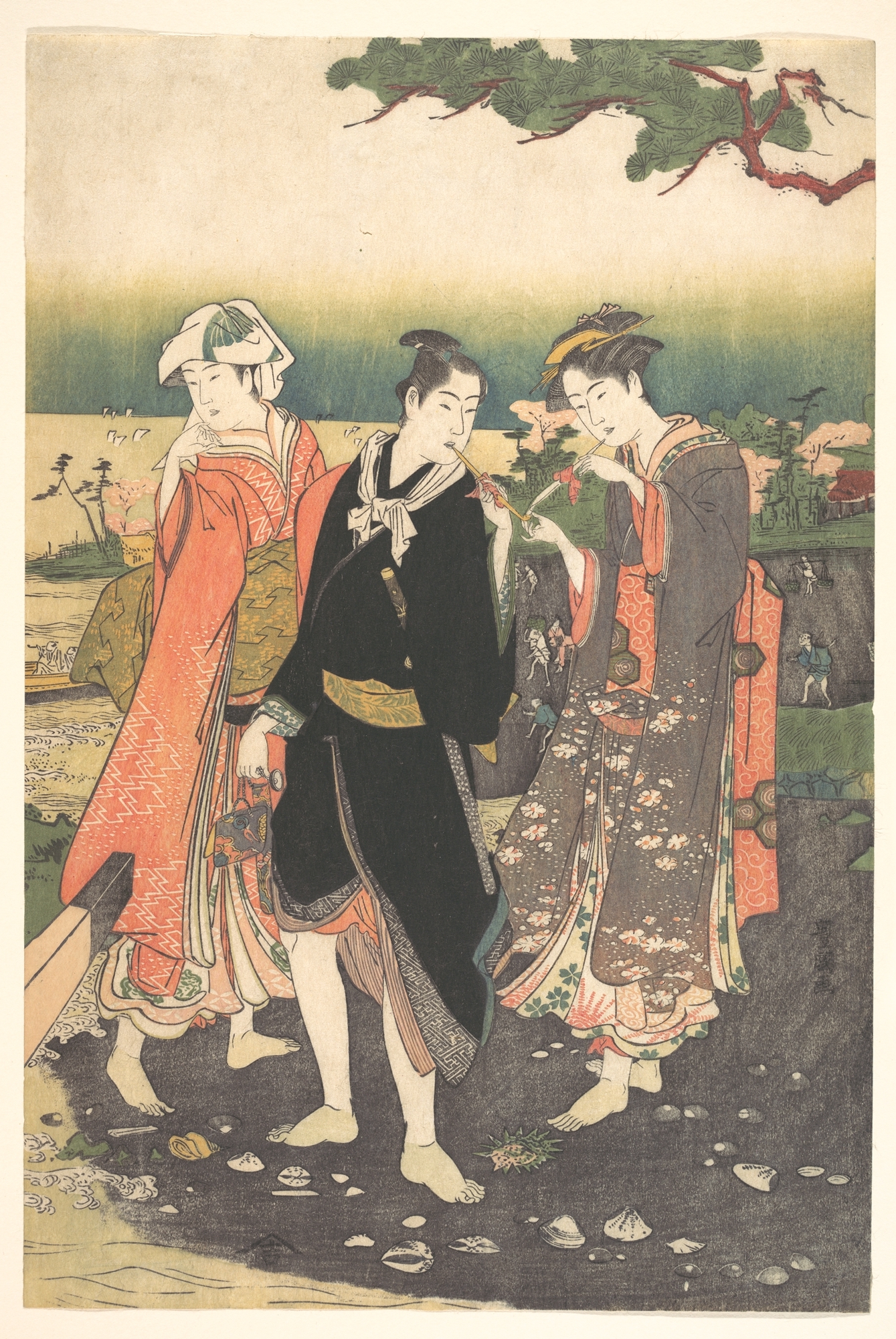
On Shinagawa Beach at Ebb-Tide
1769–1825
Woodblock print; ink and color on paper
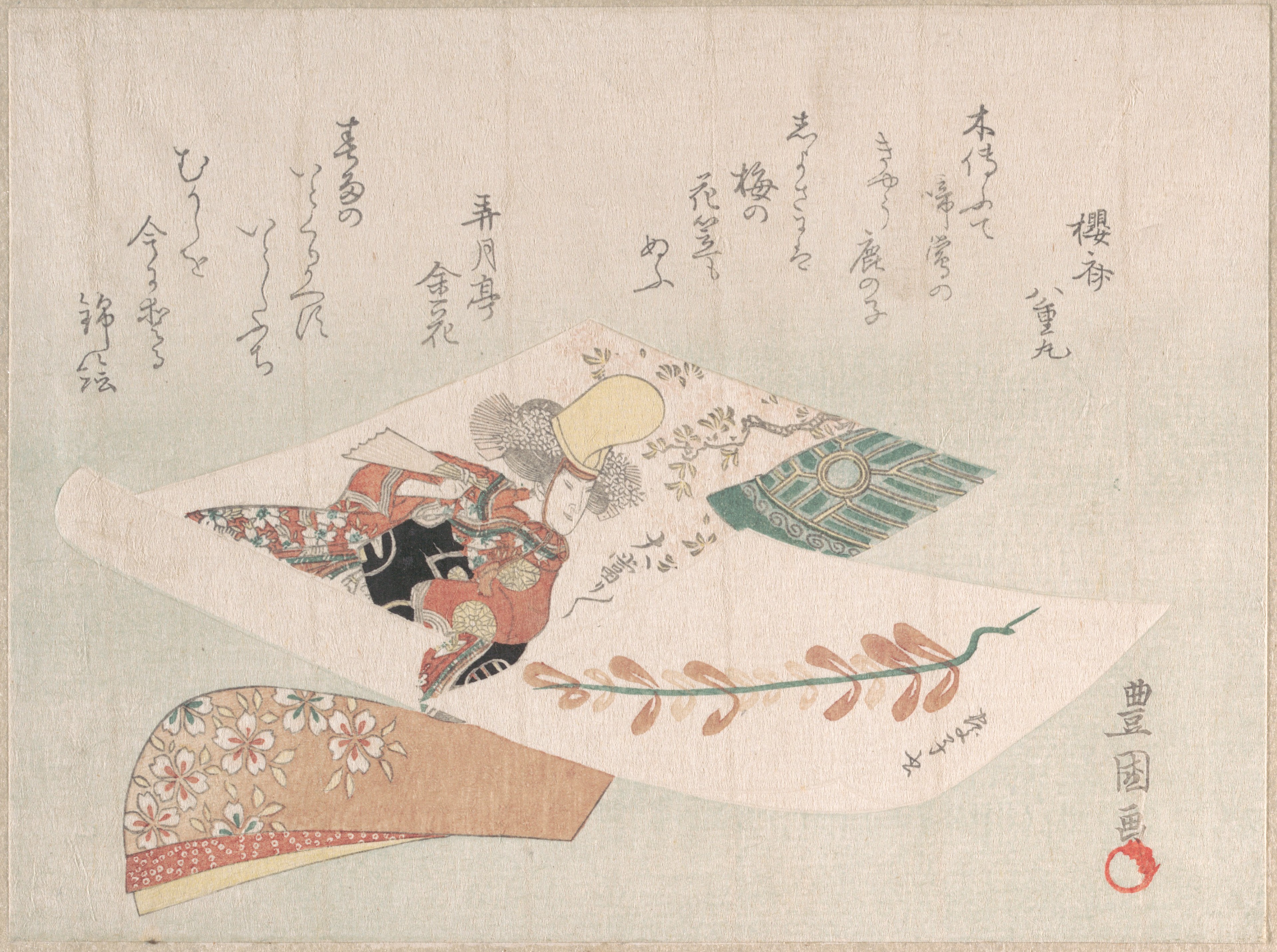
Representation of the Dance-Play "Dōjōji"
Woodblock print (surimono); ink and color on paper

The actors Sawamura Sojuro II as Satsuma Gengobei and Arashi Ryuzo II as Mawashi-otoko Yasuke in the play "Edo Sunago Kichirei Soga," performed at the Miyako Theater on the first month, 1795
c. 1795
Color woodblock print; oban
Frequently Asked Questions
The Card Game was created by Utagawa Toyokuni I (歌川豊国) in c. 1790.